


Imagine a goat herder named Kaldi in ancient Ethiopia. One day, he notices his goats dancing energetically after eating berries from a certain tree. Intrigued, Kaldi tries the berries himself and experiences a burst of energy. This moment marks the beginning of the beloved beverage’s journey.
Have you ever wondered how this simple fruit transformed into a global phenomenon? Today, coffee is more than just a drink; it represents a rich history and legacy. The global coffee market, valued at approximately $269.27 billion in 2024, reflects its significance in modern society. With 66% of U.S. adults consuming coffee daily, its impact on culture is undeniable. Understanding the history of coffee enhances your appreciation for each cup you enjoy.
Key Takeaways
Coffee’s journey began in Ethiopia with Kaldi, a goat herder who discovered its energizing effects, highlighting coffee’s deep cultural roots.
The Ethiopian coffee ceremony symbolizes hospitality and community, showcasing coffee’s role in social bonding and cultural traditions.
Coffee spread to Yemen in the 15th century, becoming integral to Islamic culture and leading to the rise of coffeehouses as social hubs.
In Europe, coffeehouses emerged as centers for intellectual exchange, influencing politics and culture, especially during the 17th century.
Today, the specialty coffee movement emphasizes high-quality, ethically sourced coffee, reflecting modern consumers’ desire for unique and sustainable experiences.
Ethiopia’s Coffee Origins
The Legend of Kaldi
The story of Kaldi, the goatherd from 9th-century Ethiopia, captures the enchanting origins of coffee. According to legend, Kaldi discovered coffee when he noticed his goats dancing energetically after eating the berries from a certain tree. This moment marked the beginning of coffee’s journey into human culture. The tale illustrates the connection between nature and human experience. It highlights how coffee became a sacred beverage, initially embraced by monks to enhance their focus during prayer. This practice established coffee’s revered status in society.
You might find it interesting that the name ‘Kaldi’ appears in various coffee shop brands, such as ‘Kaldi Coffee’ and ‘Kaldi’s Coffee’. The story has inspired names like ‘Dancing Goat’ and ‘Wandering Goat’ for coffee-related businesses. The classic version of Kaldi’s story romanticizes coffee’s origins, reinforcing the idea of coffee as a mystical and energizing substance deeply rooted in cultural practices.
Early Uses of Coffee
In Ethiopia, coffee’s early uses extended beyond mere consumption. The Ethiopian coffee ceremony remains a vital tradition today. This meticulous process involves roasting raw coffee beans over an open flame. You can imagine the aroma filling the air as the beans roast. After roasting, people grind the coffee by hand using traditional tools and brew it in a special pot called a jebena.
The ceremony includes three servings of coffee: abol (the first round), tona (the second round), and baraka (the third round). Each serving carries cultural significance and symbolizes hospitality and social bonding. Guests are invited to partake in this ceremonial experience, which can last for hours.
In Ethiopian homes, coffee serves as a symbol of hospitality. The ceremony begins with preparing the room, spreading aromatic grasses, and lighting incense. Green coffee beans are cleaned and roasted, then ground using traditional tools. The youngest child serves the coffee to the oldest guest first, showcasing respect and tradition. Coffeehouses, known as bunna bets, act as social hubs for community discussions, further embedding coffee into the fabric of Ethiopian culture.
Through these early practices, you can see how the origins of coffee in Ethiopia shaped its role in society. The ancient origins of coffee reflect a rich tradition that continues to influence coffee culture worldwide.
Coffee’s Journey to Yemen
Coffee’s journey from Ethiopia to Yemen marks a significant chapter in the history of coffee. By the 15th century, coffee began to spread from Ethiopia into Yemen, becoming a vital part of Middle Eastern culture. You can trace the earliest credible evidence of coffee-drinking back to Yemen, particularly in Sufi shrines. Yemeni merchants obtained coffee beans from Ethiopia and started cultivating them, leading to the drink’s expansion across the region.
Embracing Coffee in Islamic Culture
In Yemen, coffee, known as coffee in Arabic, became integral to the culture. Sufi monks introduced coffee to the region, using its stimulating properties during night prayers. This practice established coffee as a significant element in Islamic rituals. Over time, coffee evolved into a symbol of hospitality in Arab culture. You might find it interesting that coffee is often served during social occasions alongside dates or sweets, reflecting the generosity of the host.
The origins of Arabic coffee trace back to the Middle Ages. Initially consumed for its stimulating effects, coffee became common in religious and cultural gatherings. This integration into daily life underscores coffee’s role in Islamic traditions. The link between coffee consumption and Sufi monasteries suggests that these institutions played a pivotal role in popularizing coffee. For instance, Ali Ibn Omar al-Shadhili, a Sufi, is credited with roasting coffee beans and brewing the first cup around 1400 AD. This beverage aided spiritual practices during Sufi gatherings, and as Sufis traveled, they carried coffee beans with them, facilitating the spread of coffee beyond Yemen.
Rise of Coffeehouses
The first coffeehouses emerged in Yemen during the 15th century, marking a transformation of coffee into a commercial product. These early coffeehouses, known as coffeehouses, became popular in cities like Mecca, Cairo, and Damascus. They quickly evolved into cultural and social hubs, influencing social and intellectual life in Yemen.
In these venues, people gathered to discuss various topics, including politics and religion. The atmosphere fostered intellectual exchange and community interaction. You can imagine how these early coffeehouses became important centers of cultural exchange and debate, significantly shaping the social fabric of Yemen.
As coffee spread throughout Arabia, it became more than just a beverage. It transformed into a vital part of social traditions and hospitality. Serving coffee signifies the host’s desire to welcome guests, enhancing the atmosphere of generosity and respect. This cultural significance of coffee continues to resonate today, reminding you of its rich history and enduring legacy.
The History of Coffee in Europe
Coffee made its way to Europe through trade routes established by merchants in the 17th century. By this time, coffee had already gained popularity in Yemen. You might find it fascinating that coffee seeds traveled from the coffee forests of Southwestern Ethiopia to Yemen in the mid-15th century. This marked the beginning of coffee cultivation as a commercial crop. By the late 1600s, Yemen became a significant coffee producer, and European traders sought to capitalize on this growing market.
Cultural Impact in Europe
When coffee first arrived in Europe, reactions varied widely. Some clergy condemned coffee, calling it the “bitter invention of Satan.” However, Pope Clement VIII approved of coffee, finding it delicious. This endorsement helped coffee gain acceptance among the masses.
Reaction Type | Description |
|---|---|
Condemnation | Some clergy condemned coffee, calling it the ‘bitter invention of Satan’. |
Embrace | Pope Clement VIII approved of coffee, finding it delicious, which helped its acceptance. |
Social Centers | Coffee houses became important social hubs in major cities, replacing traditional breakfast drinks. |
Health Concerns | Controversies arose regarding coffee’s health effects, leading to public debates and pamphlets. |
Royal Intervention | King Charles II attempted to suppress coffeehouses due to concerns over their influence. |
Coffeehouses emerged as vital social centers in cities like London and Paris. These venues fostered discussions on politics, philosophy, and commerce. You can imagine how these establishments contributed to the development of financial markets and newspapers, becoming hubs for intellectual exchange.
Coffeehouses in Italy
Italy played a crucial role in the evolution of coffee culture. The first coffeehouse in Italy opened in Venice, with dates ranging from 1647 to 1683. These coffeehouses became cultural hubs for social interaction and political discourse.
In the late 1800s, innovations around brewing coffee began, leading to the introduction of the first espresso machine at the 1906 World’s Fair. This marked the start of a coffee culture that emphasized quick preparation. The term “barista” emerged in 1938, reflecting the growing importance of espresso in Italian society.
You can see how coffee transformed from a simple beverage into a cornerstone of Italian culture, influencing global coffee trends.
Coffee’s Impact in the Americas
Coffee Plantations and Economy
Coffee cultivation began in the Americas in the early 18th century. The Caribbean region marked the first introduction of coffee in Latin America. By the mid-19th century, Brazil emerged as the largest single producer of coffee. This growth significantly impacted the economy of major coffee-producing countries.
Here are some key regions and their significance in coffee production:
Region | Significance |
|---|---|
Caribbean | First introduction of coffee in Latin America |
Brazil | Largest single producer since the mid-19th century |
Cordillera | Enclave of coffee zones from Mexico to Peru, Central America, and Colombia |
The establishment of coffee plantations increased production and export capacity. This growth led to economic development in many regions. However, challenges arose. The rise of affordable Vietnamese coffee pressured prices, making it hard for less efficient farmers in Brazil and Nicaragua to sustain their livelihoods. Many had to abandon coffee farming due to these economic pressures. The shift to technified agriculture during the Green Revolution also caused environmental issues, such as deforestation and loss of biodiversity.
Cultural Integration in America
Coffee quickly became a staple in American households by the 19th century. The invention of the coffee pot and commercial coffee roasters made it easier for you to enjoy coffee at home.
Coffee drinking became a more relaxed and communal activity. People gathered in coffeehouses not just to drink coffee but to share ideas, read newspapers, and engage in lively discussions about the future of the colonies. This communal aspect of coffee culture helped build a sense of unity and shared purpose among the colonists.
Coffee also played a role in major historical events. During the American Revolution, switching from tea to coffee symbolized rebellion against British rule. Key figures like George Washington and Benjamin Franklin enjoyed coffee, using it to foster camaraderie and discussion. Today, coffee remains integral to American life, from morning rituals to social gatherings.
You can see how coffee’s journey from plantations to your cup reflects its deep-rooted significance in both the economy and culture of the Americas.
Modern Cafés and Coffee Culture

Specialty Coffee Movement
The specialty coffee movement began in the 1970s. It focuses on high-quality coffee and ethical sourcing practices. You can recognize specialty coffee by its unique characteristics:
High-quality coffee scoring 80 points or above on a 100-point scale.
Ethical sourcing practices that support farmers.
Emphasis on the entire coffee production process, from cultivation to brewing.
Key figures like Alfred Peet and Erna Knutsen played significant roles in this movement. Peet introduced high-quality, dark-roasted coffee to America, while Knutsen coined the term “specialty coffee.” This movement has influenced global coffee consumption trends. Consumers now seek high-quality beans sourced from specific regions. They want to know the stories behind each cup, fostering a greater focus on sustainability.
Year/Period | Key Figures | Contributions |
|---|---|---|
1970s | Alfred Peet | Introduced high-quality, dark-roasted coffee to America. |
1970s | Erna Knutsen | Coined the term ‘specialty coffee’ and emphasized quality. |
Sustainability in Coffee Culture
Sustainability challenges the modern coffee industry. Deforestation and habitat loss threaten coffee production. Over 2.5 million acres of forest in Central America have been cleared for coffee farming. Additionally, climate change impacts production. In Brazil, adverse conditions led to a 0.5% decrease in coffee production in 2024.
To combat these issues, many initiatives promote sustainable coffee production. Fair Trade Certification ensures fair prices for farmers and supports community development. Other programs, like the Nespresso AAA Sustainable Quality™ Program, aim to improve coffee quality while promoting sustainable practices.
You can see how modern cafés have evolved from their historical origins. They now serve as social hubs where you can enjoy traditional coffee experiences. The café culture reflects a blend of community, conversation, and quality coffee. As you sip your favorite brew, remember the journey of coffee and its impact on our world.
Coffee has traveled a remarkable journey from its origins in Ethiopia to becoming a global staple. Today, you can find coffee in various forms and rituals around the world. Its significance extends beyond mere consumption; it fosters community and connection.
Consider these key points about coffee’s impact today:
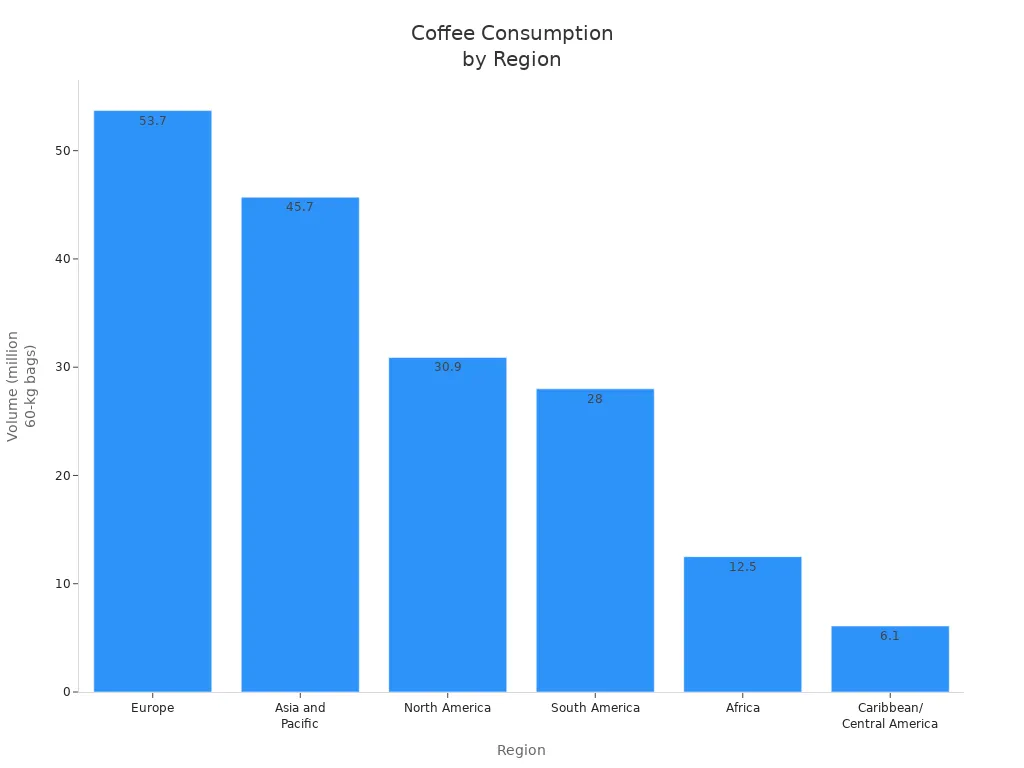
Coffee consumption is projected to rise globally, especially in Africa and Asia, with a growth rate of +4.1%.
Innovations like ready-to-drink coffee appeal to health-conscious consumers.
Modern consumers engage deeply with coffee culture, emphasizing personalized experiences.
As you enjoy your next cup, remember the rich history behind it. Appreciate the traditions and connections that coffee continues to inspire.
Region | Volume (60-kg bags) | Growth Rate (%) |
|---|---|---|
Europe | 53.7 million | 1.1 |
Asia and Pacific | 45.7 million | 2.7 |
North America | 30.9 million | 2.8 |
South America | 28 million | 1.6 |
Africa | 12.5 million | 2.6 |
Caribbean/Central America | 6.1 million | 2.3 |
Embrace the stories and experiences that each cup of coffee brings into your life.
FAQ
What is the origin of coffee?
Coffee originated in Ethiopia, where legend says a goat herder named Kaldi discovered its energizing effects after his goats ate the berries from a coffee tree.
How did coffee spread to Europe?
Coffee spread to Europe in the 17th century through trade routes established by merchants. It gained popularity after Pope Clement VIII endorsed it, helping to overcome initial resistance.
What is the specialty coffee movement?
The specialty coffee movement began in the 1970s, focusing on high-quality coffee and ethical sourcing. It emphasizes unique flavors and the entire production process, from cultivation to brewing.
Why is sustainability important in coffee production?
Sustainability in coffee production addresses environmental issues like deforestation and climate change. It promotes fair trade practices, ensuring farmers receive fair prices and communities thrive.
How can I brew the perfect cup of coffee?
To brew the perfect cup, use fresh, high-quality coffee beans. Measure the coffee and water accurately, and adjust the brewing time and temperature to suit your taste preferences.