

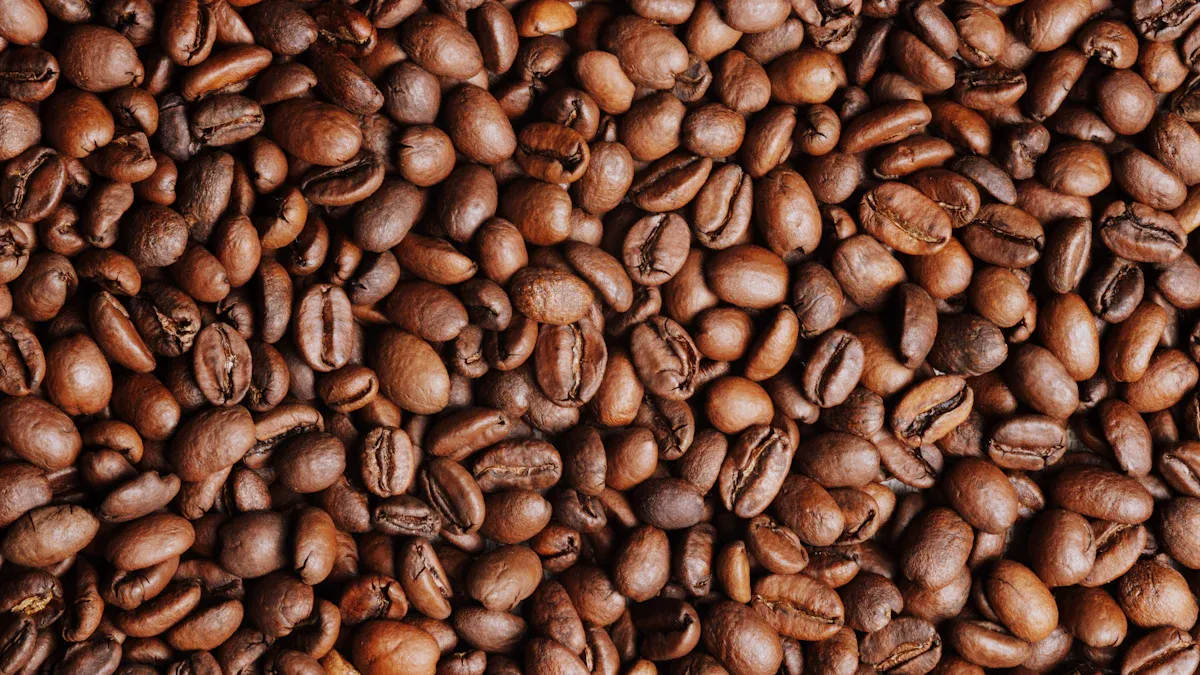
Coffee roasting plays a crucial role in developing flavor in your cup. As beans undergo roasting, their natural sugars caramelize, creating distinct tastes and aromas. The differences between light roasts, medium roasts, and dark roasts emerge during this process. Light roasts typically offer bright flavors and higher acidity, while medium roasts balance sweetness and body. Dark roasts present bold, rich flavors with less acidity. Understanding these differences helps you choose the perfect brew for your taste.
Key Takeaways
Light roasts offer bright, fruity flavors and higher acidity. They maintain the original essence of the coffee beans.
Medium roasts provide a balanced flavor profile with moderate acidity and sweetness, appealing to a wide range of coffee drinkers.
Dark roasts deliver bold, rich flavors with lower acidity, often featuring chocolatey or nutty notes, making them a favorite for those who enjoy strong coffee.
Experiment with different brewing methods to enhance the unique flavors of each roast. Pour-over works well for light roasts, while espresso suits dark roasts.
Store roasted coffee beans in an airtight container in a cool, dark place. Light roasts last longer due to lower oil content, maintaining freshness for 4-6 weeks.
Coffee Roasting Process
Coffee roasting involves several stages that transform raw coffee beans into the aromatic brew you enjoy. Each stage plays a vital role in developing the flavors and aromas of your coffee.
Roasting Stages
The coffee roasting process can be broken down into three main stages:
Stage | Temperature Range (°F) | Description |
|---|---|---|
Drying Phase | 0 – 300 | The initial phase where moisture is removed from the beans, changing color from green to yellow. |
Caramelization Phase | 300 – 395 | The phase where sugars caramelize, leading to flavor development, ending at first crack. |
Development Phase | 395 and above | The final phase where flavor modulation occurs, lasting from first crack to the end of roasting cycle. |
During the drying phase, the beans lose moisture. This step is crucial because proper drying ensures smooth heat transfer. If this phase is too short, the coffee may taste sour. If it lasts too long, the coffee can become flat.
The caramelization phase begins when the temperature reaches around 300°F. Here, the Maillard reaction occurs, where amino acids and sugars interact under heat. This reaction creates a variety of flavor compounds, enhancing the complexity of aromas. You will notice flavors like caramel and chocolate emerging during this stage.
Finally, the development phase allows for further flavor modulation. A shorter development time preserves brightness, while a longer time enhances body. However, over-roasting can lead to burnt flavors.
Flavor Impact
The roasting process significantly alters the chemical composition of coffee beans. As the beans roast, various compounds change, affecting flavor and aroma. For instance, chlorogenic acids degrade, resulting in new compounds that influence flavor and antioxidant properties. The degradation of sucrose and other carbohydrates also contributes to the rich flavors you experience in your cup.
Understanding these stages and their impact on flavor helps you appreciate the quality of your coffee. Specialty coffee often highlights these nuances, allowing you to explore different roast levels and find your perfect brew.
Light Roasts
Light Roast Characteristics
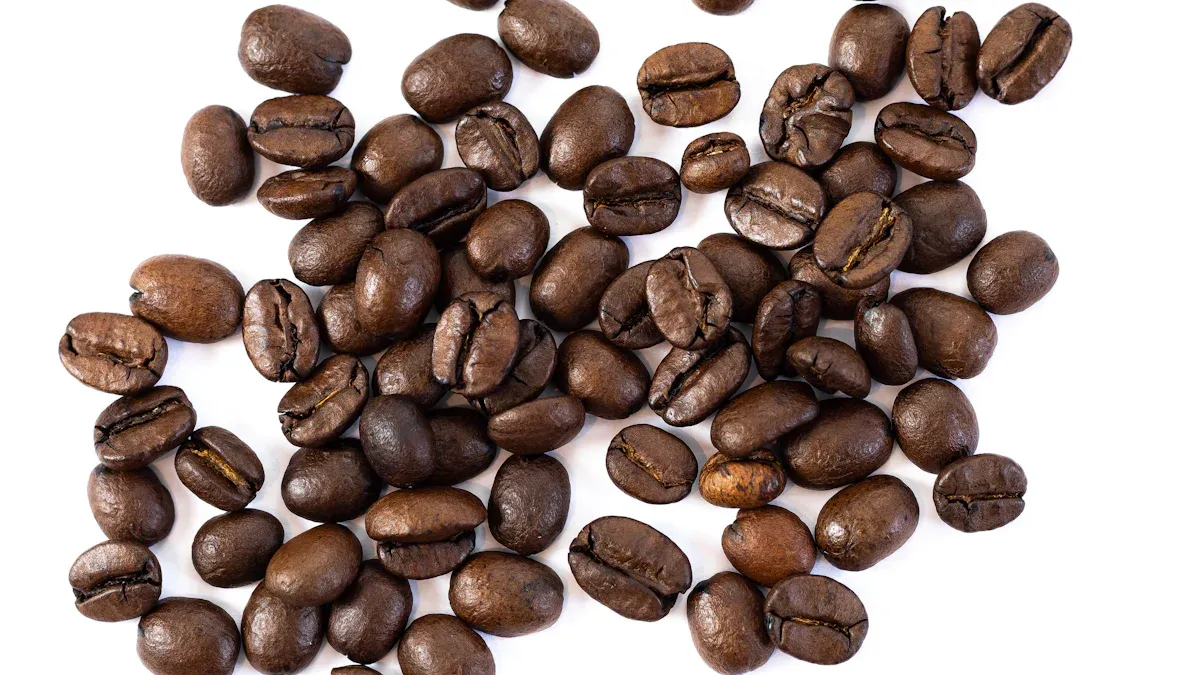
Light roasts stand out due to their unique physical characteristics. You will notice that these coffee beans have a light brown color and lack the oily sheen found in darker roasts. This absence of oil reflects their shorter roasting time. Light roast coffee beans are denser than their darker counterparts, which means they contain slightly more caffeine per bean. This density difference is crucial when measuring coffee by weight versus volume.
Here are some key characteristics of light roasts:
Color: Light brown, with no surface oil.
Density: Higher density compared to darker roasts.
Body: Thinner body, contributing to a delicate mouthfeel.
Freshness: Longer freshness duration due to lower oil content.
Light roasts maintain more of the original flavors of the coffee beans. This results in a vibrant and complex flavor profile with higher acidity.
Flavor Profile of Light Roasts
When you sip light roast coffee, you experience a bright and lively flavor profile. Common flavor notes include:
Sour
Citrus
Berry-like
Fruity
These flavors emerge from the roasting process, where the beans undergo caramelization. The typical temperature range for roasting light roast coffee beans is between 180 to 205 degrees Celsius. This careful control of temperature helps preserve the delicate flavors.
The caffeine content of light roast coffee is generally higher than that of medium and dark roasts when measured by volume. However, when measured by weight, the caffeine content can be similar across different roast levels. This is because light roast coffee is denser and contains more caffeine per particle compared to dark roast.
To fully appreciate the flavors of light roast coffee, consider using brewing methods that enhance its profile. The pour-over method, like the V60, is excellent for clarity. The French press also works well, allowing for controlled brewing time and extraction of subtle nuances. For optimal extraction, brew at temperatures between 90 – 94 degrees Celsius and use a medium-fine grind size, similar to table salt. This ensures that the bright acidity and subtle notes shine through without bitterness.
Light roasts also have a longer shelf life compared to darker roasts. Their denser structure and lower oil content help resist oxidation. Properly stored light roasts can maintain peak flavor for 4-6 weeks.
Medium Roasts
Medium Roast Characteristics
Medium roasts offer a delightful balance of flavors that appeal to many coffee drinkers. You will notice that these beans have a medium brown color and lack the oily sheen found in darker roasts. This absence of oil indicates a roasting time that allows for flavor development without burning the beans. Here are some defining characteristics of medium roast coffee:
Color: Medium brown, with no oil on the bean surface.
Aroma: Warm and toasty, often reminiscent of baked goods or roasted almonds.
Texture: Ranges from tea-like to creamy, providing a pleasant mouthfeel.
Flavor Complexity: Can vary from delicate to complex, juicy to syrupy.
Sweetness: Rounded sweetness with gentle acidity, featuring notes of caramel, nuts, and milk chocolate.
Flavor Profile of Medium Roasts
When you taste medium roast coffee, you experience a rich and smooth flavor profile. The roasting temperature for medium roasts typically ranges from 210 to 220 degrees Celsius, with a roasting duration of about 12 to 14 minutes. This careful control of temperature allows the natural flavors of the coffee’s origin to shine through.
Here are some common flavor notes you might encounter in medium roast coffee:
Caramel
Chocolate
Toasted nuts
These flavors create a harmonious blend that is neither too bright nor too bold. In comparison to light and dark roasts, medium roasts strike a perfect balance. Light roasts tend to be brighter and more acidic, showcasing floral and fruity notes. Dark roasts, on the other hand, are bold and full-bodied, featuring rich flavors like dark chocolate and nuts, with lower acidity and a smoky finish.
Interestingly, medium roast coffee has a caffeine content of 1.17%, which is slightly higher than light roast at 1.13% and dark roast at 1.08%. This means that medium roast coffee generally contains more caffeine than both lighter and darker roasts.
In blind taste tests, medium roasts often receive favorable ratings. For example, Little’s Ethiopian and Little’s Irish Cream both scored 3.5 out of 5, highlighting their smooth body and pleasant flavor profiles.
The origin of the coffee beans also plays a significant role in the flavor. Brazil, Vietnam, Colombia, and Indonesia produce nearly 70% of the world’s coffee. Each origin tells a story through its unique flavor, aroma, body, and acidity, shaped by the specific conditions of its growing environment.
By exploring medium roasts, you can discover a delightful range of flavors that cater to your taste preferences.
Dark Roasts
Dark Roast Characteristics
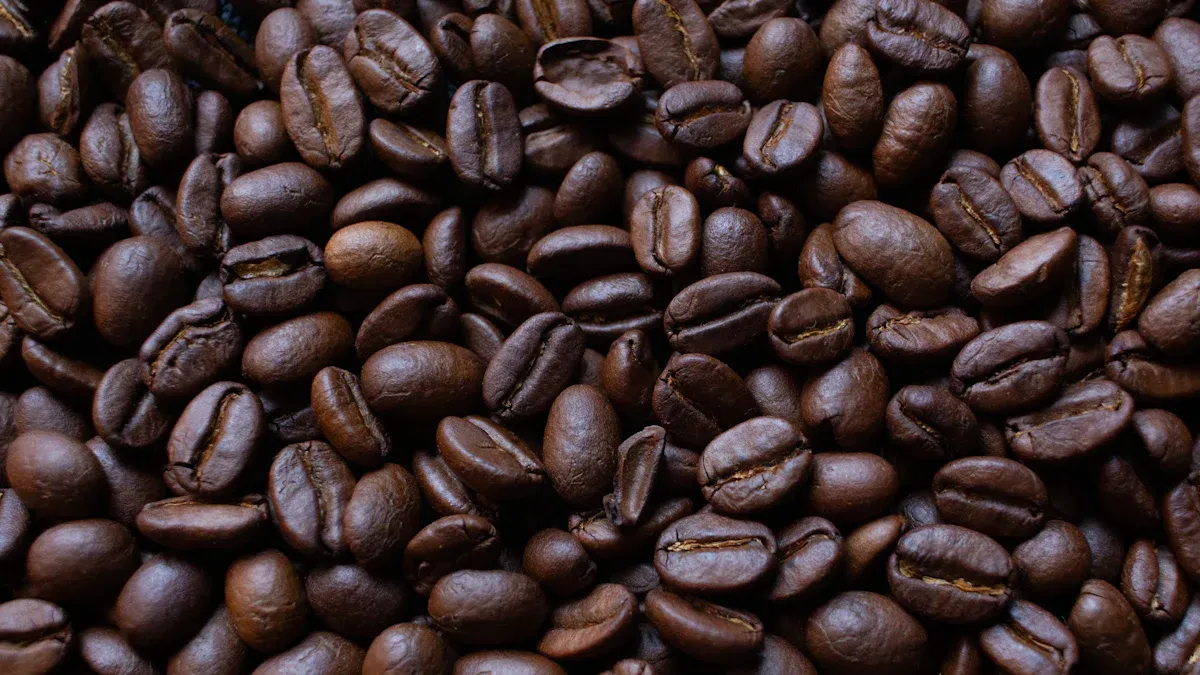
Dark roasts are known for their bold flavors and lower acidity. You will notice that these beans have a dark brown to almost black color, often with an oily sheen on the surface. This oiliness results from the roasting process, where the natural oils rise to the surface. Here are some key characteristics of dark roasts:
Color: Dark brown to black, with a shiny, oily surface.
Density: Less dense than lighter roasts due to moisture loss.
Aroma: Rich and intense, often featuring roasted, burnt, or earthy notes.
Flavor: Strong and bold, with a smooth finish.
During the roasting process, several physical changes occur in the coffee beans. They change color due to the formation of melanoidin polymers. The outer layer, known as chaff, is removed, and moisture levels decrease as water vaporizes. This leads to a weight loss of about 10-12%. As a result, the beans become more porous and soluble, enhancing their flavor extraction.
Flavor Profile of Dark Roasts
When you taste dark roast coffee, you experience a rich and complex flavor profile. Common flavor notes include:
Chocolate
Caramel
Nutty
Earthy
These flavors develop as the roasting process breaks down chlorogenic acids, which are responsible for higher acidity. This breakdown results in a smoother flavor profile, making dark roasts less sharp compared to light and medium roasts. The high temperatures during roasting also create pyrazines, which contribute to roasted, nutty, and cocoa-like aromas.
Dark roast coffee typically exhibits higher intensity in typical coffee attributes. You may notice flavors described as roasted, burnt, or even ashy. These characteristics make dark roasts a favorite among those who enjoy a strong cup of coffee.
Additionally, dark roast coffee is gentler on the stomach. It tends to be less irritating for individuals with acid reflux or sensitive stomachs. This makes it a popular choice for many coffee drinkers.
Comparing Roasts
Caffeine Content Comparison
Caffeine content varies among light, medium, and dark roasts. You might think that darker roasts have more caffeine, but that’s not always the case. The roasting process affects caffeine levels. Here’s a quick comparison:
Roast Level | Caffeine Content Insights |
|---|---|
Light Roast | Generally has more caffeine, but it depends on extraction yield. |
Medium Roast | Maximum caffeine levels observed due to specific mass loss during roasting (14-16%). |
Dark Roast | Higher caffeine concentration per unit of extracted coffee, but lower overall extraction yields, leading to less caffeine in the final cup. |
Brewing methods also influence caffeine content. For example, cold brew coffee made with dark roast can have a higher caffeine concentration than medium roast. Here’s how different brewing methods stack up:
Brewing Method | Coffee Amount | Water Amount | Caffeine Concentration (g/L) | Roasting Degree |
|---|---|---|---|---|
Cold Brew | 20 g | 200 mL | 1.962 ± 0.041 (Dark) | Dark |
French Press | 20 g | 200 mL | 1.035 ± 0.039 (Medium) | Medium |
Which Roast is Better?
Choosing the best roast depends on your personal taste. Each roast type offers unique flavor profiles.
Roast Type | Flavor Profile | Consumer Preference Description |
|---|---|---|
Light Roast | Retains original flavor and acidity | Attracts those who enjoy nuanced coffee profiles |
Medium Roast | Balanced taste with a combination of acidity and body | Appeals to a broader audience |
Dark Roast | Rich, bold flavor with less acidity | Favored by those who prefer deeper, more robust coffee |
Cultural influences also play a role in preferences. For instance, Italians often prefer dark roasts for their espresso, while Scandinavians enjoy light roasts for their nuanced flavors.
Ultimately, the best roast for you is the one that satisfies your taste buds. Experiment with different types to discover your favorite!
In summary, light, medium, and dark roasts each offer distinct characteristics that cater to different preferences.
Light Roasts: Bright and fruity flavors with high acidity. They maintain the original essence of the beans.
Medium Roasts: Balanced flavors with moderate acidity and sweetness. They provide a harmonious blend of taste.
Dark Roasts: Bold and robust flavors with lower acidity. They often feature chocolatey or nutty notes.
To find your ideal cup, consider experimenting with various brewing methods. For example, pour-over works well for light roasts, while espresso suits dark roasts. Explore these options to discover your favorite roast!
Roast Level | Flavor Profile | Best Brewing Methods |
|---|---|---|
Light Roast | Bright, acidic, and fruity flavors with a lighter body. | Pour-over, Aeropress, Cold Brew |
Medium Roast | Balanced flavors with moderate acidity and body. | Drip coffee makers, French press, Espresso |
Dark Roast | Bold, robust flavors with lower acidity. | Espresso, Moka pot, French press |
Embrace the journey of coffee exploration!
FAQ
What is the difference between light, medium, and dark roasts?
Light roasts have bright flavors and higher acidity. Medium roasts balance sweetness and body. Dark roasts offer bold, rich flavors with lower acidity. Each roast type provides a unique taste experience.
How does roasting affect caffeine content?
Roasting affects caffeine levels. Light roasts generally have more caffeine per bean due to their density. However, when measured by weight, caffeine content across roast levels is similar.
What brewing method is best for each roast?
For light roasts, try pour-over or Aeropress to highlight their bright flavors. Medium roasts work well with drip coffee makers or French presses. Dark roasts shine in espresso or Moka pots.
Can I store roasted coffee beans?
Yes, you can store roasted coffee beans. Keep them in an airtight container in a cool, dark place. Light roasts last longer due to lower oil content, maintaining freshness for 4-6 weeks.
How do I choose the right roast for me?
Choosing the right roast depends on your taste preferences. Experiment with different roasts to find what you enjoy. Consider flavor profiles, acidity, and body when making your choice.
