

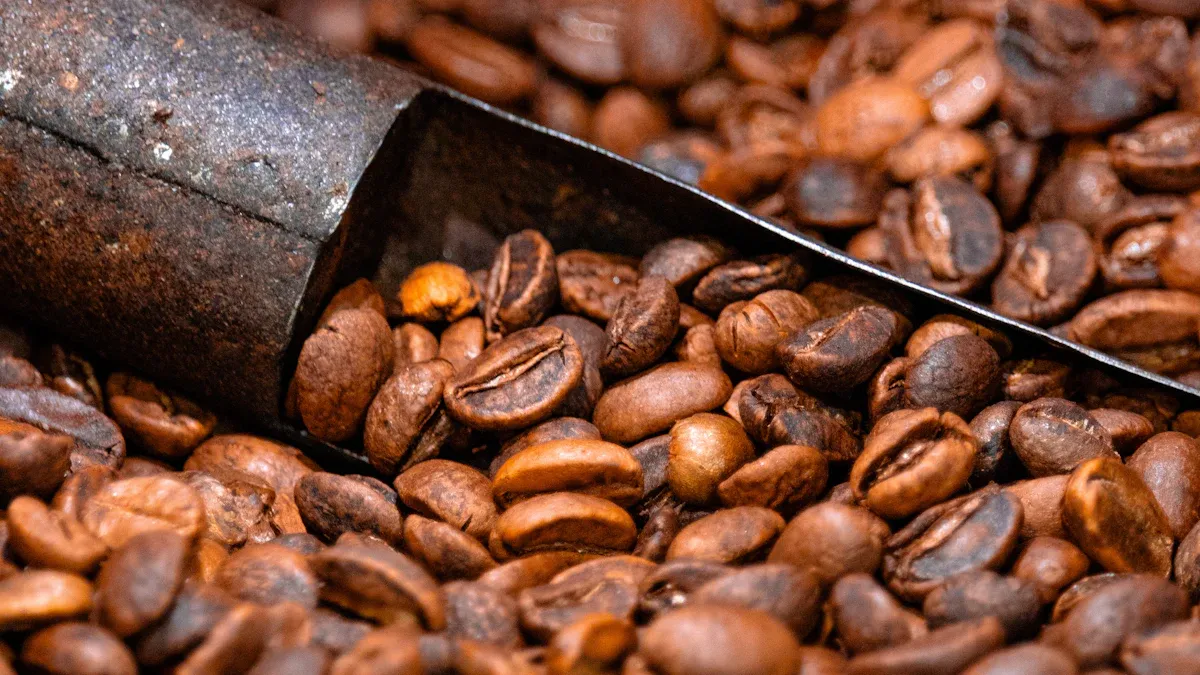
The type of coffee bean significantly affects the grind size you should use for optimal brewing. Understanding this relationship is crucial for enhancing your coffee’s flavour and taste. Different brewing methods require specific grind sizes to achieve balanced extraction. A grind that is too coarse can lead to weak, under-extracted coffee, while an overly fine grind may result in bitterness from over-extraction. Knowing how your bean type interacts with grind sizes can elevate your coffee experience.
Key Takeaways
Different coffee beans require specific grind sizes for optimal flavor extraction.
Arabica beans need a fine grind for espresso, medium for pour-over, and coarse for French press.
Robusta beans also require a fine grind for espresso but a medium grind for drip coffee.
Adjust grind size based on roast level; lighter roasts need finer grinds, while darker roasts can use coarser grinds.
Experiment with grind sizes to discover your preferred flavor profile and enhance your coffee experience.
Coffee Bean Types
Arabica
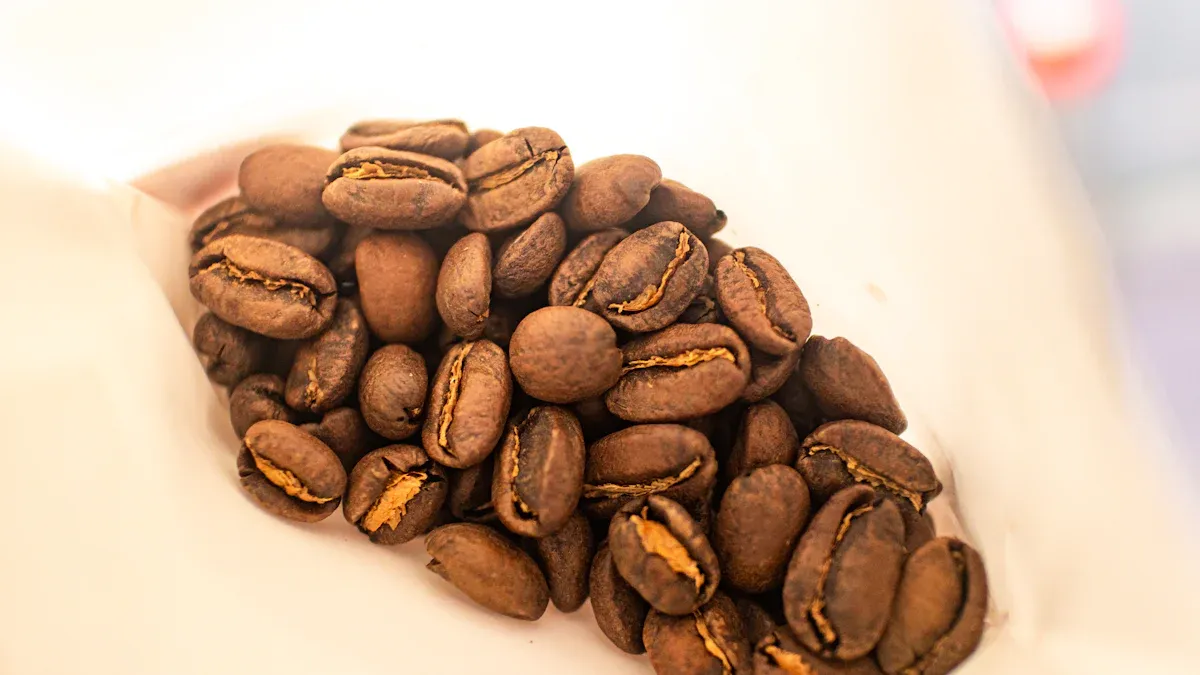
Arabica coffee beans are known for their smooth, complex flavors. They typically have a higher acidity and a sweeter taste compared to other beans. Arabica beans grow best at higher altitudes and require specific climate conditions. These beans account for about 60-70% of global coffee production. They thrive in regions like Central and South America, as well as parts of Africa and Asia.
Some key characteristics of Arabica beans include:
Lower caffeine content compared to Robusta.
A wide range of flavor profiles, often featuring notes of fruit and sugar.
A more delicate and aromatic scent.
Robusta
Robusta coffee beans are recognized for their strong, bold flavors. They contain higher caffeine levels, which contribute to their bitter taste. These beans are hardier and can grow in lower altitudes and harsher climates. Robusta beans make up about 30-40% of global coffee production, with significant cultivation in Vietnam, Brazil, and Indonesia.
Here are some notable features of Robusta beans:
Higher values of yellow intensity, chroma, and hue, indicating a lighter and more vibrant color.
The highest levels of caffeoylquinic acid (5-CQA) are found in Robusta coffee.
Caffeic acid and hydroxymethylfurfural are present only in Robusta coffee.
While Arabica and Robusta dominate the market, other varieties like Liberica are gaining attention. Liberica beans offer unique fruity and floral flavor notes. They grow in limited regions, such as the Philippines and Malaysia. As niche markets expand, these lesser-known varieties may become more prevalent.
Bean Characteristics
Density
The density of coffee beans plays a crucial role in determining the optimal grind size for brewing. Denser beans, like those from light roasts, require a finer grind. This finer grind increases the surface area, allowing for better extraction of flavors. A study by Richard highlights that coffee bean density significantly influences grind size. He found a correlation between grind settings and bean density, suggesting that understanding this relationship can enhance coffee extraction efficiency.
On the other hand, less dense beans, often found in darker roasts, can be ground coarser. This is because they are more porous and brittle, which allows for easier extraction. If you grind these beans too finely, you risk over-extraction, leading to bitterness in your cup.
Oil Content
The oil content in coffee beans also affects the extraction process during brewing. Oils are essential for flavor compounds, and different brewing methods interact with these oils in various ways. For instance, espresso machines extract oils quickly due to high pressure, while pour-over methods may take longer.
When you grind coffee, the oil content can influence how the grind size affects flavor. Higher oil content often means a richer aroma and flavor profile. If you use a grind that is too coarse, you may not extract enough of these oils, resulting in a flat taste. Conversely, a grind that is too fine can lead to an oily, bitter brew. Thus, finding the right balance is key.
Roast Level
Roast level significantly alters the physical structure of coffee beans, which in turn influences the recommended grind size. Light roasts maintain a denser structure, making them less soluble in water. This necessitates a finer grind to increase surface area for better extraction of flavors. Conversely, dark roasts are more porous and brittle, allowing for easier extraction. Therefore, a coarser grind is often recommended for dark roasts to avoid over-extraction and bitterness.
Understanding how roast level impacts grind size can help you achieve the best flavor from your coffee. Adjusting your grind size based on the roast level ensures that you extract the right balance of flavors, aromas, and oils.
Coffee Grind Size Recommendations
When it comes to brewing coffee, the grind size you choose can make a significant difference in flavor. Each type of coffee bean has its own ideal grind size based on its characteristics. Here are some recommendations for Arabica, Robusta, and other varieties.
Arabica Grind Size
Arabica beans require specific grind sizes depending on the brewing method. Here’s a quick reference table to guide you:
Brewing Method | Recommended Grind Size |
|---|---|
Espresso | Fine |
Pour-over | Medium |
French Press | Coarse |
Espresso: Use a fine grind for espresso. This size allows for quick extraction under pressure, resulting in a rich and flavorful shot.
Pour-over: A medium grind works best for pour-over methods. This size promotes even extraction, enhancing the complex flavors of Arabica.
French Press: For French press brewing, opt for a coarse grind. This prevents over-extraction and keeps your coffee smooth and balanced.
Robusta Grind Size
Robusta beans have different grind size needs compared to Arabica. Here’s how they stack up:
Coffee Type | Recommended Grind Size for Brewing Methods |
|---|---|
Arabica | Medium for drip or pour-over; medium-coarse for French press |
Robusta | Fine for espresso; medium for drip coffee |
Espresso: Similar to Arabica, use a fine grind for Robusta in espresso. The higher caffeine content in Robusta enhances the bold flavors.
Drip Coffee: A medium grind works well for drip coffee. This size allows for a balanced extraction, bringing out the robust flavors without bitterness.
Other Varieties Grind Size
For lesser-known varieties like Liberica, grind size recommendations can vary. While specific data may be limited, you can generally follow these guidelines:
Medium Grind: This size often works well for drip brewing methods, allowing for a balanced extraction.
Coarse Grind: If you prefer a French press, a coarse grind will help you avoid bitterness while still extracting the unique flavors of these beans.
Impact of Grind Size on Brewing
Extraction Process
Grind size plays a crucial role in the coffee extraction process. When you grind coffee beans, you increase the surface area exposed to water. Finer grinds allow water to extract compounds more quickly. This can lead to over-extracted coffee, which often tastes bitter. Conversely, coarser grinds slow down the extraction process. This can result in under-extracted coffee, leaving you with a weak and sour flavor.
Research shows that grind size, along with extraction time and temperature, significantly affects the physicochemical and sensory characteristics of coffee. A study by Moroney et al. highlights that the diffusion of coffee compounds is the rate-limiting step in extraction. As grind size increases, the time required for extraction to reach equilibrium also increases. This means that controlling grind size is essential for optimizing coffee extraction.
Flavor Differences
The grind size you choose directly influences the flavor profile of your coffee. Finer grinds extract flavors quickly, but they can also pull out undesirable bitter compounds. This can lead to poorly extracted coffee that lacks balance. On the other hand, coarser grinds extract flavors more slowly. This often results in a more balanced cup, but it can also lead to under-extracted coffee if the brewing time is too short.
A fine grind is ideal for espresso, producing a concentrated and robust flavor quickly.
A coarse grind suits French press brewing, allowing for a gradual extraction that enhances the coffee’s natural sweetness.
Using the wrong grind size can lead to undesirable flavors. For example, over-extracted coffee can taste harsh, while under-extracted coffee may lack depth. Therefore, understanding how grind size affects flavor extraction is vital for brewing quality coffee.
In summary, matching grind size to your coffee bean type is essential for achieving the perfect cup of coffee. Different beans, like Arabica and Robusta, require specific grind sizes to enhance their unique coffee flavor. Here are some key takeaways:
Understand your coffee maker’s requirements to select the right grind size.
Avoid using a fine grind in drip coffee makers to prevent bitterness.
Experiment with grind sizes based on taste preferences for optimal flavor.
By adjusting your grind size according to the bean characteristics, you can refine the strength and overall quality of your brew. Enjoy the journey of discovering your ideal grind size!
FAQ
What grind size should I use for cold brew?
For cold brew, use a coarse grind. This size allows for slow extraction, resulting in a smooth and less acidic flavor.
Can I use the same grind size for all coffee beans?
No, different beans require different grind sizes. Adjust your grind based on the bean type and brewing method for optimal flavor.
How does grind size affect caffeine content?
Finer grinds extract caffeine more quickly, leading to a stronger brew. Coarser grinds extract caffeine more slowly, resulting in a milder flavor.
Why is grind size important for espresso?
Espresso requires a fine grind to create pressure during brewing. This ensures quick extraction, producing a rich and concentrated shot.
Can I adjust grind size for taste preferences?
Absolutely! Experimenting with grind size can help you find your ideal flavor profile. Adjust based on your taste for a better coffee experience.
