
Robusta blends, concentrated brews like Turkish, and high-dose espresso shots often top caffeine and punch. Roast color is a poor guide; bean type, brew method, and dose determine strength. Some light roasts can deliver more caffeine than dark roasts per cup. This list ranks ten bold brews to help pick the strongest sip for your needs.
What Makes Coffee Strong
Coffee gets stronger whenever it has more caffeine per serving, and that usually comes down to the bean type, roast, and how much coffee is packed into the cup.
You’ll often notice Robusta beans deliver more caffeine than Arabica, so blends built around them can feel bolder.
A darker roast might taste deeper, but it doesn’t always mean more caffeine; the dose matters more.
Should you brew a concentrated cup, you’re raising the punch fast.
Your caffeine metabolism also shapes how long that energy lasts, while genetic tolerance can make the same drink feel mild for one person and intense for another.
Once you understand these factors, you can choose a brew that fits your crew, your pace, and your own sturdy level.
How We Ranked the Strongest Coffees
You’ll see that we ranked these coffees measuring caffeine content per cup, since that’s the clearest sign of strength.
You’ll also notice that brewing methods, bean type, and roast style can change how powerful each cup tastes and feels.
From there, we compared those factors to build a fair, easy-to-follow ranking.
Strength Measures Used
To rank the strongest coffees, we looked initially at caffeine content per 12-ounce cup, since that gives the clearest apples-to-apples comparison. You deserve a list that feels fair, so we paired caffeine quantification with sensory perception. That means we didn’t stop at numbers; we also remarked how intense each brew tastes, because a coffee community cares about both punch and pleasure.
| Measure | Why it matters | What we used |
|---|---|---|
| Caffeine per 12 oz | Core strength score | mg listed |
| Bean type | Natural potency signal | Robusta, blends |
| Roast style | Flavor intensity cue | Dark to medium |
| Taste profile | Drinking experience | Smooth, bold, earthy |
| Brand claims | Background only | Compared carefully |
This approach helps you find the brew that matches your energy goals and your taste buds.
Brewing Variables
Brewing variables can quietly swing a coffee’s strength, even though the beans stay the same, so we factored them in alongside caffeine content. You’ve probably felt it: one cup hits harder whenever the grind stays consistent, while another falls flat should it’s uneven.
Water temperature matters too, because too cool leaves strength behind and too hot can push bitterness forward. We looked at how each brew’s setup helps you get more from the beans without changing the coffee itself.
That means your favorite strong cup isn’t just about the label; it’s also about how reliably it brews. Once you understand these variables, you can choose a coffee that fits your routine and still belongs in a lineup of bold, energizing favorites.
Ranking Criteria Explained
Now that you know brewing variables can change how a cup feels, it makes sense to ask how we sorted the strongest coffees in the initial place. We ranked each brew by lab-tested caffeine per 12 oz initially, then checked bean type, roast, and flavor balance so you can find a bold cup that still fits your taste. We also considered caffeine sourcing, brand transparency, and market trends to spot standouts people trust.
| Criterion | Why it mattered |
|---|---|
| Caffeine mg | Measures raw strength |
| Bean blend | Robust often runs higher |
| Roast style | Affects body and edge |
| Flavor notes | Keeps strength drinkable |
| Availability | Shows real-world access |
That mix helps you compare Devil Mountain, Very Strong, and the rest with confidence, like you’re in the insider circle.
Dark Roast Coffee
Whenever you choose a dark roast, you’ll notice bold, smoky flavors, often with chocolate or caramel reminders.
But dark roast doesn’t automatically mean stronger coffee, since strength depends more on the bean type and caffeine content than the roast level. You’ll want to compare both flavor and caffeine provided you’re hunting for the strongest cup.
Dark Roast Flavor Profile
Dark roast coffees often deliver the boldest flavor, with deep chocolate, smoky, and roasted undertones that can feel rich and smooth rather than sharp or acidic. You’ll notice a roasty aroma that fills your cup, plus a bittersweet complexity that makes each sip feel confident and familiar.
| Remark | You Taste | You Notice |
|---|---|---|
| Chocolate | Cocoa depth | Warm finish |
| Smoke | Toasted edge | Cozy aroma |
| Roast | Dark intensity | Low tang |
| Body | Velvety feel | Full mouthfeel |
| Finish | Bittersweet lift | Lingering comfort |
When you join other dark-roast fans, you’re choosing a profile that feels bold without bragging. It’s the kind of brew that welcomes you in, steadies your morning, and keeps every cup grounded, smooth, and satisfying.
Strength Vs. Roast Level
Roast level shapes flavor, but it doesn’t automatically decide caffeine strength. You’ll often hear dark roast coffee called “strong,” yet bean chemistry tells a more useful story.
As beans darken, they lose water and gain bolder, smokier notes, while caffeine changes only slightly. That’s why roast misconceptions can lead you to pick a cup for punch when you really want taste.
Should you love the deep chocolate profile of a dark roast, enjoy it for the body and low acidity. In case you need more caffeine, look at the bean blend, grind, and serving size instead.
You’re part of the strongest-coffee crowd whenever you know strength can mean flavor, caffeine, or both, and those aren’t always the same.
Espresso
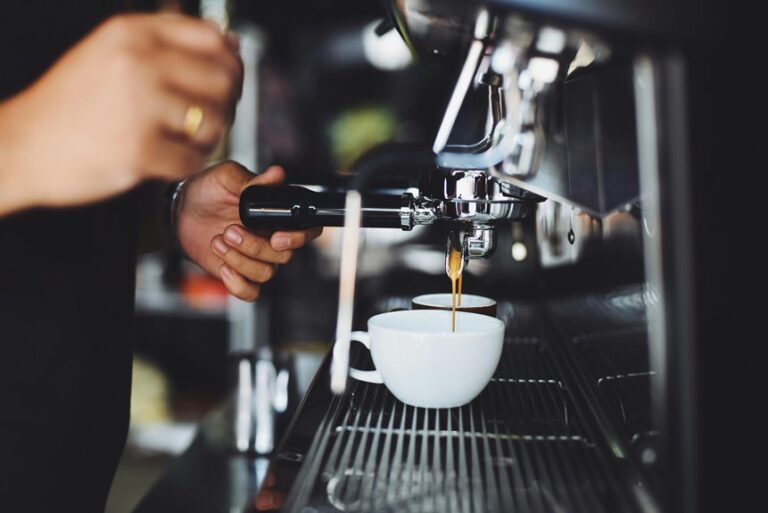
Espresso packs a concentrated caffeine hit into a small cup, but the strongest brands take that intensity far beyond a typical shot.
You’ll notice espresso’s power comes from pressure, fine grounds, and a short extraction, which keeps each sip dense and bold. Should you want more punch, look for blends built for espresso machines, like Fire Department Coffee’s skull crushing espresso or robusta-heavy options that amplify body and caffeine.
You can also tweak strength with a ristretto technique for a tighter, sweeter shot, or try lungo variations whenever you desire a longer pull with a different balance.
In a crowd that loves serious coffee, espresso gives you a fast, intense ritual that feels shared, familiar, and unmistakably sturdy.
French Press Coffee
Steeping French press coffee gives you a fuller, heavier cup because the grounds stay in contact with the water longer, pulling out more oils, body, and bold flavor. You’ll taste that richness whenever you use coarse grounds, the bloom technique, and a four-minute steep. | Step | What you do | Why it matters | |—|—|—| | 1 | Add coffee | Builds strength | | 2 | Pour water | Starts extraction | | 3 | Bloom 30 sec | Releases gas | | 4 | Press slowly | Keeps grit low | | 5 | Serve right away | Preserves balance | Metal filters let natural oils pass through, so your cup feels rounder than paper-filtered brews. In case you like a coffee that feels welcoming, sturdy, and deeply satisfying, French press delivers that clubhouse-worthy punch without needing fancy gear.
Nitro Cold Brew
Poured on tap and infused with nitrogen, nitro cold brew gives you a creamy, velvety cup without added dairy, all while keeping the coffee’s natural bite smooth and cold. You’ll notice a nitro infusion that lifts the aroma and softens the edges, so each sip feels polished but still bold.
The cascading crema on top looks like a draft beer pour, and it signals a drink built for coffee lovers who want a rich, modern edge. Because it’s served chilled, you get a clean finish that works well whenever you desire steady focus without the sharp heat of hot coffee.
Should you enjoy feeling part of the current coffee crowd, nitro cold brew fits right in.
Robusta Coffee
In case nitro cold brew is all about smooth texture and a chilled finish, Robusta coffee takes the opposite route with a bolder kick and far more caffeine.
You’ll notice its taste is stronger, earthier, and often less sweet than Arabica, which is why it shows up in blends built for punch.
Robusta cultivation thrives in hotter, lower-altitude regions, so farmers value its hardiness and reliable yield.
That resilience helps keep prices steadier and cups more affordable for your daily ritual.
From a Caffeine chemistry angle, Robusta beans naturally contain more caffeine, giving you sharper alertness and a heavier body in the cup.
Should you want a coffee that feels unapologetically intense, Robusta lets you join the crowd that loves strength initially.
Death Wish Coffee
| Trait | What you get | Why it matters |
|---|---|---|
| Caffeine | Very high | Delivers serious energy |
| Roast | Medium-dark | Keeps flavor smoother |
| Brand history | Super Bowl fame | Built its strong identity |
That brand history helped it become a go-to for you in case you want recognized strength and a fair-trade, organic profile.
Brewed Coffee With Extra Coffee Grounds
In case you add extra coffee grounds, you’ll make your brew stronger and enhance the caffeine kick.
You’ll also notice the flavor can change fast, often turning more bitter, heavy, or muddy in case you overdo it.
That balance matters because more grounds don’t always mean better coffee.
Extra Grounds, Stronger Brew
Want a stronger cup without changing beans? You can simply add more coffee grounds, and you’ll raise the brew’s intensity by increasing how much soluble material water can pull from the bed.
This works best whenever you keep your ratios consistent and watch grind saturation, so water fully contacts each particle.
More grounds usually enhance extraction yield, giving you a denser cup that feels right at home in your strong-coffee routine.
- Use a slightly finer dose
- Keep water temperature steady
- Stir or bloom evenly
- Track your brew ratio
You don’t need a special machine to join the bold-brew crowd. Just measure carefully, taste, and adjust until your cup matches your strength goal without overcomplicating the process.
Flavor Changes From Overdosing
Adding extra grounds can boost strength, but it also changes flavor fast. Whenever you overdose brewed coffee, you don’t just get more caffeine; you push the cup past balance.
The taste can turn muddy, bitter, and sharp as oils and fines flood the brew. You might notice taste saturation, where every sip feels heavy and one-note, masking the bean’s chocolate, caramel, or nutty layers.
Overextracting also pulls harsh compounds that leave a dry finish and, in some cases, throat numbness from an intense, lingering bite. Should you want a stronger cup without wrecking flavor, use a proper brew ratio, grind consistently, and adjust brewing time instead of dumping in more grounds. That way, you stay in the bold-coffee crowd with a cup that still tastes good.
Turkish Coffee
Turkish coffee is a finely ground, unfiltered brew known for its intense flavor, thick body, and traditional preparation in a cezve. Whenever you sip it, you’re joining an Ottoman tradition that values patience, ritual, and conversation.
The cezve preparation heats water, sugar, and coffee slowly, creating a velvety foam and a bold, almost syrupy cup. It won’t give you the caffeine punch of hypercharged brands, but its strength comes from concentration and texture, not volume.
- Finely ground beans amplify extraction
- Unfiltered grounds deepen the body
- Slow simmering builds foam
- Served in small cups, it feels powerful
If you want a coffee that feels communal and timeless, Turkish coffee gives you that shared, unmistakable kick.