
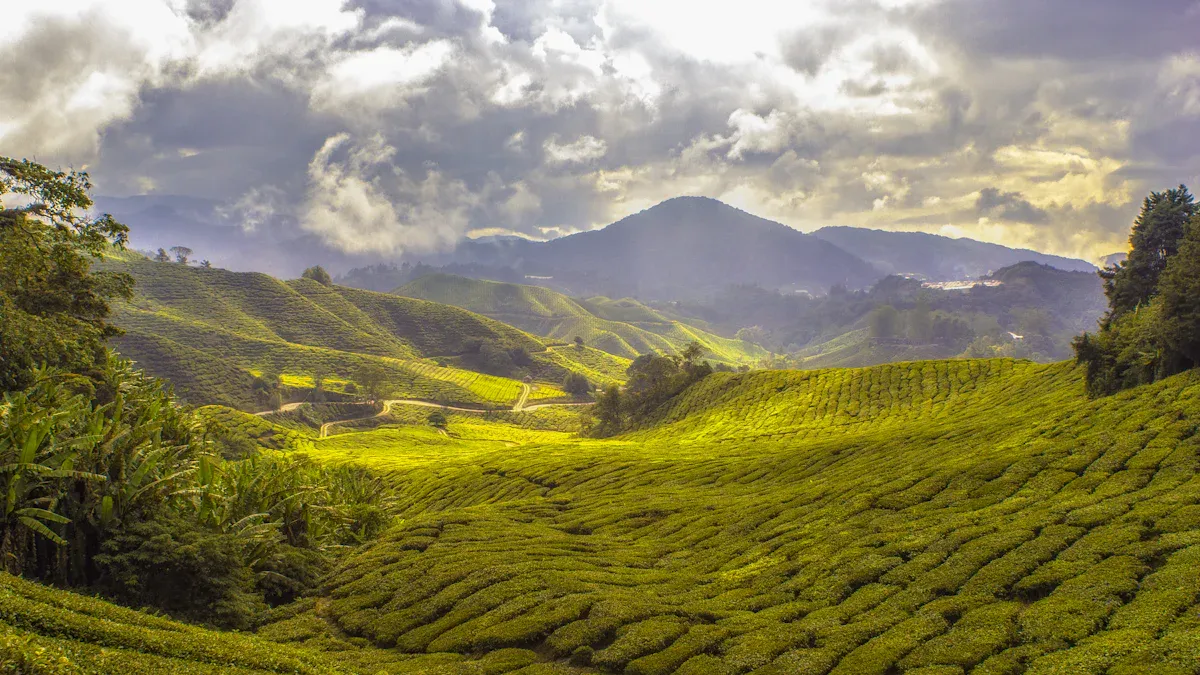
Altitude impacts coffee cultivation significantly. It directly influences the flavor and quality of the beans you enjoy. Higher elevations often lead to unique taste profiles, while lower altitudes produce different characteristics. Have you ever wondered how altitude impacts coffee taste? What flavors can you expect from coffee grown at various heights? This blog will explore these questions and reveal the fascinating relationship between altitude and coffee.
Key Takeaways
Higher altitude coffee often has complex flavors and vibrant acidity. Look for beans grown above 1,200 meters for a bright and nuanced cup.
Low altitude coffee features bolder, rounder flavors with earthy undertones. Beans grown below 900 meters provide a heavier body and smoother taste.
Medium altitude coffee strikes a balance between sweetness and acidity. Expect flavors like caramel and cocoa from beans grown between 900 and 1,200 meters.
Bean density increases with altitude, leading to better flavor profiles. Denser beans from higher elevations enhance your overall coffee experience.
When selecting coffee, check the altitude on the label. Higher elevations usually indicate richer flavors and better quality.
How Altitude Impacts Coffee Growth

Effects on Coffee Plants
Altitude significantly affects coffee plant development. As you explore different elevations, you will notice distinct physiological changes in the plants. Here are some key effects:
Coffee plants at higher elevations experience slower growth due to cooler temperatures. This slower growth allows for a longer maturation period, which can enhance flavor complexity.
In contrast, coffee plants at lower elevations grow faster because of warmer conditions. However, this rapid growth often results in less complex flavors.
Altitude Range | Growth Rate | Flavor Profile |
|---|---|---|
Higher Altitudes (1200-2000m) | Slower growth due to cooler temperatures | Complex flavors with vibrant acidity and nuanced notes |
Lower Altitudes (<900m) | Faster growth due to warmer conditions | Bolder, less complex flavors with lower acidity |
Chemical Composition Changes
Altitude also influences the chemical composition of coffee beans. As you delve into the world of coffee, you will find that various compounds change with elevation. Here are some notable changes:
Higher altitudes lead to an increase in chlorogenic acids and fatty acids. These compounds contribute to the unique flavor profiles you may encounter.
You might notice that specific sensory attributes, such as floral notes, only appear in coffee grown at higher elevations (around 1400 meters).
The ripening process slows down at higher altitudes, allowing beans to develop more complex flavors and aromatic compounds. This results in a denser and more flavorful coffee.
Altitude Level | Sugar Content | Acid Content | Flavor Profile |
|---|---|---|---|
Higher Altitude | Increased accumulation | Higher concentrations | Complex, vibrant acidity, floral notes |
Lower Altitude | Decreased accumulation | Lower concentrations | Simpler, rounder, chocolate/nutty notes |
As you can see, altitude impacts coffee in various ways. The climate at different elevations plays a crucial role in shaping the flavor and quality of the beans you enjoy.
Coffee Flavor by Altitude

Low Altitude Coffee
Coffee grown at lower elevations, typically below 900 meters, has distinct flavor characteristics. You will notice that these beans often have a heavier, rounder body. The flavors tend to be bolder but less complex compared to those from higher altitudes. Here are some typical flavor characteristics you can expect:
Flavor Characteristic | Description |
|---|---|
Acidity | Low or muted acidity |
Flavor Notes | Nuts, cocoa, toasted grains, mild caramel |
Body | Heavier, rounder body |
Undertones | Earthy, woody, or tobacco-like |
Aromatic Complexity | Lower aromatic complexity |
Bitterness | Pleasant bitterness when roasted darker |
You will find that low altitude coffee often features flavors like nuts and cocoa. The lower acidity contributes to a smoother taste, making it enjoyable for those who prefer a less tangy cup. However, the lack of complexity means you might miss out on the vibrant notes found in higher elevation coffees.
Medium Altitude Coffee
As you move up to medium altitudes, typically between 900 and 1,200 meters, the flavor profile begins to change. Coffee from this elevation achieves a harmonious balance of sweetness and acidity. You can expect a diverse range of flavors, including:
Balanced acidity
Flavor notes of caramel, brown sugar, cocoa, almond, and mild fruit
Medium body with a smooth texture
Gentle sweetness
Flavor Notes | Description |
|---|---|
Balanced Acidity | Neither sharp nor flat |
Smooth Texture | Medium body with a smooth mouthfeel |
Sweet Caramel Notes | Gentle sweetness across brew methods |
Medium altitude coffee often appeals to a wide range of coffee drinkers. The moderate growth rate at this elevation contributes to the appealing flavor spectrum. You will find that these coffees strike a balance between brightness and body, enhancing your overall flavor experience.
High Altitude Coffee
High altitude coffee, grown above 1,200 meters, is known for its vibrant acidity and intricate flavor profiles. The cooler temperatures at these elevations slow down the maturation process, allowing the beans to develop complex flavors. Here are some unique flavor profiles you might encounter:
Bright, structured acidity (citrus, berry, stone fruit)
Pronounced sweetness—often honey-like or juicy
Distinct floral or fruity aromatics
Clean, crisp finish
Lighter-to-medium body with sparkling clarity
High-altitude coffee often features flavors like citrus and berries. The slower maturation allows for fuller development of sugars and acids, resulting in a cup that is both bright and complex. You will appreciate the elegant and nuanced flavors that high elevation brings, making it a favorite among specialty coffee enthusiasts.
Quality and Altitude
Factors Influencing Quality
Altitude plays a crucial role in determining coffee quality. Higher elevations often lead to denser beans, which contribute to better flavor profiles. You will find that coffees grown at higher altitudes mature more slowly. This slower maturation results in harder, denser beans. These beans develop more complex flavor compounds, enhancing overall quality.
Here are some key factors that influence coffee quality at different altitudes:
Bean Density: Higher elevations produce denser beans compared to lowland coffees.
Defects: The proportion of defected beans decreases with elevation.
Seed Weight: Lowland coffees often have a higher seed weight than highland varieties.
Findings | Description |
|---|---|
Bean Density | Higher elevations lead to denser beans compared to lowland and midland coffees. |
Defects | The proportion of defected beans decreases with elevation. |
Seed Weight | 1000 seed weight is higher for lowland and midland coffees than for highland coffee. |
The Role of Terroir
Terroir significantly impacts coffee quality, especially in single-origin varieties. The combination of altitude, soil composition, and climate creates unique growing conditions. For instance, coffee grown at high altitudes (over 1000 m) often exhibits more aromatic and complex flavors. In contrast, lower altitudes (below 850 m) can lead to less desirable flavors.
While the saying “the higher the elevation, the sweeter and better quality of fruit” applies to wine, temperature is more critical for coffee. Cooler climates enhance acidity and affect fruit maturation. This leads to a higher concentration of sugars and more complex flavors.
You should also consider that the impact of terroir includes:
Soil composition, which provides essential nutrients affecting coffee plant health.
Climate factors, such as temperature and rainfall, which affect sugar development in beans, enhancing sweetness and body.
Selecting Coffee Based on Altitude
Understanding Coffee Labels
When you shop for specialty coffee, pay attention to the labels. Many specialty coffee labels indicate the altitude at which the coffee is grown. You might see phrases like “Grown at 1,800 meters above sea level.” This information is crucial because it can influence the flavor profile of the coffee. Higher elevations, typically above 1,000 meters, often lead to more vibrant flavors.
Here are some key points to consider when reading coffee labels:
Altitude Information: Look for specific elevation details. Higher altitudes usually mean better quality and more complex flavors.
Flavor Indicators: Labels may describe the flavor characteristics associated with the altitude. For example, high-altitude coffees often have floral, fruity, and spicy notes.
Quality Insights: The elevation can greatly affect the quality of the coffee beans. Higher altitudes slow down the maturation of coffee cherries, resulting in richer flavors.
Tasting Notes to Look For
Understanding the flavor profiles associated with different altitudes can enhance your coffee experience. Here’s a quick guide to what you might expect based on elevation:
Altitude Range | Flavor Characteristics |
|---|---|
Low Altitude (0–900m) | Low acidity, notes of nuts, cocoa, toasted grains, heavier body, earthy undertones, lower aromatic complexity |
Medium Altitude (900–1400m) | Balanced acidity, notes of caramel, brown sugar, cocoa, medium body, gentle sweetness |
High Altitude (1400–1800m) | Bright acidity, pronounced sweetness, distinct floral or fruity notes, clean finish, lighter body |
When selecting coffee, consider your taste preferences. If you enjoy vibrant and lively flavors, opt for high-altitude coffee. If you prefer rich, chocolatey notes, low-altitude coffee may be more to your liking. By understanding these tasting notes, you can make informed choices that align with your flavor preferences.
Altitude plays a vital role in shaping the flavor and quality of coffee. Higher elevations lead to denser beans with complex flavors, while lower altitudes offer a fuller-bodied experience. As you explore different coffee elevations, you will discover unique taste profiles.
High-altitude coffee often features:
Brighter acidity
Nuanced flavors
Natural sweetness
Low-altitude coffee provides:
Bolder, rounder body
Earthy undertones
By understanding these differences, you can appreciate the nuances in taste and enjoy a richer coffee experience. So, venture out and try coffees from various altitudes to find your perfect cup!
FAQ
How does altitude affect coffee bean density?
Altitude increases coffee bean density. Higher elevations produce denser beans due to slower maturation. This density contributes to better flavor profiles and overall quality.
What flavor notes can I expect from high-altitude coffee?
High-altitude coffee often features bright acidity and complex flavors. You may notice notes of citrus, berries, and floral aromas, making it a favorite among coffee enthusiasts.
Is all coffee grown at high altitudes better?
Not necessarily. While higher altitude often leads to better flavor and bean density, other factors like soil quality and climate also play significant roles in coffee quality.
How can I identify coffee from different regions?
Look for labels that specify the region and altitude. Specialty coffee often includes this information, helping you choose based on your flavor preferences.
Why is bean density important in coffee?
Bean density affects flavor and quality. Denser beans typically have more complex flavors and better acidity, enhancing your overall coffee experience.