

Coffee processing methods play a crucial role in developing the flavors and aromas you experience in your cup. Each method can dramatically transform the taste of coffee, leading to unique profiles that reflect the beans’ origins. For instance, the natural process enhances sweetness through fruit sugars, while the washed method offers a cleaner flavor by removing pulp. Understanding these processing methods helps you appreciate the complexity of coffee and choose the perfect brew for your palate.
Key Takeaways
Washed processing enhances coffee clarity and brightness, resulting in vibrant acidity and floral aromas.
Natural processing boosts sweetness and complexity, leading to rich, fruity flavors that can vary widely.
Honey processing balances sweetness and clarity, offering a unique flavor profile that combines elements of both washed and natural methods.
Understanding these processing methods helps you appreciate the diverse flavors in coffee and choose the best brew for your taste.
Experimenting with different processing methods can enhance your coffee-drinking experience and help you discover your favorite flavors.
Washed Processing Methods
Process
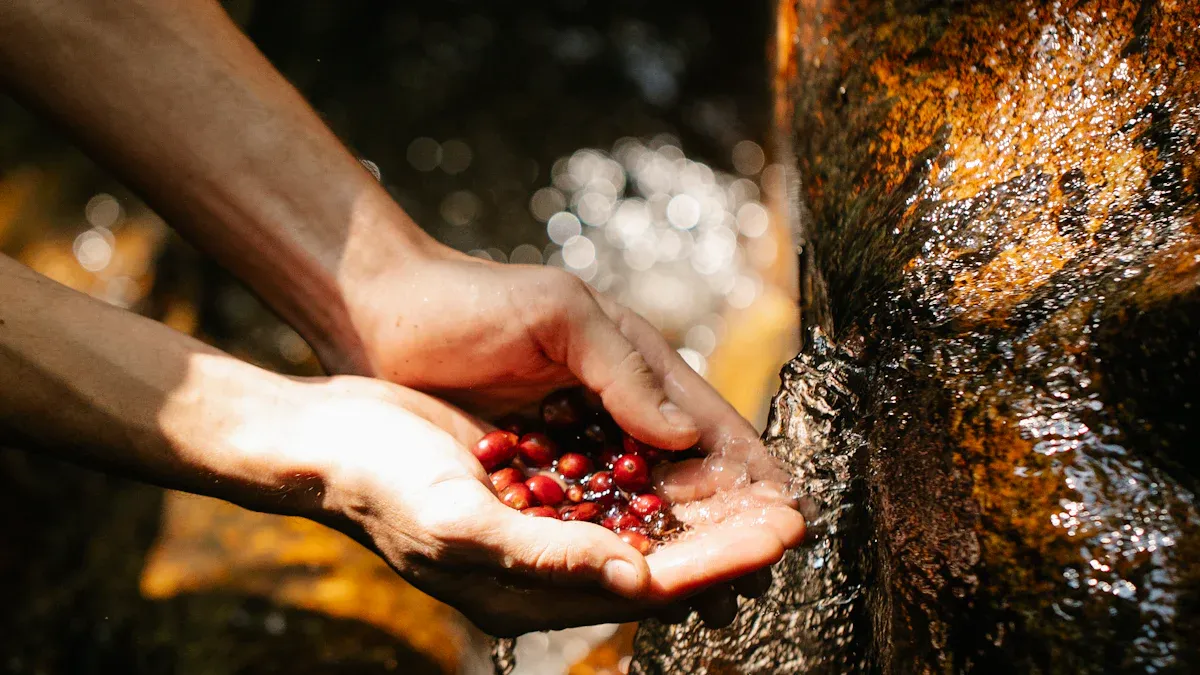
The washed processing method, also known as wet processing, significantly impacts the flavor of coffee. This method involves several key steps:
Initial Preparation: Remove the outer skin of the coffee cherry using a depulper machine.
Fermentation: Place the beans in water tanks for fermentation, lasting 12 to 72 hours.
Washing: Thoroughly wash the beans in clean water to remove remaining mucilage.
Drying: Spread the washed beans to dry until they reach a moisture content of 10-12%.
Hulling: Remove the parchment layer from the dried beans to reveal green coffee beans.
Sorting and Packaging: Sort the beans by size, density, and color, removing defective beans before packaging.
This meticulous process enhances the clarity and brightness of the coffee. By removing the outer layers of the cherries, you allow the true flavors of the beans to shine through.
Flavor Profile
Washed coffees are known for their distinct flavor profiles. You can expect:
Clear, vibrant acidity with notes of citrus fruits
Floral aromas and a silky body
A long, balanced aftertaste
The fermentation process breaks down mucilage, contributing to the coffee’s clarity. As a result, washed coffees often exhibit a higher acidity and a lighter body compared to other processing methods.
Processing Method | Acidity | Body | Flavor Profile |
|---|---|---|---|
Washed | Brighter | Lighter | Clean mouthfeel, complex flavors |
Natural | Milder | Heavier | Rich, fruity, round |
Natural Coffee Processing
Process
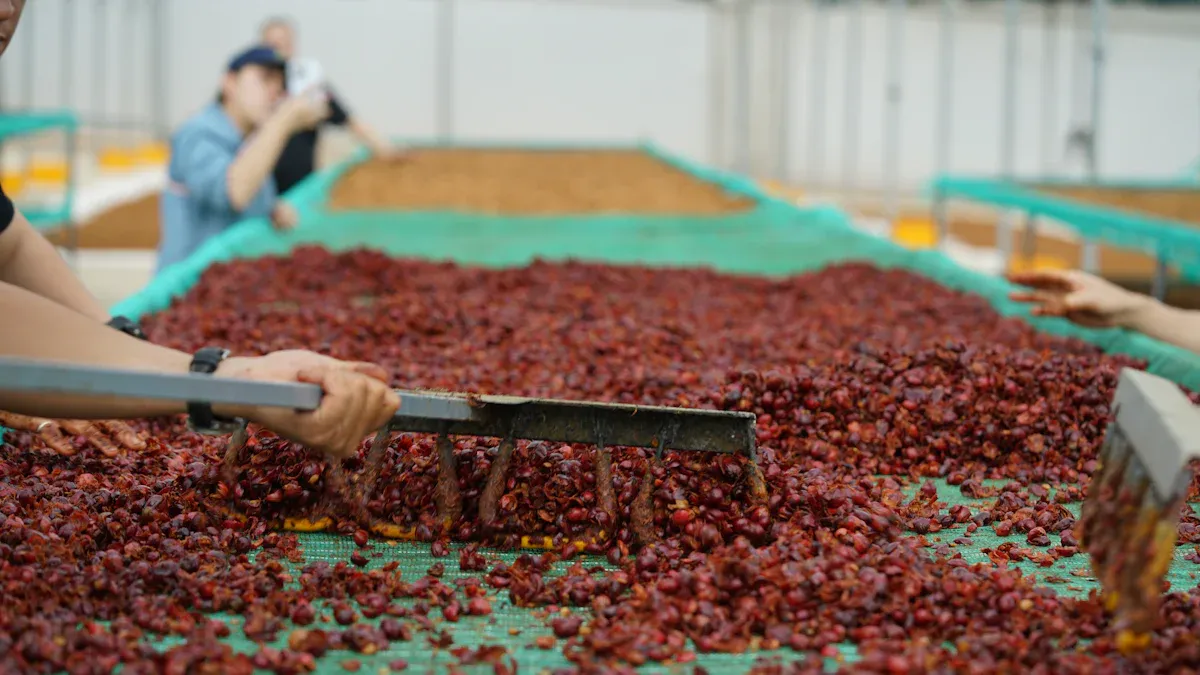
The natural processing method, often called dry processing, involves drying the whole coffee cherries without removing any part before drying. Here are the main steps:
Drying: Spread the cherries over a large area, allowing them to dry in the sun. Raking helps ensure even drying.
Monitoring: Regularly move the cherries to prevent spoilage and bruising during the drying process.
Duration: This drying typically lasts between three to six weeks.
Hulling: After drying, hull the cherries to separate the seeds from the dried fruit.
This method allows sugars and organic acids to migrate into the beans, enhancing sweetness and complexity. The fermentation that occurs during drying contributes to the coffee’s unique flavor profile.
Flavor Profile
Naturally processed coffees often exhibit bright, fruity flavors. You can expect:
Sweetness: The natural process enhances the coffee’s sweetness.
Clean Profiles: Many naturally processed coffees taste cleaner than expected.
Variability: While some coffees shine with rich fruit flavors, others may show inconsistencies. Factors like initial moisture content and drying practices can lead to significant flavor variations.
The potential for flavor defects exists due to over-fermentation or inconsistent drying. This variability can affect the overall experience of the coffee.
Flavor Characteristic | Description |
|---|---|
Sweetness | Enhanced due to sugar migration |
Cleanliness | Often cleaner than expected |
Complexity | Can vary widely among batches |
Understanding the natural processing method helps you appreciate the diverse flavors in your cup. Each sip tells a story of the cherries’ journey from tree to brew.
Honey Processing Methods
Process
Honey processing, a unique method in coffee production, retains some mucilage on the beans during drying. This process involves several steps:
Selective Harvesting: Hand-picking only ripe cherries ensures quality.
Depulping: Removing the skin while controlling mucilage levels is crucial.
Drying: Spread the beans on raised beds, turning them regularly for even drying.
Moisture Monitoring: Daily checks on moisture content help prevent spoilage.
Resting: Allowing beans to stabilize in a climate-controlled environment enhances flavor.
Roasting & Shipping: Roasting in small batches preserves peak flavor.
Your Cup: Brewing with care showcases the coffee’s journey from cherry to cup.
Variations
Honey processing has different variations based on the amount of mucilage left on the beans. Here are the main types:
Yellow Honey: Minimal mucilage (10-20%), resulting in cleaner, tea-like flavors with subtle sweetness.
Red Honey: About 50% mucilage remains, leading to a fuller body and richer sweetness.
Black Honey: Most mucilage stays (50-100%), producing intense sweetness and complex flavors.
These variations significantly influence the final flavor profile of the coffee.
Flavor Profile
Honey-processed coffees balance sweetness and clarity. The retained mucilage contributes to a distinct honey-like flavor, enhancing the coffee’s natural sweetness. You can expect:
Rounded Sweetness: Honey processing allows for a fuller mouthfeel compared to washed coffees.
Balanced Acidity: The flavors often lean toward caramelized sugars and ripe fruit.
Complexity: Depending on the honey type, you may experience rich, syrupy profiles or cleaner, brighter notes.
This method sits between washed and natural processing, offering a unique tasting experience that highlights the best of both worlds.
In summary, each processing method—washed, natural, and honey—uniquely influences the flavor of coffee. Washed processing delivers clarity and brightness, while natural processing enhances sweetness and complexity. Honey processing strikes a balance between these two, offering a rich and layered experience.
Understanding these processing methods allows you to appreciate the diversity in your cup. You can explore various flavors and find the perfect coffee beans that suit your taste. Each sip connects you to the journey of the coffee from farm to cup.
Remember, the more you know about coffee processing, the better your coffee-drinking experience will be!
FAQ
What is the difference between washed and natural coffee processing?
Washed processing removes the cherry’s outer layers, resulting in a cleaner taste. Natural processing dries the whole cherry, enhancing sweetness and fruitiness. Each method creates distinct flavor profiles in your coffee.
How does honey processing affect coffee flavor?
Honey processing retains some mucilage during drying. This method balances sweetness and clarity, producing rich, syrupy flavors. You can enjoy a unique tasting experience that combines elements of both washed and natural coffees.
Why is coffee processing important?
Coffee processing significantly impacts flavor development. The method you choose can enhance or mute specific taste characteristics. Understanding these processes helps you select coffee that matches your preferences.
Can I taste the difference between processing methods?
Yes! Each processing method creates unique flavor profiles. Washed coffees tend to be bright and clean, while natural coffees are fruity and sweet. Honey-processed coffees offer a balance of both.
How can I choose the right coffee for my taste?
Explore different processing methods to find what you enjoy. Try washed for clarity, natural for sweetness, and honey for a mix. Tasting various coffees will help you discover your favorite flavors.
