

Pour-over coffee has become a favorite among coffee enthusiasts. Many people love the control it offers over the brewing process. With the right pour-over gear, you can unlock amazing flavors in every cup. Did you know that 73% of coffee drinkers use a pour-over dripper sitting right on their mug? This method allows for precise extraction, leading to a richer taste. Choosing the right kettle, filters, and brewer can make all the difference in your coffee experience. So, let’s dive in and explore how to elevate your pour-over game!
Key Takeaways
Invest in a gooseneck kettle for precise pouring. This control enhances extraction and improves coffee flavor.
Choose your filters wisely. Paper filters create a clean cup, while metal filters allow oils for a fuller body.
Experiment with different pour-over brewers. Each type offers unique benefits, from manual control to automated consistency.
Rinse your filters before brewing. This simple step removes any paper taste and preheats your brewer for better extraction.
Practice your pouring technique. The way you pour affects extraction efficiency, leading to a better cup of coffee.
Kettles for Pour-Over

Types of Kettles
When it comes to pour-over coffee, the kettle you choose plays a crucial role in your brewing process. Different kettles offer unique designs and functionalities that can enhance your coffee experience. Here’s a quick look at some popular kettle types:
Kettle Type | Design Features | Functionality |
|---|---|---|
Gooseneck Kettle | Long, narrow spout resembling a goose’s neck for precision pouring. | Allows control over water flow rate and direction, essential for brewing perfect pour-over coffee. |
Hario Buono | Beehive shape, smooth stainless steel body, ergonomic handle. | Provides a gentle water stream but may lack in usability compared to other models. |
Bonavita | Designed for waterfall theory, directing water straight down into the brewer. | Ensures optimal extraction by controlling water flow effectively. |
Fellow Stagg | Features direct injection design for precise water placement. | Enhances brewing consistency and flavor balance in coffee. |
Among these, the gooseneck kettle stands out for its ability to provide precise control over your pour. This precision is vital for achieving optimal extraction, which directly impacts the flavor of your coffee.
Features to Consider
When selecting a kettle for pour-over brewing, keep these features in mind:
Precision: Gooseneck kettles are preferred for their ability to control water flow and timing. This control is crucial for optimal brewing.
Temperature Control: Electric gooseneck kettles can heat water quickly and maintain specific temperatures, enhancing brewing consistency.
Spout Design: The long, tapered spout of a gooseneck kettle allows for precise control over pouring, ensuring even extraction of coffee.
Comfortable Grip: A well-designed handle makes it easier to pour steadily, which is essential for a good brew.
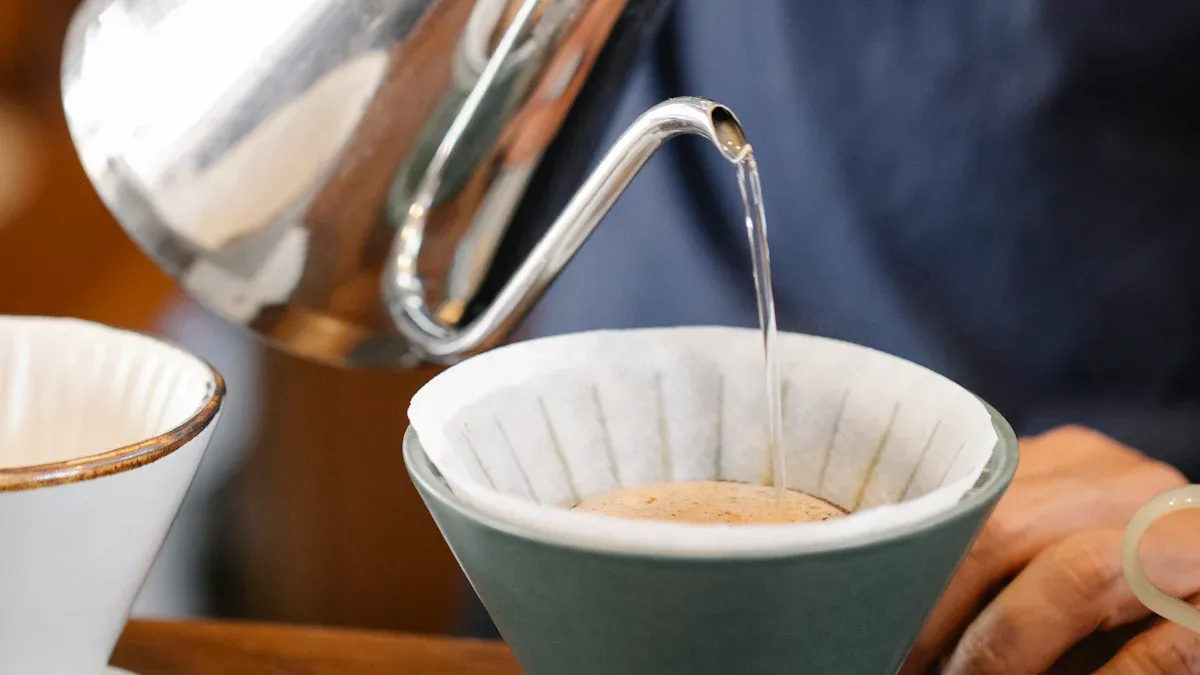
The gooseneck kettle’s narrow, curved spout allows you to direct water exactly where you need it on the coffee bed. This controlled pour helps achieve even saturation of coffee grounds, which is crucial for balanced extraction and flavor. Consistent pouring leads to repeatable results, helping you refine your brewing techniques.
Expert baristas emphasize that using a gooseneck kettle can significantly improve the quality of your brewed coffee. The meticulous control over water flow ensures even saturation of coffee grounds, enhancing the intricate notes and aromas of your coffee. So, if you’re serious about your pour-over coffee, investing in a good kettle is a must!
Brewing Tips
Remember, the way you pour can affect your brew. Higher pours with thicker water jets can lead to stronger brews with more dissolved solids. Studies show that pouring from greater heights increases granular agitation, enhancing mixing and extraction. This means that your pouring technique directly affects extraction efficiency, making precision pouring essential for a great cup of coffee.
Filters for Pour-Over Coffee
When you brew pour-over coffee, filters play a vital role in the process. They act as a barrier between your coffee grounds and the final cup, determining which elements make it through. This includes oils, particles, and dissolved solids. The type of filter you choose can significantly affect the flavor clarity, body, and overall quality of your brew.
Types of Filters
You have several options when it comes to pour-over coffee filters. Each type has its unique characteristics that can influence your brewing experience. Here’s a quick comparison of some popular filter types:
Filter Type | Thickness (μm) | Flow Rate (mL/sec) | Filtration Quality |
|---|---|---|---|
Chemex unbleached | 167 ± 23 | 9.82 ± 0.02 | Good filtration, retains coffee fines |
Chemex bleached | 210 ± 22 | 7.23 ± 0.02 | May affect brew quality due to pore size |
Hario unbleached | 203 ± 21 | 15.3 ± 0.1 | Good filtration, less clogging |
Hario tabbed | 206 ± 21 | 11.03 ± 0.02 | Balanced flow and filtration |
Hario tabless | 242 ± 22 | 6.89 ± 0.05 | Less uniform pores, more clogging |
V60 cloth | 690 ± 22 | 18.1 ± 0.3 | Produces a fuller body, less clarity |
Osaka metal | N/A | 67.8 ± 0.6 | Less clarity, more body due to large pores |
As you can see, the thickness and flow rate of each filter can impact how your coffee brews. For instance, Chemex filters are known for their ability to retain fine particles, which can lead to a cleaner cup. On the other hand, metal filters allow more oils to pass through, resulting in a fuller-bodied coffee.
Quality and Impact
The quality of your filters can greatly influence the final taste of your pour-over coffee. High-quality filters help ensure that you extract the best flavors from your coffee grounds. Here are some key points to consider:
Paper Filters: These filters produce a clean, crisp cup. They emphasize brightness and acidity but may filter out some body and flavor complexity. If you want a bright and clear brew, paper filters are a great choice.
Metal Filters: These allow natural coffee oils to pass through, delivering a fuller mouthfeel and deeper flavor. However, they can also let some sediment through, which might affect clarity.
Remember, using the wrong filter can lead to a muddy or flat brew, impacting your overall coffee experience.
Before you start brewing, it’s essential to rinse your filters. This simple step removes any paper residue or taste, preheats your brewing vessel, and primes the filter for better extraction. Rinsing creates a uniform surface for water to pass through, enhancing your brewing tips.
Research shows that the type of filter you use can significantly enhance the extraction of bioactive compounds, improving the flavor of your pour-over coffee. Filters like the PF2 promote better flow direction and stability during brewing, resulting in a higher total dissolved solids (TDS) content, which is crucial for flavor quality.
Pour-Over Brewers
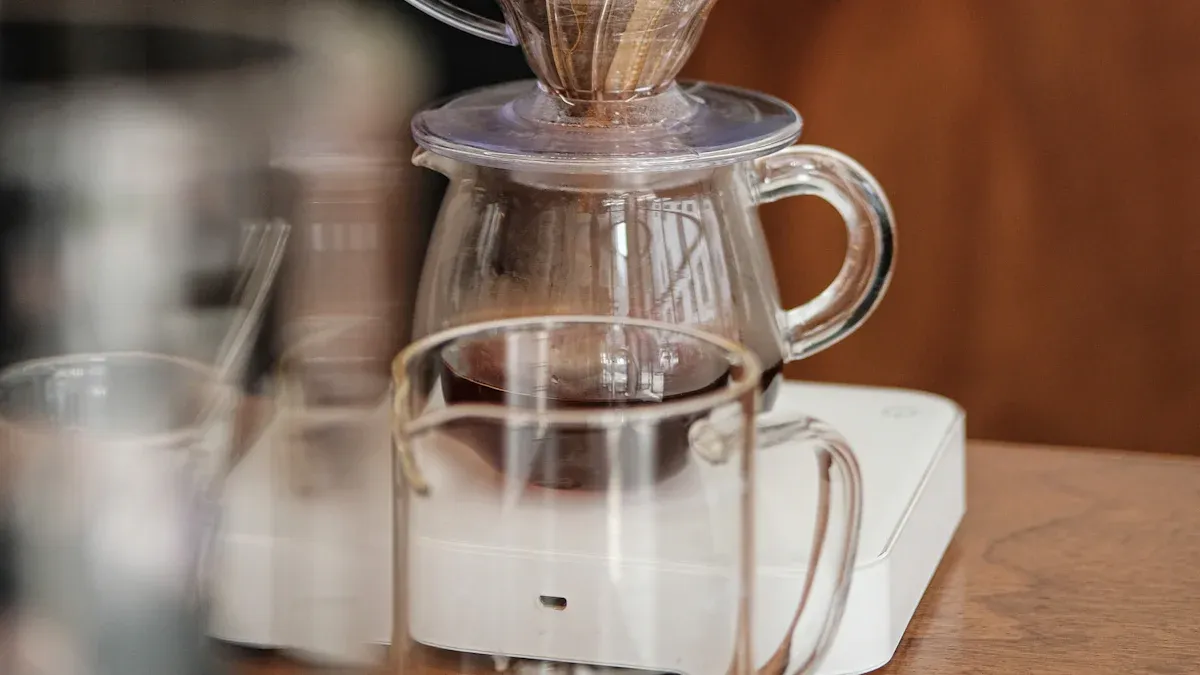
When it comes to pour-over brewing, you have two main options: manual and electric brewers. Each type offers unique experiences and benefits, so let’s break them down.
Manual vs. Electric
Feature | Manual Pour-Over | Electric Pour-Over |
|---|---|---|
Control over Variables | High; you control grind, temp, pour | Low; automated settings |
Flavor Profile | Tailored; highlights bean nuances | Consistent; uniform taste |
Ease of Use | Requires skill and practice | Simple; one-step operation |
Engagement | High; fosters exploration | Low; less interaction |
With manual brewers, you get to influence every aspect of the brewing process. You can adjust the grind size, water temperature, and pouring technique. This level of control can lead to a more flavorful cup of coffee. However, it does require practice to master the manual brew method.
On the other hand, electric pour-over brewers simplify the process. They automate many steps, making it easy for anyone to brew a consistent cup. While you might sacrifice some flavor nuances, the reliability of electric models is appealing for busy mornings.
Features and Benefits
Let’s look at some popular pour-over brewers and what makes them stand out:
Brewer | Key Features | Pros and Cons |
|---|---|---|
Hario V60 | Cone-shaped, allows control over brew time, water flow, and temperature. | Pros: Popular, rich flavor, many recipes available. Cons: Requires a gooseneck kettle. |
Kalita Wave | Flat bottom, three holes for a stable brew temperature. | Pros: Beginner-friendly. Cons: Can be challenging for some users. |
Hario Switch | Hybrid brewer combining pour-over and immersion techniques. | Pros: Versatile, easy to use. Cons: May need additional parts for larger capacity. |
Chemex | Unibody design, proprietary filters for cleanest cup. | Pros: Light-bodied coffee, aesthetically pleasing. Cons: Limited to specific filter types. |
The Hario V60 is a favorite among coffee lovers. It offers more flavor complexity and body in the cup. However, it has a steeper learning curve than the Chemex, which is more forgiving for beginners. The Chemex produces an exceptionally clean cup with zero sediment, making it a great choice for those who appreciate clarity in their coffee.
In summary, choosing the right gear is essential for perfecting your pour-over brewing experience. A good kettle, like a gooseneck model, allows for precise pouring, which is crucial for optimal extraction. Filters also play a significant role; whether you prefer paper or metal, each type impacts the flavor and clarity of your coffee. Finally, selecting the right brewer can enhance your overall experience.
Don’t hesitate to experiment with different gear! Try various kettles, filters, and brewers to discover what works best for you. Remember, the journey to the perfect cup of coffee is all about exploration and personal preference. Happy brewing! coffee cup
FAQ
What is the best kettle for pour-over coffee?
The best kettle for pour-over coffee is a gooseneck kettle. It offers precise control over water flow and direction, which is crucial for even extraction and flavor.
How do I choose the right filter?
Choose a filter based on your taste preference. Paper filters provide a clean cup, while metal filters allow oils for a fuller body. Experiment to find what you enjoy most!
Can I use regular coffee grounds for pour-over?
Yes, you can use regular coffee grounds, but a medium grind works best for pour-over. It allows for optimal extraction and flavor without clogging the filter.
How long should I brew my coffee?
Aim for a brew time of 2 to 4 minutes. This range allows for proper extraction of flavors without over-extracting, which can lead to bitterness.
Do I need to rinse my filters?
Yes! Rinsing your filters removes any paper taste and preheats your brewer. This simple step helps improve extraction and enhances the overall flavor of your coffee.