

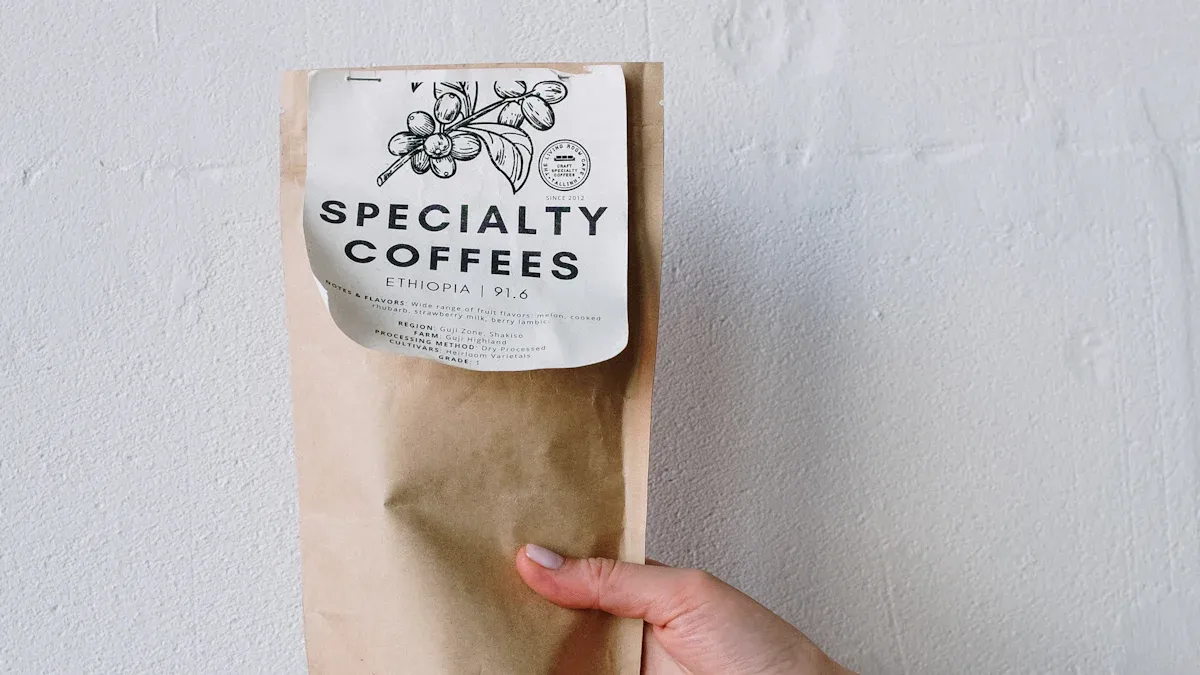
Do you ever feel confused by the different coffee bean labels? Understanding these labels is crucial for making ethical and quality choices. Recent research shows that consumers who focus on sustainability labels often value them higher in their purchasing decisions. Here are some key findings:
Key Findings | Description |
|---|---|
Sustainability Labels | Consumers who focus on sustainability labels are more likely to value them higher in their purchasing decisions. |
Visual Attention | The study measured how much time consumers spent looking at sustainability attributes, indicating their importance in decision-making. |
Willingness to Pay | Higher visual attention to sustainability attributes correlates with a greater willingness to pay for those products. |
In this blog, you will learn about organic, fair trade, and specialty coffee labels.
Key Takeaways
Understanding coffee labels helps you make informed and ethical choices when purchasing coffee.
Choosing certified organic coffee means you enjoy a product free from harmful chemicals and with higher antioxidant levels.
Fair Trade coffee ensures farmers receive fair prices, supporting their families and community projects.
Specialty coffee is defined by its exceptional quality, scoring 80 points or above, and often features unique flavors.
By selecting organic, Fair Trade, or specialty coffee, you contribute to sustainable practices and support farmers.
Organic Coffee Labels
Benefits of Certified Organic Coffee
Choosing certified organic coffee offers several advantages. First, you enjoy a product free from synthetic chemicals. Organic coffee is grown without harmful pesticides, herbicides, and fertilizers. This absence of synthetic chemicals reduces your exposure to potentially harmful substances.
Additionally, studies show that certified organic coffee contains higher levels of antioxidants. These antioxidants, such as chlorogenic acids, can improve glucose metabolism and reduce inflammation. You also contribute to better soil health when you choose organic. Organic farming practices enhance the soil’s microbiome, leading to improved nutrient processing and carbon storage.
Here are some key benefits of certified organic coffee:
Absence of Synthetic Chemicals: You consume coffee grown without harmful substances.
Higher Antioxidant Content: You gain health benefits from increased antioxidants.
Improved Soil Health: Organic practices promote healthier soil.
Enhanced Biodiversity: Organic farms support more bird species and beneficial insects.
Identifying Organic Coffee
To identify 100% certified organic coffee, look for specific labels and certifications. The USDA provides guidelines for organic certification. Coffee must meet strict criteria to earn the USDA organic seal. Here are the main requirements:
Criteria | Description |
|---|---|
Prohibited Substances | No use of prohibited substances on the land for at least three years. |
Crop Rotation | A plan must demonstrate crop rotation methods to prevent soil erosion. |
Annual Certification | Farmers must pay for certification every year, which can be challenging. |
When you see the USDA organic seal, it indicates that the coffee meets these standards. Additionally, producers must use organic methods for at least three years before they can apply for certification. An inspector visits the farm to ensure compliance with organic practices.
In major markets like the United States and Europe, specific labeling requirements exist for organic coffee. Here are some key indicators:
The certifier must be named if an organic claim is made.
The full product name must specify “Organic” (e.g., “Organic Ethiopian coffee”).
The common name and list of ingredients must be included.
The name and principal place of business must be displayed.
Net quantity and nutrition labeling are required.
The certifier control number must appear on all retail labels.
By understanding these labels and certifications, you can make informed choices about the coffee bean labels you choose.
Fair Trade Certifications
Fair Trade Coffee Explained
Fair Trade coffee focuses on creating a more equitable trading system for farmers. The Fair Trade certification process ensures that producers receive fair prices for their coffee. This process involves several steps:
Coffee producers must adhere to fair labor and environmental standards.
They receive fair prices, which helps them provide for their families.
The Fairtrade Premium is an additional sum that supports community projects.
By participating in Fair Trade, farmers gain access to better market opportunities. They can invest in their communities and improve their living conditions. Fair Trade coffee has seen significant growth over the past two decades. By 2016, over 1,400 Fair Trade-certified producer organizations existed globally, representing more than 1.6 million farmers and workers. Coffee remains the largest product category under Fair Trade certification, accounting for 48% of all Fair Trade farmers and 46% of total premiums paid.
How to Spot Fair Trade Coffee
When shopping for Fair Trade coffee, look for specific labels and certifications. Common logos include:
Fairtrade
Fair Trade Certified
These labels indicate that the coffee meets Fair Trade standards. To display these certifications, brands must follow certain requirements:
Requirement | Description |
|---|---|
License Contract | Brands must sign a license contract with Fairtrade International or a National Fairtrade Organization. |
Approval | Products must receive approval for the use of the FAIRTRADE Mark. |
Written Approval | Any use of the FAIRTRADE Mark requires prior written approval from Fairtrade International or the designated licensing body. |
The Fairtrade Standards include social, economic, and environmental criteria. They support the sustainable development of small producer organizations and agricultural workers in low- and middle-income countries.
Participating in Fair Trade programs provides documented social and economic benefits for coffee farmers. Certified farms generally receive better prices than non-certified farms. Fair trade certified coffee farmers receive a minimum price of $1.40 per pound. They also receive a Fairtrade Premium of $0.20 per pound, totaling $1.60 per pound. This is $0.70 per pound more than non-certified farmers when market prices fall. If the coffee is organic certified, an additional premium of $0.30 per pound applies.
By choosing Fair Trade coffee, you support a system that values ethical practices and empowers farmers.
Specialty Coffee Standards
What Makes Coffee Specialty?
Specialty coffee stands out due to its exceptional quality and unique flavors. To be classified as specialty, coffee must score 80 points or above on the Specialty Coffee Association’s 100-point scale. Here are some key points about specialty coffee:
Coffee scoring 90 to 100 is considered Outstanding.
Scores between 85 and 89.99 are classified as Excellent.
Scores from 80 to 84.99 are labeled as Very Good.
Specialty coffee must have 0 to 5 defects per 350 grams of milled beans.
The Specialty Coffee Association sets strict standards for specialty coffee at every production stage. These standards cover aspects like allowable defects in green beans, water quality, and brew strength.
Identifying Specialty Coffee
You can identify specialty coffee by looking for specific characteristics and cues. Here are some important factors to consider:
Origin of the Beans: Specialty coffee often comes from specific regions known for high-quality beans, such as those in the coffee belt around the equator.
Harvesting and Processing: Hand-harvesting ensures that only the ripest cherries are selected. This method leads to a higher quality product.
Grading Criteria: Specialty coffee is graded by certified Q Graders under standard cupping conditions. A minimum score of 80 points is required for classification as specialty.
Score Range | Classification | Description |
|---|---|---|
90-100 | Outstanding | Exceptional characteristics, very rare, perfect growing conditions, meticulous processing. |
85-89.99 | Excellent | Very high quality, complex flavors, minimal defects. |
80-84.99 | Very Good | High quality, slightly less complexity, few minor defects. |
Below 80 | Commercial Grade | Considered commercial grade, noticeable defects, flat flavor profiles. |
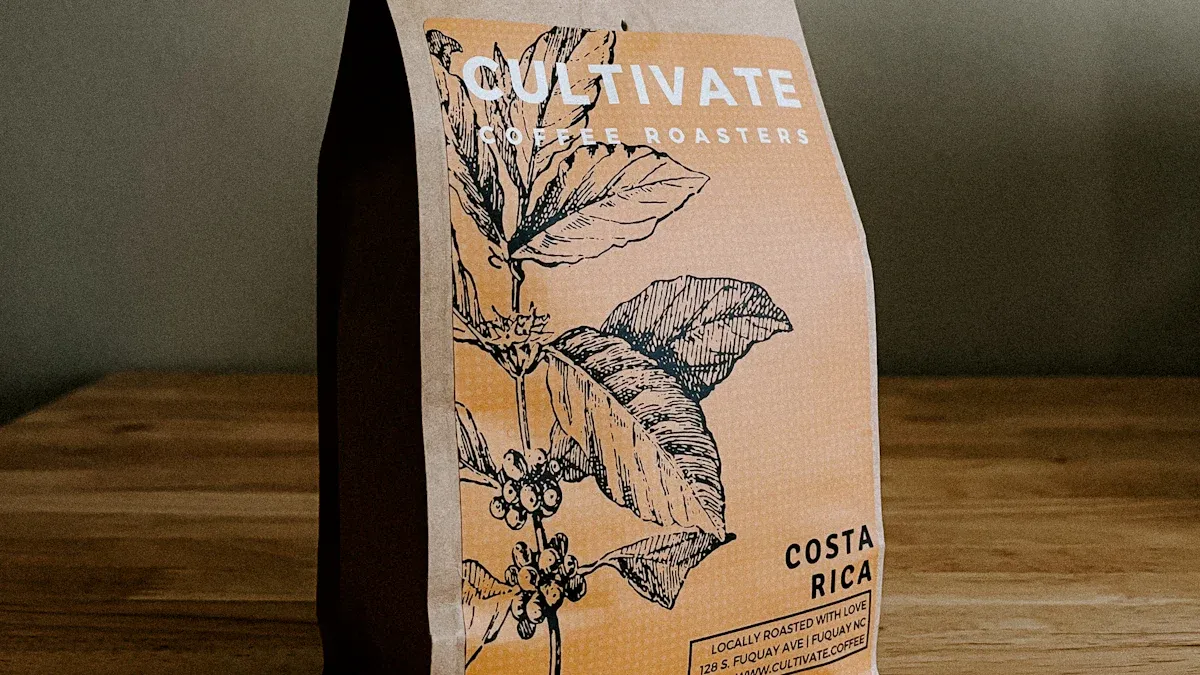
When shopping, look for packaging that highlights the coffee’s origin and quality. Specialty coffee often features unique visual designs that convey its premium nature. By understanding these factors, you can make informed choices about the specialty coffee beans you purchase.
Understanding coffee bean labels empowers you to make informed choices. Organic coffee promotes environmental health by avoiding synthetic pesticides. Fair Trade ensures farmers receive fair wages and supports community projects. Specialty coffee highlights unique flavors and quality, often sourced through direct trade relationships.
By choosing products with these labels, you contribute to ethical practices and sustainable consumption. Your decisions can lead to better quality coffee while supporting farmers and the environment.
Embrace the journey of discovering coffee that aligns with your values!
FAQ
What does “organic” mean in coffee labeling?
Organic coffee comes from beans grown without synthetic pesticides or fertilizers. It meets strict USDA guidelines for organic certification.
How can I tell if my coffee is Fair Trade?
Look for labels like “Fairtrade” or “Fair Trade Certified.” These indicate that the coffee meets Fair Trade standards for fair pricing and ethical practices.
What is specialty coffee?
Specialty coffee scores 80 points or higher on the Specialty Coffee Association’s scale. It represents high quality and unique flavors from specific regions.
Why should I choose Fair Trade coffee?
Choosing Fair Trade coffee supports farmers by ensuring they receive fair wages. It also funds community projects that improve living conditions.
Can I find organic and Fair Trade coffee together?
Yes! Many brands offer coffee that is both organic and Fair Trade certified. Look for labels that indicate both certifications for the best choice.
