
Coffee is more than just a drink; it’s a global phenomenon that brings people together. Did you know that over 2.25 billion cups of coffee are consumed daily? This shows how coffee traditions play a vital role in social interactions across cultures. Whether you’re in a bustling café or a quiet home, coffee acts as a universal language. It invites conversation and connection. From the elaborate Ethiopian coffee ceremony to Italy’s espresso rituals, each culture has unique practices that enrich our experiences. Let’s dive into the fascinating world of coffee traditions!
Key Takeaways
Coffee is a universal language that fosters connection and conversation across cultures.
The Ethiopian coffee ceremony emphasizes hospitality and community, making it a cherished social ritual.
Turkish coffee culture includes unique practices like fortune-telling with coffee grounds, enhancing social gatherings.
Swedish ‘fika’ promotes meaningful interactions and work-life balance through communal coffee breaks.
Brazilian coffee traditions, like enjoying cafezinho, highlight the importance of hospitality and celebration in social life.
Ethiopian Coffee Ceremony
Historical Significance
The Ethiopian coffee ceremony holds a special place in the hearts of many. According to legend, a goat herder named Kaldi discovered coffee when he noticed his goats became energetic after eating coffee cherries. This discovery led to the creation of a drink that helped monks stay awake during prayers. This story shows how coffee became a communal experience, symbolizing its importance in social and spiritual life in Ethiopia.
Ceremony Process
The Ethiopian coffee ceremony is a beautiful ritual that brings people together. It has evolved from a rural tradition to a cherished urban practice while keeping its core elements intact. Here’s what you can expect during this elaborate ceremony:
Preparation: The host roasts green coffee beans in a pan over an open flame. The aroma fills the air, creating excitement among guests.
Grinding: Once roasted, the beans are ground using a mortar and pestle. This step adds to the anticipation.
Brewing: The ground coffee is brewed in a special pot called a jebena. The brewing process takes time, allowing everyone to chat and enjoy each other’s company.
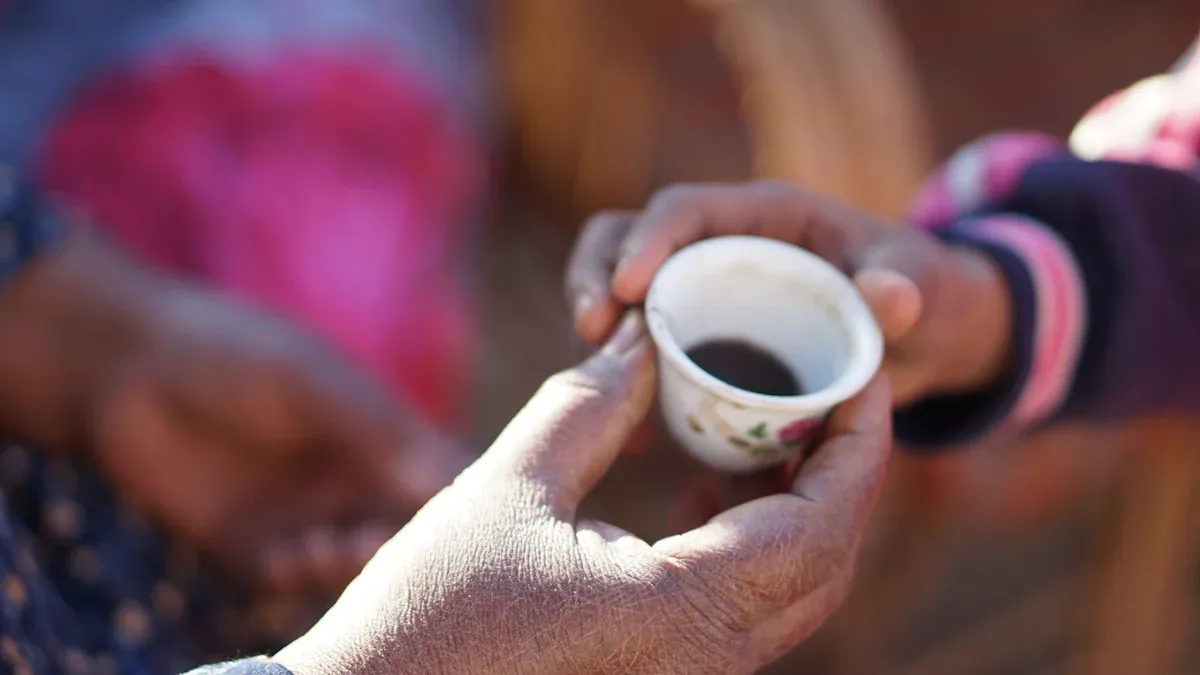
Serving: The coffee is poured into small cups, often accompanied by popcorn or other snacks. Guests take turns sipping the coffee, sharing stories, and strengthening community bonds.
This ceremony emphasizes hospitality and the social significance of coffee drinking. It serves as a platform for exchanging news and deepening connections among friends and family. The Ethiopian coffee ceremony is not just about the drink; it’s about the experience and the relationships it fosters.
Turkish Coffee and Fortune-Telling
Cultural Context
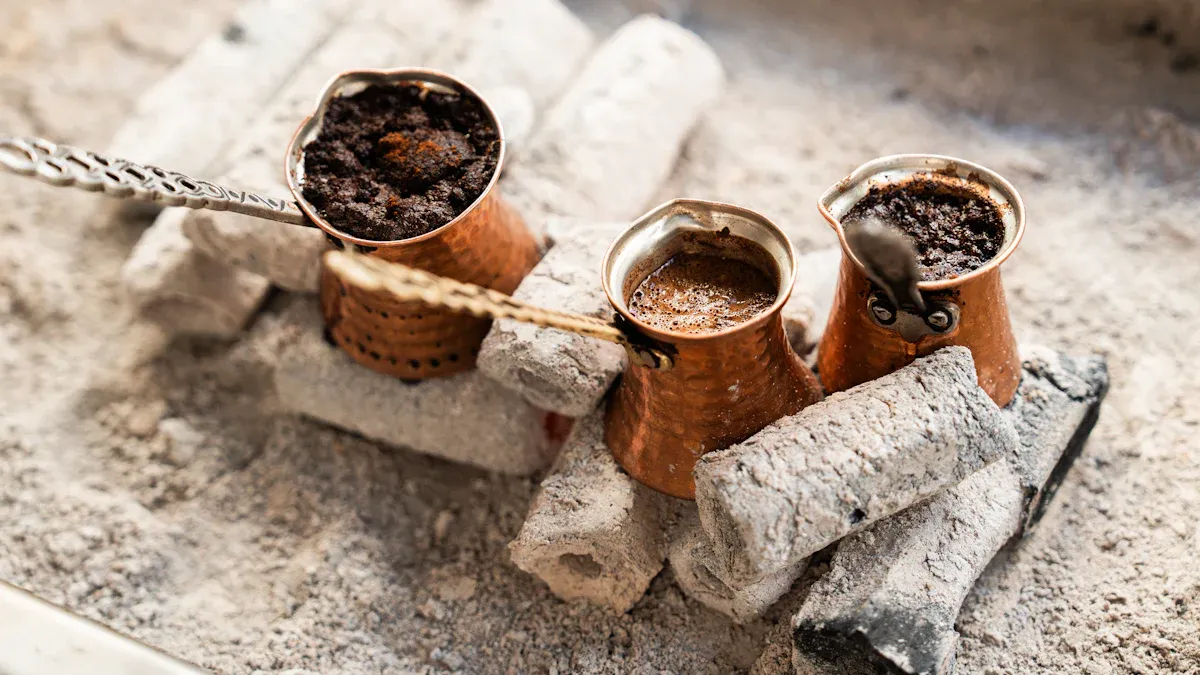
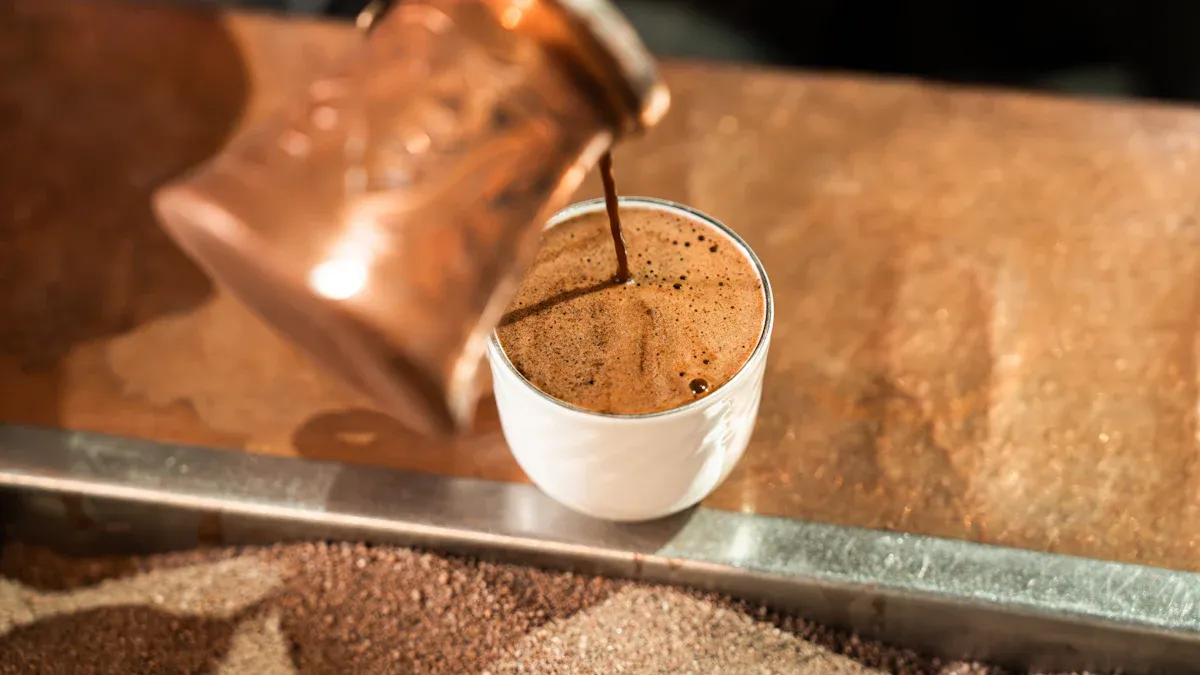
Turkish coffee is more than just a drink; it’s a vital part of Turkish coffee culture. When you sip this rich brew, you’re participating in a tradition that dates back centuries. Turkish coffee is prepared using a cezve, a small copper pot, and involves finely ground coffee brewed unfiltered. This method leaves the grounds at the bottom of your cup, creating a unique experience. In Turkish culture, coffee often appears at weddings and even during marriage proposals. For instance, a bride prepares coffee for her groom and his family, with the sweetness symbolizing her feelings. This highlights how coffee traditions are woven into social rituals and cultural practices.
Reading Coffee Grounds
After enjoying your cup of Turkish coffee, you might find yourself partaking in a fascinating ritual: fortune-telling with coffee grounds, known as “coffee fortune-telling.” This practice is not just a fun activity; it’s a cherished social event that brings friends and family together. Here’s how it works:
Finish your coffee, leaving the grounds at the bottom of the cup.
Make a wish and turn the cup upside down on its saucer.
Allow the cup to cool, then interpret the patterns formed by the grounds.
The shapes and positions of the residue tell a story, and friends often gather to share laughter and interpretations. This communal aspect makes fortune-telling a delightful part of social gatherings. In contemporary Turkey, this practice remains popular, especially among women, reflecting both cultural nostalgia and modernity. Gathering for coffee and fortune-telling strengthens bonds and keeps traditions alive, showcasing the integral role of coffee in Turkish culture.
Swedish ‘Fika’ Tradition
Concept of Fika
Fika is a cherished tradition in Sweden that goes beyond just having coffee. It serves as both a noun and a verb, meaning you can “have a fika” or “go for a coffee break.” This delightful ritual emphasizes social interaction over the drink itself. Typically, you enjoy coffee paired with sweet treats, like cinnamon buns, which are a popular choice. Fika can happen at any time of day, making it a flexible and enjoyable part of daily life. The term ‘fika’ even comes from reversing the syllables in ‘kaffi,’ the old spelling of coffee.
Social Importance
The origins of the ‘Fika’ tradition trace back to Sweden’s historical relationship with coffee. In the late 17th century, coffee was a luxury item, and attempts to ban it only increased its popularity. By the 19th century, coffee became accessible to everyone, leading to social gatherings centered around this beloved beverage.
Fika plays a crucial role in Swedish daily life. It fosters social connections and promotes a healthy work-life balance through communal coffee breaks. Here’s how fika contributes to social bonding and workplace culture:
Fika fosters meaningful interactions, essential for emotional resilience and stress relief.
It encourages mindfulness, helping you slow down and reduce anxiety.
Integrating fika into workplace culture leads to higher satisfaction and enhances creativity.
By sharing personal stories during fika, you deepen understanding among team members and build a positive workplace culture. Regular fika breaks boost morale, making conversations enjoyable and enhancing the overall mood of the team. In Sweden, coffee traditions like fika highlight the importance of hospitality and connection in everyday life.
Japanese Pour-Over Techniques
Brewing Techniques
Japanese pour-over coffee is all about precision and artistry. You’ll find that the brewing process requires careful attention to detail. Here are some key techniques that set it apart:
Technique | Description |
|---|---|
Water Temperature | Heated between 195°F to 205°F (90°C to 96°C) to avoid over or under-extraction. |
Pouring Technique | Slow, controlled circular motions in three stages ensure even saturation and extraction. |
Grind Size | A medium-fine grind, similar to sea salt, controls water flow and extraction rate. |
Coffee-to-Water Ratio | Commonly 1:15, ensuring accurate proportions for consistent flavor. |
These techniques highlight the meticulous nature of Japanese coffee culture. You’ll notice that each step in the process contributes to the overall experience, making it a true art form.
Flavor Enhancement
The pour-over method enhances the flavor profile of coffee in ways you might not expect. This technique reveals floral undertones, especially during spring, aligning with the freshness of newly bloomed flowers. The careful brewing process mirrors nature’s awakening, which can elevate the overall flavor.
Here are some reasons why Japanese pour-over techniques stand out:
The syphon brewing method showcases the ability to extract various flavors from coffee beans, emphasizing the skill involved in the roasting and preparation process.
The meticulous nature of the brewing process requires careful measurement of water and coffee, demonstrating the precision that is characteristic of Japanese coffee culture.
The time-consuming nature of the syphon method contrasts with other brewing techniques, highlighting the patience and dedication required in Japanese coffee preparation.
By embracing these techniques, you can truly appreciate the depth and complexity of flavors in your cup. Whether you’re exploring coffee traditions or planning your next coffee travel adventure, understanding these methods will enrich your experience.
Brazilian Coffee Culture
Social Gatherings
Brazilian coffee culture is vibrant and lively, deeply rooted in social interactions. One of the key elements of this culture is the cafezinho, a small, strong coffee that plays a significant role in hospitality rituals. You’ll often find that coffee is enjoyed at home rather than in cafes, which reflects a unique cultural approach. The affordability of cafezinho makes it a staple in Brazilian households, reinforcing its importance in social gatherings. Here are some ways coffee enhances social life in Brazil:
Coffee serves as a welcoming gesture for guests.
It creates opportunities for conversation and connection.
Sharing coffee often leads to laughter and storytelling.
Coffee and Samba
Coffee and samba share a special bond in Brazilian culture. Samba, a lively music genre, originated from a blend of European and African influences, showcasing the country’s rich cultural heritage. As the leading producer of coffee, Brazil has a long-standing relationship with this beloved beverage, dating back to the era of slavery. Here’s how coffee and samba intertwine:
Samba celebrations often feature coffee as a central element, bringing people together.
The rhythm of samba complements the social atmosphere created by coffee gatherings.
Many samba events serve coffee to keep the energy high and the conversations flowing.
In Brazil, coffee traditions are not just about the drink; they embody the spirit of community and celebration. Whether you’re enjoying a cafezinho at home or dancing to samba rhythms, coffee is always there, enhancing the experience and connecting people.
Coffee traditions around the world showcase the beauty of community and connection. From the lively espresso bars in Italy to the warm Ethiopian coffee ceremonies, each practice tells a unique story. You can see how coffee serves as a bridge between cultures, fostering friendships and shared experiences.
Consider exploring these traditions in your daily life. Research the significance behind your favorite coffee rituals. Try brewing methods from different cultures or invite friends over for a coffee tasting. By doing so, you not only enjoy a delicious drink but also appreciate the rich cultural stories that come with it. So, grab your favorite cup and celebrate the global love for coffee!
FAQ
What is the Ethiopian coffee ceremony?
The Ethiopian coffee ceremony is a traditional ritual where coffee is roasted, ground, and brewed in front of guests. It emphasizes hospitality and community, allowing people to connect over coffee and share stories.
How is Turkish coffee different from regular coffee?
Turkish coffee is finely ground and brewed unfiltered in a cezve. It has a thicker consistency and a stronger flavor compared to regular coffee. The grounds settle at the bottom, creating a unique drinking experience.
What does ‘fika’ mean in Sweden?
‘Fika’ is a Swedish term for a coffee break that involves enjoying coffee with pastries. It emphasizes social interaction and relaxation, making it an essential part of Swedish culture and daily life.
How do you brew Japanese pour-over coffee?
To brew Japanese pour-over coffee, use a medium-fine grind, controlled water temperature, and a precise coffee-to-water ratio. Pour water in slow, circular motions to ensure even extraction and enhance flavor.
Why is coffee important in Brazilian culture?
Coffee is a staple in Brazilian culture, symbolizing hospitality and social gatherings. The cafezinho is often served to guests, fostering conversation and connection. Coffee also plays a role in lively samba celebrations, enhancing the festive atmosphere.