

Vacuum Coffee Makers suit you when brewing coffee is part of the ritual, not a task to rush between meetings. A siphon brewer uses vapor pressure to move heated water into an upper chamber, then draws brewed coffee back through a filter as the heat drops. That visible process gives you control over dose, water volume, and brew timing, though it also asks for more countertop attention than a button-operated machine.
The Shortlist for Your Coffee Bar

Hario 3-Cup Coffee Siphon (Moca)
Diguo Belgian Balance Syphon Coffee Maker (Polished Rose Gold)

YUCHENGTECH Siphon Coffee Maker 5 Cups (600ml)
YUCHENGTECH Syphon Coffee Maker 3 Cups (360ml)

Yama Glass 5 Cup Tabletop Siphon 20-Ounce
More Details On Our Top Picks
For a quiet morning coffee routine, Hario’s 240 ml Moca format keeps the siphon process focused rather than oversized. That capacity suits a personal serving or two smaller pours, so you avoid heating a large vessel for a single cup.
The appeal is control. You can keep your coffee dose and extraction timing consistent across brews, which matters when you are learning how grind size changes the cup. The honest read is that the modest capacity limits its usefulness during a crowded brunch.
Strong Points
- 240 ml capacity suits a measured personal brewing routine.
- The three-cup format takes up less storage space than larger tabletop siphons.
- Manual brewing gives you direct control over coffee dose and timing.
Things To Consider
- You need to clean the upper chamber and filter after each brew.
- The smaller volume is less practical for serving several guests.
Who It Suits Best
You benefit most from the Hario 3-Cup Coffee Siphon (Moca) when your daily routine centers on one carefully measured coffee serving.
Where Another Pick Suits Better
The YUCHENGTECH Siphon Coffee Maker 5 Cups (600ml) suits you better when several people expect coffee from the same brewing session.
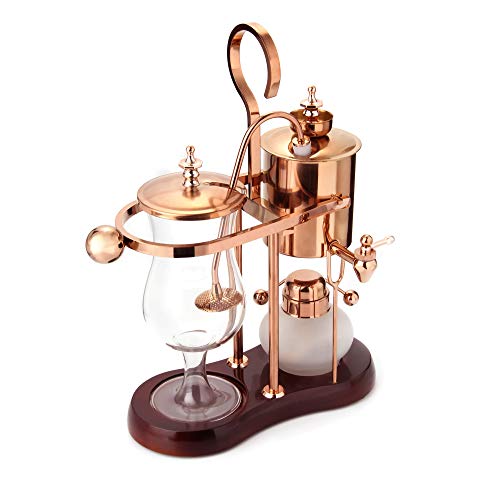
Where the Hario Moca keeps the ritual compact, this Diguo brewer makes its mechanical balance system part of the table setting. Its polished rose-gold finish, wood base, plated balance shaft, and glass chambers give you a distinctly decorative setup for hosting.
A 500 ml vessel holds about 17 ounces, a more sociable amount for after-dinner coffee. You may find the layout demands a dedicated shelf rather than a crowded everyday counter, especially with the included alcohol burner and glass cup nearby.
What We Like
- 500 ml capacity supports several smaller coffee servings.
- The balance mechanism creates an engaging table-side brewing moment.
- Wooden base helps give the brewer a defined display footprint.
- Heat-resistant glass chambers let you follow the water movement during brewing.
Worth Noting
- The multi-part structure takes longer to wipe down than the Hario Moca.
- Polished plated surfaces benefit from gentle drying to limit visible marks.
- You need room to store the burner, cup, and spoon together.
Feature Snapshot
Made For
You get the most from this Diguo brewer when entertaining matters as much as serving a multi-cup coffee round.
Consider Something Else When
The Hario 3-Cup Coffee Siphon (Moca) is a better fit for you when storage space is tight and your coffee routine stays solo.
The YUCHENGTECH 600 ml format moves beyond the Hario Moca’s personal-serving scale without adopting Diguo’s display-oriented balance frame. Its upper and lower vessels use heat-resistant borosilicate glass, a glass type made to tolerate repeated temperature changes during brewing.
Five cups suit a household breakfast or a slow weekend visit. For most kitchens, that capacity is the useful middle ground, though the tall two-chamber shape still needs protected cupboard space between uses.
Highlights
- 600 ml volume supports a larger shared coffee round.
- Borosilicate glass is suited to the heating and cooling cycle of siphon brewing.
- Clear chambers make it easier for you to monitor water transfer.
- The tabletop arrangement keeps the brewing process visible and hands-on.
- A five-cup size reduces the need to run separate brews for a small group.
Trade Offs
- You need to dry the outside of the lower vessel before heating.
- The upper chamber needs a firm insertion for a proper seal.
Technical Sheet
Right Fit For
You benefit most from the YUCHENGTECH Siphon Coffee Maker 5 Cups (600ml) when you regularly brew coffee for two to four people.
Not Your Match When
The YUCHENGTECH Syphon Coffee Maker 3 Cups (360ml) suits you better when your shelf space and serving needs stay modest.
At 360 ml, this smaller YUCHENGTECH model is aimed squarely at your two-person coffee routine. You retain the same borosilicate-glass upper and lower chambers as the 600 ml version, while avoiding extra volume that may sit unused on an ordinary weekday.
That smaller batch can make dose adjustments less wasteful while you refine your grind. Nothing flashy, but the scale makes sense for an apartment counter; you still need careful handling during assembly and storage because both chambers are glass.
Upsides
- 360 ml capacity fits one large serving or two smaller cups.
- Borosilicate glass supports the temperature swing involved in siphon brewing.
Minor Gripes
- You need to keep the lower vessel exterior dry before heating.
- A firm upper-chamber seal is necessary before you begin brewing.
- Glass chambers need a protected cabinet position rather than loose stacking.
Best Suited To
You get the most value from the YUCHENGTECH Syphon Coffee Maker 3 Cups (360ml) when you brew small batches in a compact kitchen.
Look Elsewhere When
The Yama Glass 5 Cup Tabletop Siphon 20-Ounce is a better fit for you when a larger tabletop batch and included brewing accessories matter more.
Yama Glass takes the familiar tabletop siphon route with a clear 20-ounce, five-cup brewer and an included alcohol burner. Compared with the Diguo balance design, the visual focus stays on the two glass chambers and the brewing movement itself.
You also receive a cloth filter, filter assembly, measuring spoon, and lid-stand, which helps you begin with the core brewing pieces together. The practical trade-off is cloth-filter upkeep: you need to rinse it promptly and store it carefully between brews to avoid stale coffee residue.
Standout Traits
- 20-ounce capacity supports a shared coffee service.
- The alcohol burner is included for tabletop heating.
- Included cloth filter and assembly reduce the need to source core brewing parts separately.
- The measuring spoon helps you keep your starting dose consistent.
Room For Improvement
- Cloth filters require regular rinsing and careful storage.
- The full tabletop setup occupies more space than the 360 ml YUCHENGTECH model.
- Glass components need deliberate handling during washing.
Feature Rundown
Who Will Love This
You benefit most from the Yama Glass 5 Cup Tabletop Siphon 20-Ounce when you want a traditional shared-batch setup with core accessories included.
A Better Fit Elsewhere
The Diguo Belgian Balance Syphon Coffee Maker (Polished Rose Gold) suits you better when your coffee station also serves as a decorative focal point for guests.
What Matters Before Choosing Vacuum Coffee Makers
Batch Size and Serving Habits
Capacity shapes your daily experience more than appearance. A 240 ml or 360 ml brewer fits your personal coffee ritual, while 500 ml to 600 ml models make more sense for two to four servings. Brewing a large siphon for one cup wastes coffee and leaves more glassware to wash.
Heat Source and Counter Setup
Tabletop models with alcohol burners need stable counter room and sensible storage for their separate pieces. A balance brewer adds visual character, though its base, shaft, and vessels take more space than a conventional two-chamber layout. Keep your preferred brewing area clear before committing to a larger format.
Filter Care and Brew Consistency
Cloth filters trap fine coffee particles and can produce a clear cup, but they require rinsing after every use. Store a cleaned filter carefully and replace it as wear becomes apparent. Your grind setting, dose, and heating pace still matter more than decorative finishes.
Glass Handling
Borosilicate glass is built for the brewing temperature cycle, yet it remains glass. Avoid stacking chambers loosely in a crowded cabinet, and let parts cool before washing. A compact model is often easier for you to store safely in a small kitchen.
A Few Practical Notes Before Checkout
Common Shopping Slip Ups
Avoid choosing solely by stated cup count, because cup labels often mean smaller servings. Match milliliters or ounces to the amount you actually pour into your mug.
Where The Extra Money Goes
Higher-tier setups often add decorative metalwork, wood bases, or more included accessories. Spending up makes sense when you want a permanent coffee-bar display or need a complete tabletop arrangement.
Frequently Asked Questions
How does a vacuum coffee maker brew coffee?
Heated water rises from the lower chamber into an upper chamber holding coffee grounds. Removing heat draws the brewed coffee back through a filter.
What coffee grind works with a siphon brewer?
A medium to medium-fine grind is a sensible starting point for most siphon brewers. Adjust gradually when your coffee tastes thin or overly sharp.
Are cloth filters difficult to maintain?
Cloth filters need rinsing soon after brewing to remove coffee residue. You should keep them clean and replace them after noticeable wear.
Can you make one cup in a five-cup siphon?
You can brew smaller amounts, though the brewer works most predictably near its intended capacity. A three-cup model is usually more practical for your solo routine.
Why choose borosilicate glass chambers?
Borosilicate glass is made to handle temperature changes involved in hot brewing. Its clear construction also lets you observe the water transfer and drawdown.
Closing Remarks
Your right siphon brewer depends on batch size, storage room, and how much you enjoy the manual process. Choose the Hario Moca or smaller YUCHENGTECH model for compact routines, then move toward Yama, Diguo, or the 600 ml YUCHENGTECH for shared coffee. Give the glassware a protected home, keep filters clean, and the ritual stays enjoyable.
