

Industrial coffee machines aren’t just bigger brewers, they’re workflow tools. Offices, cafés, and catering crews rely on steady, hands-off brewing when a single pot won’t cut it. The right machine keeps lines moving and cups consistent, the wrong one turns a morning rush into a bottleneck. This roundup covers nine options that handle volume, heat retention, and real-world cleanup.
Quick Look At Our Top Picks
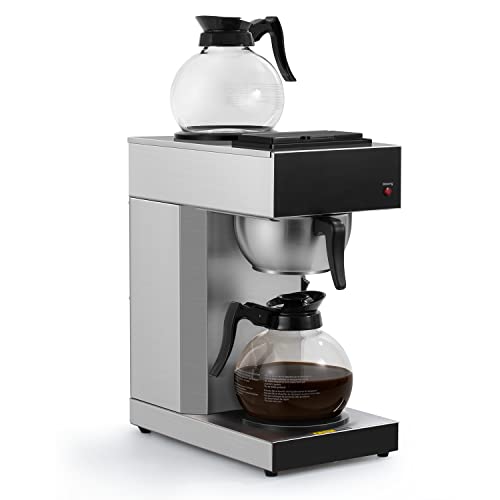
SYBO 12-Cup Commercial Pour Over Coffee Maker SF-CB-2GA

BUNN 04275.0031 VPS 12-Cup Pourover Brewer

Homecraft 100-Cup Coffee Urn

BUNN VP17-3 12-Cup Low Profile Brewer

Keurig K-2500 Single Serve Brewer
Elite Gourmet CCM040X 40 Cup Urn

SYBO 6L Commercial Coffee Maker


VEVOR 100 Cup Commercial Urn
Small offices that need more than a countertop brewer but less than a 40-cup urn often land in a sizing gap. The SYBO SF-CB-2GA fills that spot with a 12-cup glass-carafe design and a stainless-steel body built for daily use.
Two carafes come included, which helps when one is mid-brew and someone else needs a refill. The reusable brew basket cuts ongoing filter costs, and the spray head aims water evenly across grounds for consistent extraction. ETL certification covers commercial electrical safety, a useful checkbox when a workplace inspector asks.
Strong Points
- Two glass carafes included, so brewing and serving can overlap without downtime.
- Reusable brew basket removes the need for paper filters on every cycle.
- Stainless-steel housing resists stains and smells better than plastic in a busy kitchen.
- Full brew cycle finishes in under 10 minutes, matching a typical coffee break window.
Minor Gripes
- Glass carafes are prone to chipping at the spout if stacked or knocked during cleaning.
- Internal water lines can build mineral deposits in hard-water areas, so descaling matters more here.
Key Specs
Made For
Small offices and break rooms that serve 8 to 12 people daily and want a simple, no-frills upgrade over a drip machine.
Where A Sibling Pick Shines
For offices that need more than 12 cups per batch, the BUNN VP17-3 keeps three warmers active and outlasts this model’s single-carafe rhythm.
Where the SYBO model stops at one carafe, the BUNN VPS keeps three warming stations glowing so the coffee line never stalls. A low-profile design slips under most break-room shelves, which matters in tight office kitchens.
The brew head uses Bunn’s pourover method, where heated water meets grounds directly, and the SplashGard funnel angles away from hands during refills. Stainless-steel surfaces clean with a damp cloth, a small win when someone forgets to wipe down machines after use.
Upsides
- Three independently controlled warmers let different batches stay hot without mixing flavors.
- Low-profile height fits under standard cabinetry in cramped break rooms.
- SplashGard funnel design reduces the chance of hot spills during carafe swaps.
- Brews at roughly 3.8 gallons per hour, enough for steady midmorning demand.
Points To Note
- Decanters are sold separately, so total setup cost climbs past the machine alone.
- Water reservoir sits on top, which makes refilling a minor choreography challenge mid-rush.
Feature Snapshot
Right Fit For
High-turnover break rooms and small cafés where three simultaneous brews matter more than a single large batch.
Consider Something Else When
If space is severely limited and one warmer is enough, the SYBO SF-CB-2GA sits lower on the counter without the triple-warmer footprint.
Church basements, cafeteria lines, and weekend catering setups need a machine that can empty a room’s worth of cups in one go. The Homecraft 100-cup urn brews a full batch and keeps it warm for hours, which is exactly what event volunteers want.
A pair of two-way dripless faucets lets two people fill cups at once, cutting queue time when a crowd descends after service. The polished stainless exterior wipes clean, though the interior mesh filter traps fine grounds that need scraping between events.
Bright Spots
- 100-cup capacity covers large gatherings without mid-event refills.
- Dual dripless spigots let two people serve simultaneously during rushes.
- Keep-warm function holds temperature for hours after brewing ends.
- Stainless-steel construction handles frequent transport and setup abuse.
Softer Spots
- Internal mesh filter collects fine sediment that requires regular scraping to clear.
- No built-in grind scale, so measuring the right coffee amount takes practice.
- Full batch takes a while to brew, making partial pours impractical.
Spec Overview
Perfect Match For
Event coordinators, church kitchens, and cafeterias that serve 50 to 100 people from a single batch.
A Better Fit Elsewhere
For smaller weekday crowds, the Elite Gourmet CCM040X delivers 40 cups with easier cleanup than this large urn demands.
Like the BUNN VPS above, this model runs three warmers, but it drops the profile so decanters sit lower and are easier to reach. The difference matters in break rooms where staff are shorter or counter space sits at ankle height.
Brewing capacity tops out near 3.8 gallons per hour, enough for a steady morning rush without the bulk of a 100-cup urn. The stainless exterior and black accents hide fingerprints better than all-white machines, a small detail that keeps it looking tidy.
Plus Points
- Lower overall height makes decanters easier to grab and replace.
- Three warmers keep multiple batches hot and ready to serve.
- Stainless-steel exterior resists fingerprints and daily wear.
- Brews up to 3.8 gallons per hour for consistent morning output.
Trade Offs
- Grind size matters here, coarse grounds can under-extract and taste weak.
- Decanters sell separately, so the full setup cost creeps up.
Details At A Glance
Whose Shelf It Belongs On
Break rooms with lower counters or staff who struggle reaching high warmers, where the triple-warmer benefit still matters.
Skip It When
If you only need one warming station, the SYBO SF-CB-2GA offers simpler operation at a lower price point.
Where every other machine on this list brews by the batch, the Keurig K-2500 brews single cups on demand, which suits offices where drink preferences vary widely. Some want regular, others want decaf, and a few just need hot water for tea.
A touchscreen interface handles size selection from 4 to 12 ounces, and the STRONG setting brews a bolder cup meant to survive ice dilution. Installation options include direct plumbing or a removable water reservoir, so it adapts to kitchens with or without nearby plumbing.
Best Bits
- Single-cup brewing eliminates waste when only one person wants coffee.
- Five brew sizes plus a STRONG setting cover a wide range of drink orders.
- Optional plumbing connection supports continuous operation in busy spaces.
- Touchscreen controls are intuitive for new users and infrequent coffee drinkers.
Areas To Watch
- Pod-based brewing raises per-cup cost compared to ground coffee in bulk urns.
- Internal water lines need periodic descaling, especially with hard water.
Quick Facts
Who Will Love This
Offices with mixed drink preferences, where decaf, tea, and varied cup sizes matter more than batch consistency.
Reach For A Different Pick When
When budget and bulk brewing matter more, the Homecraft 100-cup urn delivers volume at a lower per-cup cost.
Between the 12-cup SYBO and the 100-cup Homecraft, the Elite Gourmet CCM040X lands at 40 cups, a sweet spot for medium offices and small events. It brews roughly one cup per minute, so a full batch finishes before most meetings start.
External water-level markings let you fill only what you need, which saves time and energy when a half-batch is enough. The cool-touch exterior reduces burn risk, a real perk in break rooms where kids or tired staff reach for refills.
Highlights
- 40-cup capacity bridges small offices and medium event needs.
- External water marks show fill level without lifting the lid.
- Cool-touch housing reduces burn risk in busy break rooms.
- Removable filter makes routine cleanup faster than fixed baskets.
Room For Improvement
- Heating element runs constantly during keep-warm, which can dry out coffee left too long.
- Plastic filter housing feels less durable than the stainless body during rough transport.
Feature Card
Best Suited To
Small to medium offices and community centers that need 20 to 40 cups without the footprint of a full-size urn.
Not Your Match When
For single-cup variety, the Keurig K-2500 handles mixed drink orders better than this batch-only urn.
Sharing the same brand as the SF-CB-2GA but built for volume, the SYBO 6L model brews 45 cups in a stainless-steel urn built for catering prep. The metallic finish hides water spots better than polished steel, which helps during busy event setups.
A removable filter basket simplifies cleanup between batches, and the hot-water dispenser doubles as a tea station when coffee demand slows. For caterers who need a backup urn, this one’s compact enough to store alongside the main brewer.
Reasons To Buy
- 6-liter capacity covers 45 cups without refilling mid-event.
- Removable filter basket cleans faster than fixed-mesh systems.
- Hot-water tap doubles as a tea station when coffee demand drops.
- Stainless-steel body withstands frequent transport and setup.
Honest Caveats
- Fine-ground coffee can clog the mesh filter, requiring extra rinsing.
- No external water marks, so guessing fill levels leads to waste.
Core Details
Who Should Grab It
Catering crews and prep kitchens that need a secondary urn for backup brewing or specialty drinks alongside the main batch.
Swap It Out When
If you prefer percolator-style strength, the SYBO 45 Cup Urn delivers a bolder brew profile than this filtered model.
Where the SYBO 6L filtered brew leans clean, this 45-cup urn uses a percolator-style system that some drinkers prefer for its stronger, more concentrated flavor. It’s the same capacity in a different brewing method, so the choice comes down to taste.
Fast brewing means a full batch finishes before most morning meetings wrap up, and the grey finish blends into most catering setups without standing out. Owners commonly report that the removable filter clogs less than fixed-percolator screens when using coarse grounds.
Differences That Matter
- Percolator-style brewing delivers a bolder cup for strong-coffee fans.
- 6-liter capacity matches the filtered SYBO model at the same volume.
- Removable filter cleans faster than traditional percolator baskets.
- Grey finish hides water spots and wear in busy catering kitchens.
Small Caveats
- Percolator brewing can over-extract if left on heat too long.
- No external water marks, so fill estimation relies on experience.
Spec Rundown
Best Suited To
Catering crews and event kitchens where strong, percolator-style coffee is preferred over filtered brew.
Where Another Pick Suits Better
If your team prefers clean, filtered coffee, the SYBO 6L Commercial Coffee Maker delivers a milder profile without the percolator bite.
Matching the Homecraft 100-cup capacity but adding a 1500-watt heating tube, the VEVOR urn brews a full batch in about 65 minutes. That speed matters when a church fellowship hall or business meeting starts sooner than the coffee finishes.
A removable plastic mesh filter replaces paper filters and cuts ongoing supply costs, though it traps fine grounds that need rinsing between batches. The stainless-steel body handles heavy use, but the single dispenser faucet means serving lines move slower than dual-spigot models.
Standout Traits
- 1500-watt heating tube brews a full 15-liter batch in about 65 minutes.
- Removable mesh filter removes the need for paper filters on every cycle.
- Stainless-steel construction withstands daily use in high-traffic venues.
- 100-cup capacity covers large gatherings without mid-event refills.
Points To Note
- Single dispenser faucet creates slower serving lines during peak demand.
- Plastic mesh filter can trap fine grounds requiring frequent rinsing.
Feature Snapshot
Built With In Mind
Large venues, churches, and business events where 50 to 100 cups are needed from a single brewing cycle.
Look Elsewhere When
If you need faster serving lines, the Homecraft 100-cup urn’s dual spigots handle crowds better than this single-faucet model.
How To Choose The Right Industrial Coffee Machines
Brewing Method and Capacity Match
Batch brewers like the BUNN VP17-3 and SYBO SF-CB-2GA suit offices where everyone drinks the same coffee. Single-serve models like the Keurig K-2500 handle varied preferences, though per-cup cost climbs higher than ground coffee in bulk urns.
Real-World Space and Workflow
Low-profile designs like the BUNN VP17-3 fit under standard cabinetry, while 100-cup urns need dedicated floor space near plumbing or a floor drain. Counter-depth machines work in break rooms; full-height urns need clearance for lifting and cleaning.
Maintenance and Daily Care
Stainless-steel bodies wipe clean easily, but internal water lines build mineral deposits in hard-water areas, so descaling matters more for machines used daily. Removable filters like those in the Elite Gourmet CCM040X clean faster than fixed-mesh baskets, which matters when turnover is quick.
What To Weigh Before You Buy
Hidden Buying Traps
Many shoppers focus on cup count and ignore the total setup cost. Decanters, filters, and water filtration systems add up quickly, especially when three warmers or 100-cup urns require multiple carafes. Another common slip is buying a machine that brews too fast or too slow for the actual crowd size, leaving coffee either cold or over-extracted. Assuming all stainless-steel urns clean the same way, when interior mesh filters and removable baskets make a real difference in daily maintenance.
Where The Extra Money Goes
Higher-tier models like the BUNN lineup carry their price in commercial-grade heating elements, triple-warmer configurations, and build quality that survives daily transport. The upgrade pays off when downtime means a stalled morning rush, and when a low-profile height or dual-spigot design actually moves people through the line faster. For occasional users, a 40-cup urn like the Elite Gourmet CCM040X delivers enough capacity without the premium features most shoppers never use.
Final Thoughts
The right industrial coffee machine depends on your crowd size, drink variety, and daily rhythm. Batch brewers excel when everyone wants the same coffee, while single-serve models handle mixed preferences at a higher per-cup cost. For large events, 100-cup urns eliminate refill anxiety, but they demand dedicated space and regular cleaning. Pick the machine that matches your actual usage, not the maximum capacity on the spec sheet.
