

Big events need steady coffee service, not a stack of small brewers working overtime. These 100 Cup Coffee Pots suit church halls, office breaks, catered lunches, and long meeting days where you want one vessel to keep up without constant refills.
You’ll see a range here, from compact 25-cup urns to full 100-cup and 120-cup options. The trade-off is usually simple, smaller pots are easier to store and carry, while larger ones reduce refill duty and make sense for busier service lines.
Quick Look At The Shortlist
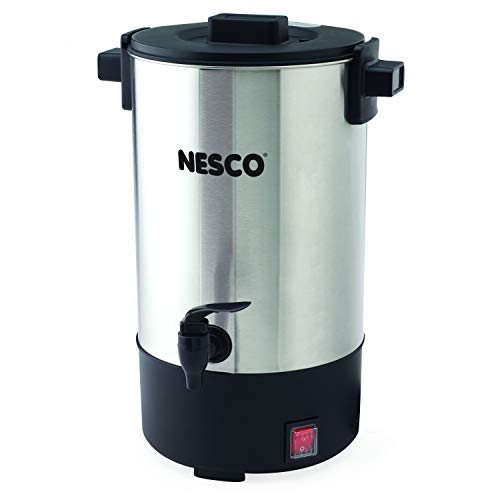
Nesco CU-25 Professional Coffee Urn 25 Cups Metallic

VEVOR Commercial Coffee Urn 50 Cups 7.5L Stainless Steel

Proctor Silex Commercial 45100R Brushed Aluminum Coffee Urn 100 Cup Capacity

Homecraft 100-Cup Coffee Urn and Hot Beverage Dispenser Stainless Steel

SYBO 120 Cup Commercial Coffee Urn 18 L Metallic

VEVOR Commercial Coffee Urn 100 Cup 15 L Hot Beverage Dispenser

Commercial Coffee Maker 100 Cup Coffee Urn 4 Gallon 16L

NUPANT Commercial Coffee Urn 100 Cup 15L Coffee Dispenser

100 Cup Commercial Coffee Maker 14 L Food Grade Stainless Steel
More Details On Our Top Picks
The smaller 25-cup size makes sense for office counters, family brunches, or a modest event table where a full-size urn would feel oversized. Metal construction keeps the profile straightforward, and that matters when you want something easy to set out, fill, and store between uses.
Compared with the larger Proctor Silex and SYBO picks, this one fits lighter serving needs far better. It’s a sensible match for people who care more about convenience than marathon capacity, though you’ll feel the limit quickly in busy crowd settings.
Strong Points
- 25-cup size suits smaller serving jobs without eating table space.
- Metal body should hold up well in regular use.
- Simpler footprint makes storage easier after events.
- Easy to place on a sideboard or service cart.
Things To Consider
- The capacity runs out fast for larger gatherings.
- It makes more sense for light service than heavy event traffic.
- Metal finishes can still show fingerprints, so wiping it down helps.
Feature Snapshot
Who Will Love This
You’re a strong match for this urn if you host small groups and want a compact coffee station.
Where A Sibling Pick Shines
Proctor Silex Commercial 45100R suits church socials and larger service lines, where a 100-cup urn makes more sense.
Halfway up the capacity ladder, this VEVOR urn is easier to place than the 100-cup models while still handling a decent coffee run. The stainless steel body and 7.5L volume make it a practical fit for break rooms, small catering tables, or a family event where refills are unwelcome.
The detachable power cord is a useful detail because cleaning a large urn gets old fast without it. Against the smaller Nesco, this gives you much more service room, though it still sits below the larger commercial machines for full-scale gatherings.
What We Like
- 7.5L capacity covers mid-size serving needs well.
- Detachable cord makes cleanup and storage simpler.
- Stainless steel construction fits regular commercial-style use.
- 1000W heating gives it solid brewing pace.
Areas To Watch
- 50 cups may feel tight for large church or banquet service.
- The corded setup still needs a nearby outlet.
- Stainless steel can need frequent wiping to stay presentable.
Core Details
Best Suited To
You’ll appreciate this model most in smaller offices, church kitchens, or family-hosted events with steady but not overwhelming traffic.
Another Choice May Suit
SYBO 120 Cup Commercial Coffee Urn fits busier catering setups that need more volume in one pass.
This is the first true full-size workhorse in the list, and the 100-cup capacity gives you room for real event traffic. Brushed aluminum keeps the look businesslike, while the one-hand dispensing setup matters most when someone is juggling cups, napkins, and a crowded serving line.
Compared with the VEVOR 50-cup unit, this one is built for longer stretches without refill pressure. It’s a strong fit for large meetings and church functions, though the bigger footprint and commercial emphasis make it less comfortable for casual kitchen storage.
Highlights
- 100-cup capacity suits busy service lines.
- One-hand dispensing is practical in crowded settings.
- Dual heaters help support steady coffee service.
- Commercial rating makes it feel purpose-built for events.
- Brushed aluminum finish has a straightforward, durable look.
Small Caveats
- The size makes countertop storage less convenient.
- Commercial-focused design may feel like overkill for casual use.
- Aluminum surfaces still need regular wiping to stay clean.
Feature Rundown
Built With In Mind
You’re in the right spot for church events, volunteer kitchens, and other settings where coffee service stays active for hours.
Swap It Out When
Homecraft 100-Cup Coffee Urn works better for serving tables where drip control matters more than commercial-grade pacing.
The dripless faucet is the detail that stands out here, especially on shared serving tables where drips turn into sticky cleanup fast. Stainless steel keeps it in the same broad commercial lane as the Proctor Silex urn, but this one leans more toward tidy beverage service than heavy-duty pacing.
For banquets, office receptions, or casual event lines, that steadier pour can be a real comfort. You may find it especially handy in places where the urn sits in view all day and needs to look presentable between refills.
What We Like
- Dripless faucet helps cut down on table mess.
- 100-cup capacity suits substantial gatherings.
- Stainless steel finish fits frequent service use.
- Simple beverage-dispenser format is easy to understand.
Worth Noting
- It still takes up meaningful counter space.
- Large stainless bodies need routine wipe-downs.
- It’s better suited to serving than compact storage.
Details At A Glance
Right Fit For
You’re in the sweet spot if you host formal receptions or serving tables where presentation matters as much as capacity.
Look Elsewhere When
GOLREAN Commercial Coffee Maker fits faster-paced setups that want higher wattage and a more power-forward feel.
The 120-cup capacity pushes this one beyond the rest of the field, and that makes it a natural fit for busier catering lines or community events with long coffee demand. The stainless steel body and percolate-style brew setup point toward steady output rather than a delicate café feel.
Compared with the Proctor Silex 100-cup urn, this gives you more headroom before a refill becomes necessary. The trade-off is size, because a unit this large is easiest to justify when you truly need the volume.
Reasons To Buy
- 120-cup capacity leaves generous serving headroom.
- 18L volume fits high-traffic events.
- Stainless steel build suits repeated commercial use.
- Broad beverage role helps beyond coffee alone.
Areas To Watch
- The larger body needs serious storage space.
- It can be more than many kitchens require.
- Big stainless equipment usually means more cleaning surface.
Key Specs
Whose Shelf It Belongs On
You’ll get the most from this urn in catering rooms, large church kitchens, and event spaces where volume matters more than compact storage.
Where A Sibling Pick Shines
Homecraft 100-Cup Coffee Urn is the tidier fit for serving tables that need a drip-conscious faucet and a slightly calmer footprint.
This VEVOR lands in the main 100-cup zone, which makes it a sensible middle ground between compact urns and oversized catering tanks. The dripless faucet and quick-brewing stainless build are practical touches for church foyers, business meetings, or party setups where people move through in waves.
Compared with the SYBO 120-cup model, it gives you strong capacity without stretching quite as far on bulk. That balance makes sense for anyone who wants a serious serving urn but still needs to store it more easily than the biggest unit on the list.
Plus Points
- 100-cup capacity fits most large-group service plans.
- Dripless faucet helps keep the area neat.
- Stainless steel build suits frequent handling.
- Quick-brewing design helps service keep moving.
Minor Gripes
- It still asks for substantial counter or cart space.
- The stainless finish needs routine cleaning to stay tidy.
- Large-format urns are less casual to store away.
Feature Card
The Right Fit
You’re looking at a strong match for organizations that need dependable volume without stepping up to the very largest urn sizes.
Reach For A Different Pick When
Proctor Silex Commercial 45100R suits more fast-moving event service, especially when one-hand dispensing matters.
The dual-layer 304 stainless steel build gives this urn a more serious feel than the lighter-duty options around it. Add the 1300W heating spec and you get a machine aimed at faster turnover, which matters in business dining rooms, catering halls, and church events with steady foot traffic.
Against the VEVOR 100-cup model, this one leans harder into output and heating strength. The honest read is that it’s a good fit for high-activity service, though the larger, more technical setup may feel like more machine than casual hosts need.
Best Bits
- 1300W output supports fast brewing.
- Dual-layer stainless build sounds built for hard use.
- 16L capacity covers large service runs.
- 304 stainless steel is a strong material choice for repeated handling.
Softer Spots
- The larger format needs real storage room.
- High-output machines can feel more complex than basic urns.
- Stainless surfaces reward regular cleaning.
Quick Facts
Made For
You’ll like this most in busier service environments where speed and volume both matter.
Another Choice May Suit
Homecraft 100-Cup Coffee Urn is easier to live with for service tables that put clean pouring ahead of raw output.
NUPANT leans into the long-service crowd with a 100-cup, 15L body and a keep-warm mode that helps during long receptions or staggered arrivals. The upgraded percolator and 304 stainless steel build place it in the same practical lane as the other large urns, but with a little more attention on holding temperature over time.
That makes it useful for catering tables and event rooms where coffee doesn’t disappear in one round. Compared with the Homecraft urn, this one feels more focused on staying warm through the day, though it still asks for the same kind of space a large dispenser always needs.
Positives
- Keep-warm mode helps extend service windows.
- 100-cup capacity fits large gatherings well.
- 15L size gives you dependable batch volume.
- 304 stainless steel suits regular cleaning and use.
- Upgraded percolator suggests a more capable brewing setup.
Points To Note
- The larger body is not easy to tuck away.
- Long-service features matter most in event settings.
- Stainless steel can need regular polishing to stay presentable.
Core Details
Perfect Match For
You’re best served by this urn in catering setups, reception halls, and church kitchens where coffee sits out for a while.
Where Another Pick Suits Better
GOLREAN Commercial Coffee Maker suits faster turnover and a stronger power-forward approach.
This model keeps the pitch simple, 100 cups, quick brewing, and food-grade stainless steel for large gatherings that need straight-ahead coffee service. That combination makes it useful for meeting rooms, lounges, church halls, and other spaces where nobody wants a fussy setup.
Compared with the more feature-heavy NUPANT unit, this one looks more focused on the essentials. That’s helpful for hosts who want a direct, businesslike urn, though it may feel plain next to the more feature-rich choices above.
Upsides
- 100-cup capacity handles large-group service.
- Quick brewing suits active coffee lines.
- Food-grade stainless steel is a sensible material choice.
- Simple setup feels approachable for mixed-use spaces.
Honest Caveats
- It’s more basic than several other large urns here.
- Large stainless equipment still needs regular cleaning.
- The simpler feature set may not suit every event style.
Spec Overview
Who Should Grab It
You’ll like this best for straightforward event service where basic capacity and simple cleanup matter more than extras.
Skip It When
SYBO 120 Cup Commercial Coffee Urn is the better call for larger catering schedules that need extra volume.
How To Choose The Right 100 Cup Coffee Pots
Capacity And Event Size
Capacity is the first number to check, because it tells you how long the urn can stay in service before refills become part of the routine. A 25-cup pot suits small gatherings, 50 cups fits modest office use, and 100-cup or 120-cup models make more sense for church socials, banquets, and catering tables.
The real question is not how big the number sounds, but how quickly coffee moves in your setting. A pot that looks oversized at home can be exactly right in a room where drinks leave the station in steady waves.
Heating, Dispensing, And Cleanup
Brewing speed matters, but so does how the urn pours once the crowd gathers. One-hand dispensing, dripless faucets, and keep-warm modes make daily use easier because they reduce spills, slowdowns, and awkward hovering around the tap.
Cleanup deserves equal attention. Stainless steel is common because it suits repeated use, while removable cords and simpler body shapes make washing and storing less of a chore.
Material And Build Style
Aluminum, stainless steel, and layered steel builds each bring a slightly different balance of weight, durability, and presentation. Brushed aluminum can feel lighter and more utilitarian, while stainless steel usually fits settings that need a cleaner, more polished look.
For regular event service, sturdier construction tends to matter more than decorative detail. You want a body that feels stable on a serving table, plus fittings that hold up when the urn is moved, wiped, and packed away again.
Match The Pot To The Setting
Office break rooms, church halls, and catered receptions all place different demands on the same kind of urn. A compact model is easier to store, while a high-capacity unit saves time where people expect a steady flow of coffee or hot water.
The best fit usually comes from balancing capacity, footprint, and how much handling the pot will see. That balance keeps you from paying for more machine than you’ll actually use, or settling for one that runs empty too soon.
What To Weigh Before You Commit
Hidden Buying Traps
One common mistake is choosing capacity by headline number alone, then realizing the urn is too bulky for the service table or storage shelf. Another is overlooking the faucet style, which matters a lot when a line forms and people are pouring for themselves.
Cleaning access is easy to ignore until the first busy event ends. A removable cord, smooth interior, and manageable body shape can save you time later.
The Upgrade Payoff
Higher-tier urns usually cost more because they lean on larger capacity, sturdier materials, and more thoughtful service features. Dual heaters, keep-warm modes, dripless taps, and stronger stainless builds are the sorts of details that make long service days less clumsy.
Spending up makes sense for caterers, event hosts, and church groups that use the urn often. For lighter home or office use, a simpler model may be enough and easier to store.
Frequently Asked Questions
How many people can a 100-cup urn serve?
That depends on cup size and how heavily coffee is poured. A 100-cup urn usually suits large gatherings where serving happens in repeated rounds.
Is stainless steel better than aluminum for these urns?
Stainless steel usually feels more at home in repeat event service and wipes down cleanly. Aluminum can still work well, especially when lighter weight matters more.
Do dripless faucets really help?
They help most on shared serving tables where drips turn into extra cleanup. The faucet style also makes the serving area feel tidier between pours.
What size is easier to store?
The 25-cup and 50-cup models are easier to tuck away after use. Full 100-cup and 120-cup urns need more cabinet or cart space.
Which urn is the most practical for mixed-use spaces?
The 100-cup VEVOR and Homecraft models strike a useful middle ground for many event rooms. They give you strong capacity without pushing all the way into the biggest commercial footprint.
Final Thoughts
Your best choice depends on how many cups you serve and how often the urn comes out of storage. Smaller picks keep life easier in limited spaces, while the larger SYBO, Proctor Silex, and VEVOR models make more sense for busier schedules and serious coffee traffic. Homecraft and NUPANT sit in the middle with useful service features, and that balance can feel just right for many event setups. Choose the urn that fits your room first, then your crowd.
