

Coffee beans start losing flavor the moment they leave the roaster, and the wrong storage setup speeds that process along. Oxygen, light, moisture, and heat are the four culprits that strip away those nuanced oils and aromatics you paid good money for. A proper canister slows that decline by sealing out air and blocking at least some of those damaging elements. Whether you buy in small batches or stock up on multi-pound bags, the right vessel keeps your beans tasting the way the roaster intended for weeks rather than days. This roundup walks through six options that cover different storage volumes, materials, and countertop styles.
The Shortlist At A Glance
umieo Glass Storage Jars with Bamboo Lids

Mixpresso 16oz Stainless Steel Coffee Canister
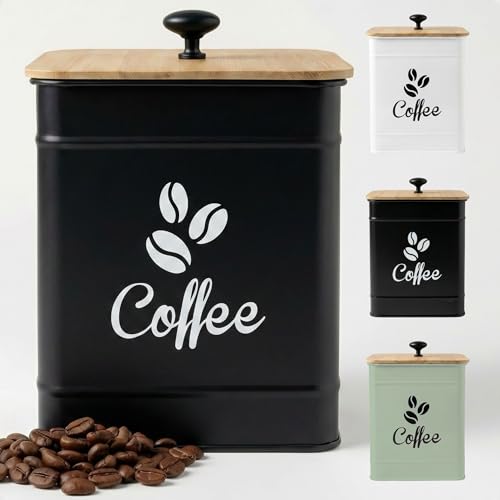
HB Design Co. 40oz Metal Coffee Canister

Ohtomber 22oz Stainless Steel Coffee Canister

KIVY Vacuum Stainless Steel Coffee Canister

gmisun 2-Piece 50oz Black Glass Canister Set
More Details On Our Top Picks
Not every coffee storage vessel needs to be a heavy-duty steel drum. These umieo jars take a different approach, pairing clear borosilicate glass bodies with bamboo wood lids that sit comfortably on an open shelf or coffee bar. The 4-inch wide mouth means you can slide a hand inside without scraping knuckles, which matters more than you’d think when you’re fishing for the last scoop of beans at 6 a.m. Unlike the steel options later in this list, the transparent walls let you see exactly how much coffee remains before you need to reorder.
The trade-off is that glass lets light through, and light is one of those four freshness-killing elements mentioned earlier. You can mitigate this by storing the jars in a cabinet or shaded corner rather than direct sun. For someone building a visually appealing coffee nook where aesthetics matter as much as function, that compromise feels reasonable. The bamboo lids provide an airtight seal using a silicone gasket, so the oxygen barrier stays intact even if the light protection is partial.
Strong Points
- Wide 4-inch opening makes scooping and hand-cleaning straightforward, no special brush required
- Borosilicate glass handles temperature swings well, so you can move jars from pantry to counter without concern
- Bamboo lids add a warm, natural look that blends with modern or farmhouse decor
- Clear walls let you monitor bean levels at a glance, reducing surprise run-outs
Things To Consider
- Transparent glass offers zero light blocking, so direct sun exposure will degrade beans faster than an opaque canister would
- Bamboo lids need occasional hand-wiping and drying, since prolonged moisture can warp or crack the wood over time
- No date-tracking mechanism, so you’ll need a separate label or marker to track roast dates
At A Glance
Who Will Love This
Home decorators and coffee bar builders who want visible, attractive storage and keep their jars out of direct sunlight.
Where A Sibling Pick Shines
For someone who needs full light protection and a built-in freshness valve, the Mixpresso 16oz canister covers both gaps the glass jars leave open.
Stepping up from the umieo glass jars, the Mixpresso canister takes freshness preservation seriously by adding a one-way CO2 valve. That valve matters because freshly roasted beans release carbon dioxide for days after roasting, and without an escape route, that gas builds up inside a sealed container. The valve lets gas exit while blocking oxygen from entering, which is the core mechanism that keeps beans tasting vibrant longer. You also get a date tracker on the lid, so you can rotate your stock by roast date rather than guessing.
The 16-ounce capacity holds roughly a standard one-pound bag of beans, which covers most home brewers’ weekly consumption. Stainless steel walls block light completely, solving the transparency issue the umieo jars face. A matching scoop comes included, so you have a portioning tool ready without digging through your utensil drawer. The triple-seal system, combining the clamp lid, silicone gasket, and CO2 valve, creates a more aggressive oxygen barrier than a simple bamboo-and-glass closure.
Highlights
- One-way CO2 valve vents roasting gas while blocking incoming oxygen, extending peak flavor for freshly roasted beans
- Date tracker on the lid lets you log the roast or open date so you always know which batch to brew first
- Stainless steel body resists rust, stains, and odor absorption, keeping flavors pure across batch changes
- Includes a matching scoop, eliminating the need to grab a separate measuring tool each morning
- 16oz capacity fits a standard one-pound bag, matching the most common purchase size for specialty coffee
Worth Noting
- The CO2 valve relies on a small silicone component that can degrade over time, and replacements are not always easy to source
- 16oz may feel cramped for anyone who buys two-pound bags or grinds in volume for multiple daily drinkers
Quick Facts
Right Fit For
Specialty coffee drinkers who buy freshly roasted beans in one-pound increments and want to track roast dates without guesswork.
Consider Something Else When
Storing larger quantities for a multi-person household makes the HB Design Co. 40oz canister a better match for the extra volume.
Capacity becomes the headline here. The HB Design Co. canister holds 40 ounces, which translates to roughly two and a half pounds of whole beans depending on density and roast level. That volume suits households running through coffee quickly or anyone who buys in bulk from a local roaster. The 6-by-8-inch footprint sits stable on a counter without dominating the surface, and the iron body gives it a solid, planted feel that won’t tip when you reach in with a scoop.
Unlike the Mixpresso’s clamp-lid mechanism, this canister uses a rubber-lined bamboo lid that presses on and pulls off easily, an design choice that prioritizes convenience over the airtight aggression of a triple-seal system. The rubber lining creates the actual seal against the iron rim, so keeping that rim clean and dry between uses is what maintains the barrier over time. You may find the easy-open lid trades a small amount of sealing pressure for everyday accessibility, which is a fair swap for someone who opens the canister multiple times daily.
Bright Spots
- 40oz capacity accommodates bulk purchases, cutting down on transfer containers and pantry clutter
- Iron body blocks light completely, protecting beans from UV degradation on open counters
- Easy-open lid suits frequent daily access without fighting a clamp mechanism each time
- Wide interior lets you reach inside with a full-hand scoop, no awkward angles
Trade Offs
- No CO2 valve means freshly roasted beans can’t vent roasting gas, so this suits beans that have already degassed for several days
- Iron construction can show rust spots if the finish chips or the interior stays wet, requiring dry-storage habits
- Lacks a date tracker, so batch rotation depends on your own labeling system
- Bamboo lid rubber lining may compress over extended use, gradually reducing seal tightness
Feature Snapshot
Built With In Mind
Bulk coffee buyers and multi-cup households who need storage volume and frequent, easy access throughout the day.
Reach For A Different Pick When
Freshly roasted beans that need to vent CO2 call for the Mixpresso canister’s one-way valve instead of this sealed iron jar.
Sitting between the Mixpresso’s 16oz and the HB Design Co.’s 40oz, the Ohtomber canister splits the difference at 22 ounces. That capacity comfortably holds a one-pound bag with room to spare, which gives you flexibility if your roaster sells 12-ounce or 16-ounce bags. The 304-grade stainless steel body adds a layer of corrosion resistance beyond what a basic iron jar offers, and the double silicone sealing ring on the lid creates a redundant barrier against oxygen ingress.
The date tracker returns here, giving you the same roast-date logging the Mixpresso provides. A measuring scoop comes included, matching the Mixpresso’s accessory approach. The double silicone ring is the distinguishing mechanical feature: two gaskets mean that even if one seal degrades, the second continues blocking air. You may find that extra redundancy gives peace of mind if you store beans for two to three weeks rather than burning through a bag in days.
Plus Points
- Double silicone sealing ring provides redundant oxygen protection, maintaining freshness even if one gasket wears
- 304 stainless steel resists rust and corrosion more effectively than standard iron or lower-grade steel
- Date tracker on the lid simplifies batch rotation for multi-bag storage
- 22oz capacity covers common bag sizes with headroom, avoiding the tight fit of a 16oz canister
- Included scoop means portioning is handled without a separate tool
Softer Spots
- Double gasket design makes the lid slightly harder to press down fully, requiring a firm hand compared to single-gasket options
- No CO2 valve, so beans still in active degassing will build gas pressure inside the sealed environment
Core Details
Made For
Brewers who store beans for two to three weeks and want redundant sealing plus a date tracker in a mid-size footprint.
A Better Fit Elsewhere
Fresh beans still releasing CO2 will vent better in the Mixpresso canister, which includes a one-way valve this Ohtomber model lacks.
The KIVY canister takes a different approach to air removal. Rather than relying solely on a gasket seal, it uses a push-lid mechanism that actively pushes excess air out as you press down. Think of it as manually reducing the oxygen inside the container each time you close it, which is a step beyond the passive sealing the Ohtomber and HB Design Co. jars provide. For beans you plan to store for a month or longer, that active air reduction slows oxidation meaningfully.
The stainless steel construction brings the same light-blocking and rust-resisting properties you see across the other metal picks. Where the Mixpresso focuses on venting roasting gas, the KIVY focuses on removing ambient air already inside the canister. These are complementary approaches, not competing ones, and in most kitchens the KIVY suits someone who buys larger batches and wants them to last. The push-lid operation is simple enough for daily use, though it does require pressing firmly to engage the vacuum effect.
Reasons To Buy
- Push-lid vacuum mechanism actively removes trapped air, going beyond passive gasket sealing
- Stainless steel body blocks light and resists odor absorption across batch changes
- Airtight closure locks in volatile aroma compounds that fade fastest after grinding
- Design suits extended storage timelines of several weeks to a month without flavor flatness
Small Caveats
- Push-lid vacuum relies on consistent downward pressure, so a partial press leaves air inside and reduces the freshness benefit
- No CO2 valve means freshly roasted, actively degassing beans need to rest before sealing or pressure can build inside
- Vacuum seal mechanism may wear with heavy daily use over months, requiring firmer pressing to achieve the same air removal
Spec Overview
Who Should Grab It
Coffee enthusiasts who buy in larger quantities and store beans for weeks, where active air removal extends usable freshness.
Another Choice May Suit
Freshly roasted beans still releasing CO2 pair better with the Mixpresso canister’s one-way valve than with the KIVY’s sealed vacuum approach.
Rather than a single canister, the gmisun set gives you two 50-ounce jars plus a wooden shelf, labels, and a scoop. That bundle approach changes the value proposition entirely from the single-vessel picks above. You can dedicate one jar to beans and the other to sugar, tea, or a second bean origin, which suits a multi-item coffee station better than any individual canister on this list. The black glass bodies also solve the light problem that plagued the clear umieo jars earlier, offering a tinted barrier that reduces light exposure while still letting you see contents faintly.
The included wooden shelf keeps both jars elevated and aligned, which is a thoughtful touch for anyone who takes pride in their coffee bar presentation. Labels help you track what is inside each jar, though they are not roast-date trackers like the wheels on the Mixpresso or Ohtomber lids. For a household that stores coffee alongside sugar or tea and wants a coordinated look, this set covers more ground than buying a single canister and improvising the rest.
Best Bits
- Two 50oz jars provide generous combined storage for beans plus a second dry good like sugar or tea
- Black glass reduces light penetration compared to clear glass, offering a middle ground between transparency and full opacity
- Included wooden shelf creates a tidy, organized presentation for countertop coffee stations
- Labels and scoop come bundled, so you have portioning and identification handled out of the box
- Unified black design fits multiple decor styles from modern to farmhouse without clashing
Points To Note
- Black glass still admits some light, so it underperforms fully opaque steel for long-term freshness
- Two-jar footprint requires more counter space than any single canister in this roundup
- No date-tracking mechanism means batch rotation relies on the included labels or your own system
Feature Rundown
Whose Shelf It Belongs On
Coffee bar builders who want a coordinated, multi-jar station for beans and accompanying dry goods like sugar or tea.
Skip It When
Counter space is tight or you need active freshness features like the KIVY’s vacuum seal or the Mixpresso’s CO2 valve for longer-term bean storage.
How To Choose The Right Containers For Coffee Beans
Material And Light Protection
The material of your coffee canister directly determines how well it blocks light, one of the four elements that degrade beans over time. Opaque stainless steel and iron bodies, like those on the Mixpresso, Ohtomber, and HB Design Co. models, provide complete light blocking. Glass options, including the umieo and gmisun jars, let you see contents but admit varying amounts of light depending on whether the glass is clear or tinted. Clear glass offers zero protection and works best in shaded storage spots, while black-tinted glass like the gmisun set provides a partial barrier that suits countertop display without full UV exposure. For someone storing beans in a sunny kitchen, steel is the safer call.
Capacity And Purchasing Habits
Matching canister volume to your buying pattern prevents both overflow and excess air space. A 16oz canister like the Mixpresso fits a standard one-pound bag snugly, minimizing the air pocket above the beans. Larger canisters, such as the 22oz Ohtomber or 40oz HB Design Co., accommodate bulk buyers or households consuming multiple bags weekly. Too much empty headspace in an oversized container means more trapped air touching the beans, which accelerates staling. The gmisun two-jar set offers flexibility for split storage, letting you portion beans into smaller working amounts while keeping a second jar for another dry good.
Seal Quality And Air Management
The seal is where most canisters differentiate their freshness strategy. A simple silicone gasket, like the umieo bamboo lids provide, blocks new air from entering but does not address air already inside. Redundant systems, such as the Ohtomber’s double silicone ring, add a backup layer if one gasket degrades. The Mixpresso’s one-way CO2 valve addresses a different problem: venting roasting gas from freshly roasted beans without letting oxygen back in. The KIVY’s push-lid vacuum goes further by actively pushing ambient air out on each close. Your choice depends on bean age and storage duration, since beans still degassing need a valve, while older beans benefit more from active air removal.
Date Tracking And Batch Rotation
Roast date tracking helps you use older beans first and avoid brewing past-peak coffee. Canisters with built-in date trackers, like the Mixpresso and Ohtomber, let you log the roast or open date directly on the lid. This feature matters most for shoppers who buy from multiple roasters or keep several origins on hand simultaneously. Canisters without trackers, including the HB Design Co., KIVY, and gmisun, require your own labeling system. For a disciplined brewer who rotates stock weekly, a built-in tracker saves time and prevents guesswork.
A Quick Reality Check Before You Buy
Wrong Turns To Avoid
One common slip-up is prioritizing aesthetics over freshness mechanics. Clear glass jars look beautiful on an open shelf, but sunlight streaming through a kitchen window will strip aromatics from your beans faster than any seal can protect them. Another frequent mistake is buying a canister that is too large for your typical bag size. Extra headspace means more oxygen trapped above the beans, which speeds up staling even with a good seal. Storing freshly roasted beans in a sealed container without a CO2 valve is another misstep, since the gas builds pressure and can compromise the lid seal over time. Choosing a canister based solely on capacity without considering the seal mechanism often leads to disappointment weeks later.
When Paying More Pays Off
Higher-tier canisters earn their premium through features that actively manage the storage environment rather than passively blocking air. A one-way CO2 valve, like the Mixpresso includes, addresses a problem basic sealed jars cannot solve. Double gasket systems, vacuum push-lids, and date trackers each add a layer of freshness management that compounds over weeks of storage. For someone buying specialty beans at premium prices, spending more on a canister that extends usable freshness by even a week pays for itself in saved coffee. The upgrade makes sense when your beans cost enough that wasting a bag to staleness stings. Casual drinkers who finish a bag in a few days will not see the same return on investment.
Bottom Line
Finding the right container comes down to matching storage mechanics to your bean habits. Frequent buyers of fresh-roasted coffee benefit most from a CO2 valve, while bulk storers need capacity and active air management. Visual decorators can work with glass if they keep jars shaded. Whatever your brewing routine, the right canister keeps those carefully sourced beans tasting the way the roaster intended, cup after cup.
