

Grinding beans right before brewing changes the whole rhythm of a kitchen, whether you want espresso, drip coffee, or a faster single-serve routine. These eight picks cover compact counters, larger households, and setups that lean more barista-style than basic. You’ll see where a built-in grinder saves steps, where a thermal carafe helps keep coffee ready, and where a milk system matters more than extra presets.
The right choice depends on how you brew on ordinary mornings, not on a perfect day. Some machines keep things simple with one main job, while others pack in multiple drink styles, smart controls, or easier cleanup. That mix is useful, because your best fit can be a neat drip unit, a full espresso station, or something in between.
The Shortlist At A Glance

De’Longhi La Specialista Arte Evo Espresso Machine
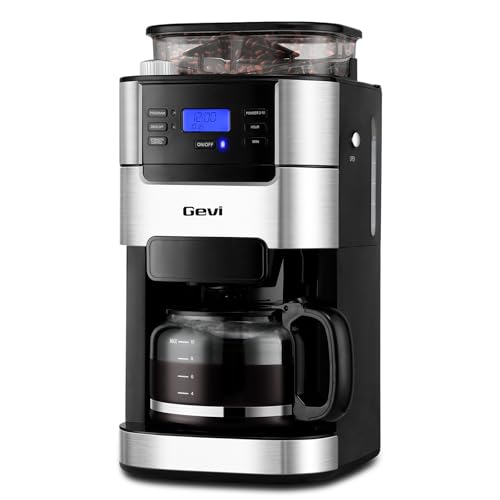
Gevi All In One 10-Cup Grind & Brew Coffee Maker

Ninja Luxe Café Pro Series ES701
Cuisinart Grind and Brew Single Serve Coffee Maker DGB-30

Café Specialty Grind and Brew Coffee Maker Matte White

Café Specialty Grind and Brew Coffee Maker Matte Black

Café Specialty Grind and Brew Coffee Maker Stainless Steel

PHILIPS 5500 Series Fully Automatic Espresso Machine EP5544/94
More Details On Our Top Picks
You get a machine aimed at espresso-first kitchens, with a built-in grinder and a milk frother that make the routine feel more like a compact café station. The barista toolkit helps the setup feel less guessy, which matters more than flashy extras on rushed mornings.
Compared with the drip-focused Gevi and the more automated PHILIPS, this De’Longhi leans into hands-on espresso control. It suits you best when counter space is dedicated to coffee and you want a stronger sense of ritual without piecing together separate gear.
Strong Points
- Built-in grinding keeps the workflow tighter, so you move from bean to shot without extra gear.
- Four preset recipes help you stay consistent on busy mornings.
- The milk frother supports drinks that need texture, not just straight espresso.
- The included toolkit is useful for dialing in a home routine.
Things To Consider
- Espresso-first features can feel like more machine than a casual drip drinker needs.
- Counter placement matters, since a setup like this tends to ask for a committed spot.
- More moving parts usually means more cleaning after a milk-based drink session.
Feature Snapshot
Who It Suits Best
Home espresso fans who want a more guided setup will get the most from this machine.
Where A Sibling Pick Shines
Ninja Luxe Café Pro Series ES701 suits you better if you want espresso along with cold brew, hot water, and drip coffee in one station.
The Gevi makes sense for households that want fresh ground coffee without jumping into a complex espresso routine. Its 10-cup capacity, glass carafe, and warm plate point straight at everyday drip brewing, and the 24-hour timer fits a kitchen that starts early.
Unlike the De’Longhi, this one stays focused on classic brewed coffee rather than milk drinks and shot pulling. The trade-off is simplicity, which is a good thing for you if your mornings are about speed, not tinkering.
What We Like
- The 10-cup size works well for families or a household that drinks more than one pot a day.
- A programmable timer helps coffee line up with your wake-up routine.
- The reusable filter trims one more thing to replace, and it also keeps daily prep straightforward.
- The warm plate helps keep brewed coffee ready for a second mug.
Worth Noting
- Glass carafes show wear and need a little more care than thermal options.
- The profile is better for drip coffee than for specialty espresso drinks.
- A built-in grinder adds cleaning steps, especially after frequent use.
Core Details
Made For
Busy kitchens that want a straightforward grind-and-brew pot with planning built in will fit this model well.
Look Elsewhere When
PHILIPS 5500 Series EP5544/94 suits you better if espresso presets and automatic drink variety matter more than a traditional pot.
This is the broadest brew station in the group, and that breadth matters in homes where coffee preferences change by person or by time of day. Espresso, cold brew, hot water, drip coffee, an integrated tamper, a grinder, and a hands-free frother make it feel like a kitchen toolbox rather than a single-purpose appliance.
Compared with the narrower Gevi and the espresso-only De’Longhi, the Ninja covers more styles without asking you to buy separate equipment. The catch is that a machine this versatile tends to suit organized countertops better than tight ones.
Highlights
- Multiple drink modes reduce the need for separate appliances.
- The integrated tamper helps with a more guided espresso workflow.
- Hands-free frothing is useful for lattes and cappuccino-style drinks.
- Hot water support broadens the machine beyond standard coffee service.
- The built-in grinder keeps the bean-to-brew process in one place.
Areas To Watch
- Feature depth can make the learning curve feel steeper than a basic brewer.
- It likely asks for more storage and counter room than a single-use coffee maker.
- More functions usually mean more parts to wipe down after use.
- People who want only one style of coffee may find the menu more than they need.
Feature Rundown
Whose Shelf It Belongs On
Homes that want one machine to cover espresso, drip, and specialty drinks will get the most from this setup.
Swap It Out When
Cuisinart DGB-30 is the calmer choice for someone who mainly wants a compact single-serve grind-and-brew routine.
The Cuisinart takes a more personal approach, since it serves one cup at a time while still bringing a stainless steel burr mill into the mix. That burr mill, meaning a grinder that crushes beans between two metal surfaces instead of chopping them, gives you a more controlled grind than a blade-style setup.
Relative to the larger Gevi and the feature-heavy Ninja, this is easier to fit into a small kitchen or office nook. You may find it especially practical when you want fresh coffee without committing to a full-pot machine every morning.
Best Bits
- Six cup-size options make the unit flexible for different mug sizes and habits.
- The stainless steel burr mill supports a more even grind.
- Adjustable strength helps you steer the cup toward lighter or fuller flavor.
- Over-ice mode adds a useful cold coffee option for warmer months.
Points To Note
- Single-serve design suits solo brewing more than household batch needs.
- A built-in grinder still asks for regular emptying and brushing.
- People who want one-pot convenience may prefer the Gevi instead.
Details At A Glance
The Right Fit
Solo coffee drinkers who want fresh ground coffee in a compact footprint will appreciate this model.
A Better Fit Elsewhere
Café Specialty Grind and Brew Coffee Maker Matte White works better for you if you want a thermal carafe and a larger shared brew routine.
The matte white finish gives this Café a calmer visual tone than the black and stainless options later in the list. Beyond looks, the removable 75-ounce reservoir and thermal carafe make it feel built for kitchens that want fewer refills and less heat loss across a longer morning.
Compared with the Cuisinart single-serve model, this one is better suited to shared brewing and a more permanent spot on the counter. The smart-connected angle also makes sense for households that like a little scheduling help without giving up the feel of a traditional coffee station.
Upsides
- The thermal carafe helps coffee stay ready without a warming plate.
- A removable reservoir makes filling and rinsing simpler.
- Single-serve to 10-cup flexibility supports both one mug and a group pot.
- WiFi-connected control adds convenience for routine-driven kitchens.
Small Caveats
- Smart features are useful only if you plan to use them often.
- Thermal carafes usually need a bit more attention during cleaning than a basic pot.
- The larger footprint makes more sense on a roomy counter.
Quick Facts
Best Suited To
Shared households that want a polished grind-and-brew setup with carafe flexibility will feel right at home with this one.
Another Choice May Suit
Gevi All In One 10-Cup Grind & Brew Coffee Maker makes more sense for you if a simpler programmable pot matters more than smart control.
The matte black version keeps the same smart-minded shape as the white Café, but the darker finish changes the visual tone completely. For a kitchen with other black appliances, that can make the setup feel more intentional, and the thermal carafe still keeps the focus on brewed coffee rather than constant reheating.
It sits in the middle of the list because it balances flexibility, smart controls, and shared brewing without leaning as hard into espresso as the De’Longhi or Ninja. That middle ground is useful for you if your coffee routine stays steady and you want the machine to fit into it quietly.
Reasons To Buy
- Thermal carafe design suits longer mornings and second cups.
- WiFi support adds scheduling convenience.
- Single-serve to 10-cup range covers solo and shared use.
- The black finish blends well with darker kitchens.
Areas To Watch
- Connected features add value mainly for households that enjoy app-based control.
- Thermal carafe care can be a little more involved than a plain glass pot.
- The machine makes more sense for brewed coffee than for espresso-based drinks.
Feature Card
Who Will Love This
Home cooks who like a connected brewer with a more understated finish will appreciate this model.
Reach For A Different Pick When
PHILIPS 5500 Series EP5544/94 suits you better if fully automatic espresso and a larger drink menu matter more.
The stainless steel version leans into a cleaner, more appliance-like look than the matte finishes in the café line. That matters in kitchens where the coffee maker sits out all the time, because the finish becomes part of the room instead of a thing you hide.
Functionally, it follows the same shared-brew logic as the other Café models, so you still get the thermal carafe and WiFi-enabled setup. The honest read is that you’d choose this one mostly for the finish, which is a fair reason when the rest of the feature set already fits.
Positives
- The stainless steel finish feels easy to pair with other kitchen hardware.
- Thermal carafe use works well for slow mornings and second pours.
- Single-serve and larger-batch brewing keep it flexible.
- WiFi support adds scheduling convenience.
Softer Spots
- Finish preference is the main reason to choose it over the matte Café versions.
- Smart controls matter more to some kitchens than to others.
- Thermal carafes usually need careful cleaning around the lid and interior seams.
Core Details
Who Should Grab It
Style-conscious kitchens that still want a practical grind-and-brew setup will suit this model well.
Skip It When
Gevi All In One 10-Cup Grind & Brew Coffee Maker is the safer choice for a simpler, more traditional pot-first routine.
The PHILIPS 5500 Series is the most automation-heavy machine in the group, and that shows up in the 20 hot and iced coffee presets. LatteGo milk handling and SilentBrew point toward a home that wants a fast, repeatable routine with less fuss around milk drinks and noise.
Compared with the De’Longhi, it feels more fully automatic and less hands-on, while the Ninja still spreads its talents across more drink styles. You may find this model especially appealing if you want a grinder, preset shortcuts, and milk support all aimed at speed.
Bright Spots
- The large preset menu makes routine drinks quicker to start.
- LatteGo milk handling is useful for drinks that need foamed milk without a complex setup.
- SilentBrew is a welcome touch for early starts.
- The integrated grinder keeps the entire espresso path in one machine.
Minor Gripes
- Preset-heavy machines can feel more specialized than a basic grinder-brewer.
- Espresso automation usually means more parts to keep clean.
- The machine fits best in a kitchen that already has room for a full coffee station.
Quick Facts
Built With In Mind
Busy espresso drinkers who want a fast, automated routine with milk support will get the most from this machine.
Not Your Match When
Cuisinart DGB-30 fits better for you if a compact single-serve brewer matters more than a full espresso station.
How To Choose The Right Coffee Maker Grinders
Match The Machine To Your Morning
Start with the drink you make most often. Espresso-focused homes usually get more value from a machine like the De’Longhi or PHILIPS, while drip households tend to appreciate the Gevi or one of the Café models.
The grinder matters too, because it changes how many steps sit between beans and cup. A built-in burr grinder, which crushes beans more evenly than a blade-style grinder, usually gives you better control, but it also adds cleaning and maintenance work.
Think About Capacity And Counter Space
Single-serve machines such as the Cuisinart fit small kitchens, offices, or one-person routines without taking over the counter. Larger units with 10-cup carafes or multiple brew modes make more sense where several people drink coffee at different times.
Thermal carafes help keep coffee ready without a hot plate, while glass carafes are easier to read at a glance. That trade-off shows up most clearly in homes that pour slowly over the morning.
Features Should Earn Their Place
Timer functions, WiFi control, frothers, and preset drinks sound attractive, but each one should support a habit you actually use. A smart-connected brewer helps only when scheduling and remote control fit your routine, and a milk system matters mainly if you make lattes or cappuccinos often.
Extra features also mean more parts to clean. That is the part many kitchens feel a month later, so the simpler option can be the smarter one for everyday use.
A Quick Reality Check
Common Shopping Slip Ups
One common mistake is choosing by feature count instead of drink style. A full espresso machine can be overkill for someone who mainly wants a pot of drip coffee, while a basic brewer may feel too limited for someone chasing café-style drinks.
Another miss is ignoring cleanup. Built-in grinders, milk systems, and thermal carafes each ask for a bit more attention, so the easier-looking setup is not always the easier one to live with.
The Upgrade Payoff
Higher-tier models usually cost more because they combine more functions into one chassis. You are paying for things like integrated grinders, milk handling, preset drink menus, stronger materials, and smarter controls, not just a fancier shell.
That upgrade makes sense for households that will use those features often. It matters less for someone who only wants one brew mode and would rather keep upkeep simple.
Frequently Asked Questions
What Makes A Built-In Grinder Worth It?
A built-in grinder saves counter space and trims steps from bean to cup. It makes the most sense when you want fresh grounds without adding a separate appliance.
Is A Thermal Carafe Better Than Glass?
A thermal carafe helps coffee stay warm without a heated plate. A glass carafe is easier to glance at, but it usually depends more on the warming element underneath.
Do Smart Features Matter In A Coffee Maker?
Smart controls help most when your mornings run on a schedule. They matter less when you brew by feel and do not care about app-style convenience.
Which Option Fits A Small Kitchen?
The Cuisinart DGB-30 stands out for a tighter footprint and single-serve use. It avoids the bulk of larger carafe models and full espresso stations.
How Much Maintenance Does A Grind-And-Brew Machine Need?
Expect regular basket, grinder, and carafe cleaning. Machines with milk systems or thermal parts usually add a few more steps to the routine.
Closing Thoughts
The best coffee maker grinder for your kitchen is the one that matches your habits without asking for a second job. For espresso lovers, the De’Longhi and PHILIPS bring more control and drink variety, while the Gevi and Café models lean into easier daily brewing. If your space is tight, the Cuisinart keeps things compact and practical, and the Ninja gives you the widest menu. Choose the machine that fits the way you already make coffee, and the routine usually feels smoother from the start.
