

Looking for a machine that handles espresso, foam, and everyday coffee without turning your counter into a project? The right coffee maker and frother setup can make weekday drinks feel calmer, especially in small kitchens, shared homes, or morning routines that run on a tight clock.
Below, you’ll find compact single-serve options, semi-automatic espresso machines, and more advanced combo models, each chosen for a different kind of routine. Some lean simple, some lean feature-rich, and a few sit right in the middle, which is usually where the smartest trade-offs live.
Quick Look At The Shortlist

De’Longhi La Specialista Arte Evo Espresso Machine with Coffee Grinder
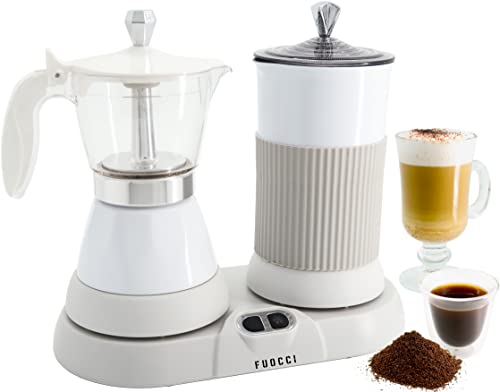
FUOCCI Electric Moka Pot with Milk Frother 3-Cup White

Nespresso Vertuo Pop+ Coffee Machine with Milk Frother Liquorice Black

KEENSTAR 3.5Bar Espresso Machine 800W Compact 4-Cup

Ninja Luxe Café Pro Series ES701

XIXUBX Espresso Machine Compact Espresso Maker with Milk Frother

AIRMSEN 20 Bar Espresso Machine with Automatic Milk Frother

XIXUBX Cold Brew Espresso Maker with Milk Frother
More Details On Our Top Picks
Plenty of coffee maker and frother combos stop at convenience, but this one leans into control. The built-in grinder and barista toolkit point you toward a more hands-on routine, which suits you well if you like dialing in espresso instead of relying on presets alone.
The silver finish keeps the look clean without feeling flashy, and the four preset recipes cover the basic drink range without crowding the interface. The trade-off is obvious, it asks for more attention than a single-serve machine, so it fits best in a kitchen where counter time is part of the ritual.
Strong Points
- Built-in grinding keeps the workflow in one place.
- The four preset recipes simplify common drinks.
- Barista toolkit pieces help with day-to-day prep.
- The compact silver design looks tidy on the counter.
- Better suited to espresso-focused routines than quick pod-style use.
Things To Consider
- Works best for you when you want a more involved routine.
- Cleaning a grinder and frothing setup takes more care than a basic brewer.
- The learning curve can feel a little steeper for first-timers.
Feature Snapshot
Who It Suits Best
You’ll get the most from this if you want a more involved espresso station at home and don’t mind a little setup work.
Where A Sibling Pick Shines
AIRMSEN 20 Bar Espresso Machine with Automatic Milk Frother suits you better if you want faster, more automated drink prep with less hands-on effort.
This small electric moka pot fits the kind of kitchen where every inch matters. The 3-cup size keeps it friendly for one or two drinks, and the built-in frother makes it easier to move from espresso-style coffee to cappuccino or mocha without extra tools scattered around.
Compared with the De’Longhi above, this is a much simpler path to coffee and foam. The white finish feels neat and bright, though the smaller brew size means it’s better for modest servings than for hosting a round of drinks.
What We Like
- Small footprint suits tight counters and dorm-style setups.
- The attached frother keeps the workflow straightforward.
- Three-cup capacity works well for solo mornings.
- Useful for Cuban coffee, cappuccino, latte, or mocha routines.
Worth Noting
- The smaller size limits how much you can make at once.
- Electric moka-style brewing asks for a little more attention than a push-button machine.
- White finishes can show stains or splashes more easily during cleaning.
Details At A Glance
Built With In Mind
You’re the best match for this if you want a compact coffee-and-foam setup for a small kitchen or occasional use.
Another Choice May Suit
Nespresso Vertuo Pop+ Coffee Machine with Milk Frother suits you better if speed and sealed capsule convenience matter more than moka-style brewing.
The Vertuo Pop+ sits in a very different lane from the moka pot, because it pushes convenience first. The compact body helps in apartments, office corners, and kitchens where a smaller machine still needs to look tidy, while the Aeroccino3 frother bundle gives you hot or cold foam without adding a second search for parts.
That separate frother matters more than it sounds, since you can make foam for both warm drinks and iced drinks without changing the rest of your setup. The trade-off is less manual control than a semi-automatic espresso machine, so it suits you best when you want speed and consistency over tinkering.
Bright Spots
- Compact shape fits easily into smaller kitchens.
- The frother bundle broadens drink options for hot or cold foam.
- Single-serve format keeps prep simple on busy mornings.
- The black finish feels restrained and easy to place.
Small Caveats
- Capsule-style brewing gives you less room to fine-tune flavor.
- Single-serve systems can create more used parts to manage after each drink.
- The frother adds another piece to rinse and store.
Feature Rundown
Whose Shelf It Belongs On
You’re a strong match for this if you want a compact routine with very little fuss and like the idea of separate foam control.
Skip It When
De’Longhi La Specialista Arte Evo Espresso Machine with Coffee Grinder fits you better if you want more control over espresso prep and don’t mind a hands-on process.
KEENSTAR keeps the setup modest, which makes sense for a first espresso machine or a secondary station. The 3.5-bar pressure and 800W output place it in a lighter-duty lane than the more advanced machines above, so the appeal here is small-scale espresso and cappuccino without much clutter.
The steam wand gives you a path to milk drinks, and the 4-cup format works for casual home use rather than large rounds. In most kitchens, that balance feels fair, though you’ll want to be comfortable with a less demanding machine that gives you basic espresso rather than a deep menu of options.
Upsides
- Compact size suits tighter counters and simpler setups.
- The steam wand opens the door to milk drinks.
- 4-cup capacity is useful for small household routines.
- Good fit for beginners who want a gentle entry point.
Areas To Watch
- Lower-pressure machines usually feel less flexible than higher-end espresso setups.
- Small appliances often need a bit more attention to keep them clean around the wand and drip area.
- The smaller capacity may feel tight for guests.
Core Details
Right Fit For
You should look here if you want a simple starter machine for occasional espresso and milk drinks at home.
Swap It Out When
XIXUBX Espresso Machine Compact Espresso Maker with Milk Frother makes more sense if you want stronger espresso control and a more modern feature set.
Some kitchens need one machine to cover a lot of habits, and this Ninja model leans hard into that reality. Espresso, drip coffee, cold brew, and hot water all sit under the same roof, so it suits households where one person wants cappuccino while another prefers a plain cup.
The built-in grinder, integrated tamper, and hands-free frother make the workflow feel more complete than the simpler picks above. The trade-off is size and complexity, so it fits best where counter space and storage are already planned out.
Positives
- Multiple brew styles reduce the need for separate appliances.
- The grinder and tamper keep prep in one workflow.
- Hands-free frothing helps with dairy and non-dairy drinks alike.
- Useful for homes with very different coffee preferences.
- Hot water support adds another layer of usefulness for daily routines.
Points To Note
- The larger feature set asks for more counter room.
- Cleaning takes longer than with a single-function brewer.
- All-in-one machines can feel more involved for occasional use.
Technical Sheet
Made For
You’ll appreciate this most if you want a single station that can cover espresso, drip, cold brew, and milk drinks without compromise on variety.
Where A Sibling Pick Shines
FUOCCI Electric Moka Pot with Milk Frother suits you better if you want a smaller, simpler coffee setup with a lighter footprint.
With the 20-bar pump and PID control, this XIXUBX machine aims for a more controlled espresso routine without taking over the counter. PID means proportional, integral, derivative temperature control, a method that helps keep heat steadier while you brew, and that matters most for consistency in small kitchens.
The low-vibration design is a nice touch for apartment living or early mornings when you want less rattling around. It sits closer to the AIRMSEN and De’Longhi picks in spirit, though it stays more compact and direct than the multi-function Ninja.
Highlights
- 20-bar pressure gives the machine a more serious espresso profile.
- PID temperature control helps support steadier brewing conditions.
- Low vibration is helpful in compact homes and apartments.
- Small footprint suits tight kitchen layouts.
- Milk frother extends it into latte and cappuccino territory.
Softer Spots
- Espresso-focused machines still ask for more involvement than single-serve models.
- Smaller appliances can mean more frequent cleaning around the frother area.
- The compact build leaves less room for oversized mugs or accessories.
Quick Facts
The Right Fit
You’re the best match for this if you want a compact espresso setup with more control than the simplest starter machines.
Another Choice May Suit
AIRMSEN 20 Bar Espresso Machine with Automatic Milk Frother suits you better if you want a more automated milk routine and a larger water tank.
This AIRMSEN model takes a more automated route than the XIXUBX above, and the 60-ounce tank gives you more breathing room between refills. The touchscreen and dual-boiler setup add convenience, while the automatic frother suits you well when milk drinks are part of the daily routine instead of an occasional treat.
Dual boiler means the machine uses separate heating systems for different tasks, which helps it juggle brewing and milk prep more smoothly. The stainless steel finish feels like a solid fit for a busier kitchen, though the extra features do ask for a little more cleaning and storage space.
Reasons To Buy
- Automatic frothing reduces the manual steps in milk drinks.
- The large 60-ounce tank helps with fewer refill interruptions.
- Touchscreen controls keep the interface straightforward.
- Dual-boiler design supports more efficient multi-step drink prep.
- Stainless steel gives the machine a sturdy, modern look.
Room For Improvement
- The feature set adds complexity compared with simpler espresso makers.
- More components mean more surfaces to wipe down.
- The larger body may feel less natural in very small kitchens.
Feature Card
Whose Shelf It Belongs On
You should look here if you want an upgraded espresso station with automatic frothing and a fuller feature set for regular milk drinks.
Look Elsewhere When
KEENSTAR 3.5Bar Espresso Machine 800W Compact 4-Cup suits you better if you want a simpler, smaller machine for lighter use.
This XIXUBX model shifts the focus toward visible control, which starts with the built-in pressure gauge. That gauge helps you watch the brew process more closely, and the stainless steel body plus 42-ounce removable tank make it feel well suited to a home setup where espresso is part of the weekly rhythm rather than a rare indulgence.
The steam wand and milk frothing pitcher give you more hands-on flexibility than the automatic AIRMSEN, while the removable tank makes refills and cleaning a little easier. It’s a good fit for you if you like a more tactile machine, though the extra parts do mean a little more cleanup after each round.
Best Bits
- The pressure gauge adds a clear visual cue during brewing.
- The steam wand gives you direct control over milk texturing.
- The included pitcher supports a more complete frothing setup.
- The removable tank makes routine upkeep less awkward.
- Stainless steel helps the machine feel durable on the counter.
Honest Caveats
- More manual parts mean more steps during cleanup.
- The hands-on approach suits you best when you enjoy a bit of ritual.
- The water tank is smaller than the AIRMSEN model’s reservoir.
Core Details
Perfect Match For
You’ll like this most if you want a tactile espresso machine with visible brew feedback and a hands-on frothing setup.
Reach For A Different Pick When
Nespresso Vertuo Pop+ Coffee Machine with Milk Frother suits you better if you want a simpler single-serve routine with less manual work.
How To Choose The Right Coffee Maker And Frothers
Match The Machine To Your Routine
Your daily rhythm matters more than a long spec sheet. Busy mornings favor single-serve or automatic systems, while slower routines can handle grinders, steam wands, and tamping tools without feeling rushed.
Capacity matters too, especially in shared kitchens. A 3-cup moka pot suits one or two servings, while a larger tank and multi-drink machine make more sense for households that pull several drinks back to back.
Pay Attention To Frothing Style
Not all frothers behave the same way. Built-in automatic frothers reduce steps, while steam wands and separate pitchers give you more control over milk texture, especially for latte foam or smaller cappuccino pours.
That trade-off is worth thinking through before you settle on a pick. Control usually means more cleanup, while convenience usually means fewer adjustments.
Think About Space And Cleanup
Counter space is easy to overlook until the box arrives. Compact machines like the FUOCCI and Nespresso models stay tidy in tighter kitchens, while larger combo machines need more breathing room and more storage for accessories.
Cleaning also shapes long-term satisfaction. Grinder chutes, steam wands, pitchers, and removable tanks all affect the after-drink routine, so simpler builds tend to suit everyday use better when you want less fuss.
Choose By Skill Level
Beginners usually feel more comfortable with preset drinks, automatic frothing, or single-serve systems. More experienced espresso users often want pressure gauges, PID control, and built-in grinders because those parts give them more say in the final cup.
The honest read is that the smartest pick is the one that matches how much attention you actually want to give your coffee. A machine that looks impressive but feels awkward by week two rarely earns its spot on the counter.
A Quick Reality Check
Mistakes Worth Dodging
Plenty of shoppers focus on brew strength and forget about cleanup or storage. A machine can look ideal on paper, then feel bulky once you have to leave space for the frother, pitcher, or grinder tools.
Another common miss is ignoring capacity. A small tank is fine for solo use, but it becomes a nuisance in a household that makes several drinks before breakfast is over.
The Upgrade Payoff
Higher-tier machines usually cost more because they combine more parts, more control, and more convenience in one body. Dual boilers, built-in grinders, automatic frothers, and larger water tanks add material and engineering weight, which shows up in the price.
That extra spend makes sense when you use the machine every day and care about consistency. For occasional coffee, a simpler espresso maker or moka pot often does the job without asking for the same space or upkeep.
Frequently Asked Questions
Do you need a built-in frother for latte drinks?
No, a steam wand or separate frothing tool can do the job too. A built-in frother simply keeps everything in one station and cuts down on extra gear.
What pressure level matters for espresso-style coffee?
Higher pressure is generally used in espresso-style brewing, and several picks here use 20-bar systems. Lower-pressure models still make coffee drinks, but they usually feel less flexible.
Are single-serve machines better for small kitchens?
They usually are, especially when counter space is tight. You still need room for cups, storage, and cleaning, but the footprint stays more manageable.
Is a grinder necessary in a home espresso setup?
No, but it helps if you want fresher grounds and fewer separate tools. A built-in grinder also simplifies the workflow, especially for frequent use.
What matters more, the frother or the coffee maker?
That depends on how you drink coffee most often. Foam lovers should weigh the frother first, while straight espresso drinkers can focus more on pressure, temperature control, and brew style.
Closing Thoughts
You’ve got a wide spread here, from compact moka-style convenience to more committed espresso stations with grinders, gauges, and automatic frothing. The best fit depends on how much control you want, how much space you can spare, and whether your morning routine calls for speed or hands-on prep. Choose the machine that matches your habits now, not the version of yourself that sounds ambitious before coffee.
