

You need a coffee setup that keeps pace with a full workday, not a kitchen gadget that slows everyone down. The right machine handles early arrivals, mid-morning refills, and the person who wants a single cup while someone else wants a full pot. This roundup focuses on office-friendly picks with mixed brewing styles, larger reservoirs, and layouts that make sense in shared spaces. You’ll also see where each one fits best, because the right choice depends a lot on how many people use it and how much cleanup you want to manage.
Quick Look At The Shortlist

Hamilton Beach FlexBrew Trio 2-Way Coffee Maker 49902

AIRMSEN 12-Cup Programmable Dual Coffee Maker
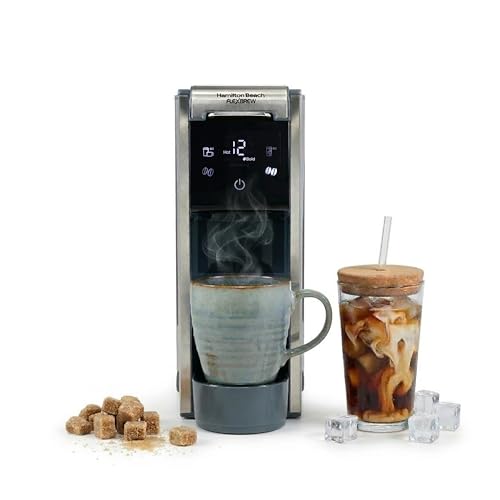
Hamilton Beach FlexBrew Advanced 4-in-1 Single Serve Coffee Maker
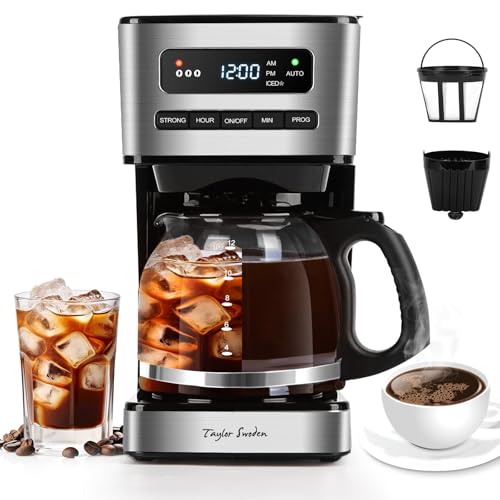
Taylor Swoden Programmable Coffee Maker 12 Cup Black & Stainless Steel
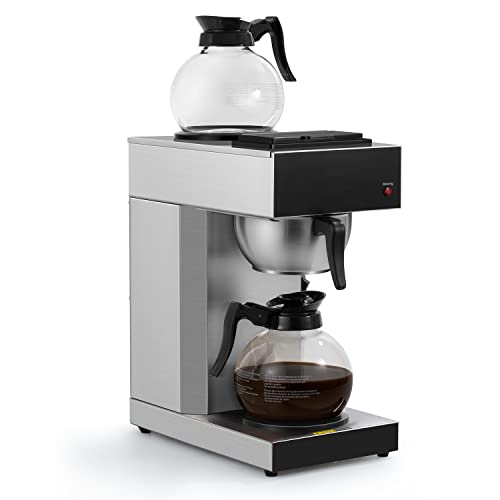
SYBO 12-Cup Commercial Pour Over Coffee Maker SF-CB-2GA

Keurig K-2500 Single Serve Commercial Coffee Maker

Keurig K-1550 Small Business Single Serve Coffee Maker 96 oz Water Reservoir Black

Cafe Bueno Super Automatic Espresso Machine
More Details On Our Top Picks
Shared office coffee usually turns into a compromise, and this Hamilton Beach model handles that reality better than a lot of simple single-serve brewers. You get pod compatibility for fast solo cups, plus ground coffee for a full 12-cup pot, so morning routines do not have to line up perfectly.
The black finish keeps the look straightforward, and the two-way layout suits offices that need one machine for different habits. In a break room with early risers and occasional all-hands meetings, that flexibility matters more than flashy extras. The trade-off is that a combo brewer still takes more counter room than a basic pod-only unit.
Strong Points
- Pod and ground brewing keep it useful across different office routines.
- The 12-cup side helps serve a group without constant refills.
- Single-serve brewing makes a quick cup easy between meetings.
- The straightforward black finish blends into most break rooms.
Worth Noting
- Dual-function designs usually need more countertop space than a single-brew machine.
- Having two brewing paths means a little more cleanup after busy mornings.
Feature Snapshot
Who It Suits Best
You’ll get the most value from this pick in a shared office that needs one machine for both solo use and group pours.
Where A Sibling Pick Shines
AIRMSEN 12-Cup Programmable Dual Coffee Maker suits offices that want a set-and-forget timer and a touchscreen interface.
This AIRMSEN option leans into convenience with a programmable layout, a touchscreen, and a 60 oz tank that cuts down on constant refilling. For a team that likes coffee ready on schedule, the delay-start function is the kind of detail that quietly makes mornings smoother.
The 12-cup glass carafe handles group brewing, while the single-serve side keeps one-off cups simple. Compared with the Hamilton Beach FlexBrew Trio, this one feels more centered on routine planning than on multi-style flexibility. The honest read is that touch controls can be great for clarity, but they also put more responsibility on the interface staying intuitive for everyone who uses it.
What We Like
- Programmable brewing helps coffee be ready before the rush starts.
- The 60 oz tank reduces the number of refill stops.
- Touchscreen controls keep the front panel easy to understand at a glance.
- Single-serve and carafe modes cover both solo cups and group pours.
- Two-hour warming support helps a pot stay usable through a long meeting block.
Areas To Watch
- Touch controls can feel less immediate than physical buttons in a busy break room.
- The glass carafe needs a little more care than a thermal-style setup.
- Programming features help most when one person keeps the settings consistent.
Core Details
Made For
You’ll appreciate this most in an office that wants a planned brewing rhythm and a visible, easy-to-follow control panel.
A Better Fit Elsewhere
Hamilton Beach FlexBrew Advanced 4-in-1 Single Serve Coffee Maker suits smaller shared spaces that want more pod, grounds, hot, and iced flexibility in one compact footprint.
Some office kitchens need a machine that does a lot without taking over the counter, and this Hamilton Beach model fits that brief neatly. Its 4-in-1 setup supports pod packs and grounds, while the removable 45 oz reservoir makes daily top-offs less awkward.
The hot-and-iced angle gives it more range than the simpler FlexBrew Trio, especially in offices where one person wants a warm cup and another wants something colder in the afternoon. The trade-off is plain enough, a single-serve machine like this suits smaller teams better than a full carafe brewer. Still, for a tidy shared counter, it feels practical rather than overbuilt.
Bright Spots
- Four brewing modes give it more range than a basic single-serve machine.
- Hot and iced support makes it useful across seasons.
- The 45 oz reservoir helps reduce constant water top-offs.
- Pod packs and grounds both fit, so supply options stay flexible.
Points To Note
- Single-serve design suits smaller groups better than large all-office service.
- Removable water parts need regular rinsing to stay easy to maintain.
Details At A Glance
The Right Fit
You’ll get the most from this pick in a small office kitchen where counter space matters as much as drink variety.
Another Choice May Suit
SYBO 12-Cup Commercial Pour Over Coffee Maker SF-CB-2GA suits busier break rooms that want larger-batch brewing and two glass carafes.
A straightforward drip machine often earns its keep in the office by staying out of the way, and this Taylor Swoden model leans into that role. The 12-cup capacity, 24-hour timer, and LED display make it easy to set up before the workday starts, so coffee is ready without anyone hovering over the counter.
Its black and stainless steel finish gives it a more polished look than plain plastic brewers, which helps in a front-facing reception area or shared kitchen. Compared with the AIRMSEN, it feels more like a classic drip machine with a few useful upgrades, not a hybrid system. The honest caveat is that simple drip designs are easy to live with, but they do ask you to keep the carafe and brew path clean on a regular basis.
Reasons To Buy
- The 12-cup size works well for standard office coffee traffic.
- Programming the brew time helps mornings run more smoothly.
- Four brew-strength settings let you match stronger or lighter coffee to the room.
- The LED display makes status checks quick and clear.
- Auto shutoff adds a practical layer of convenience for shared use.
Small Caveats
- Drip machines need regular cleaning to keep flavor buildup in check.
- The feature set is practical, but it’s less flexible than a dual-format brewer.
Feature Card
Whose Shelf It Belongs On
You’ll like this best in a conventional office kitchen where routine, not novelty, is the priority.
Where A Sibling Pick Shines
AIRMSEN 12-Cup Programmable Dual Coffee Maker suits you better when you want both single-serve and carafe brewing in the same footprint.
In a busy break room, a pour-over commercial brewer often makes more sense than a feature-heavy home model, and this SYBO unit follows that logic closely. Stainless steel construction, a reusable brew basket, and a spray head built for even water distribution point toward steady group brewing rather than fancy extras.
The two included glass carafes help keep service moving, especially during staggered meetings or shift changes. Compared with the Taylor Swoden, this one is less about timer convenience and more about keeping a crowd supplied with minimal fuss. The catch is that a commercial-style machine usually rewards consistent upkeep, so you’ll want a routine for basket cleaning and carafe care.
Best Bits
- Commercial styling fits busy shared spaces well.
- Stainless steel construction suits hard-working office environments.
- The reusable brew basket cuts down on disposable paper filter use.
- Two glass carafes help you keep coffee flowing during meetings.
Honest Caveats
- Glass carafes need more careful handling than thermal servers.
- The commercial form factor can feel more than some small offices need.
- Reusable parts ask for a steady cleaning routine.
Technical Sheet
Best Suited To
You’ll benefit most from this brewer in a larger office or communal kitchen that needs steady batch output.
Look Elsewhere When
Keurig K-1550 Small Business Single Serve Coffee Maker suits smaller teams that want individual cups and a larger reservoir instead of two glass carafes.
This Keurig is built for offices that want single-serve convenience without acting like a household machine dressed up for work. Its main advantage is installation flexibility, since you can go with a plumbed setup or use the optional 110 oz reservoir, depending on your space and plumbing access.
That flexibility gives it an edge in offices with steady traffic, especially where nobody wants to keep checking water levels. Compared with the K-1550, it feels more adaptable to built-in or semi-permanent setups, while the smaller model is easier to place and manage. One thing worth considering is that commercial installation choices can shape the whole experience, so the best fit depends on how fixed your coffee station really is.
Highlights
- Plumbed setup support suits a more permanent coffee station.
- The optional 110 oz reservoir gives you another placement path.
- Single-serve brewing keeps lineups short in busy offices.
- The commercial design fits steady daily use.
Room For Improvement
- Installation planning matters more here than with a simple countertop brewer.
- The setup choice can make this feel more specialized than a plug-and-go unit.
Core Details
Who Should Grab It
You’ll get the most out of this machine in a busier office that can support a fixed coffee station.
Where A Sibling Pick Shines
Keurig K-1550 Small Business Single Serve Coffee Maker suits smaller offices that want a simpler reservoir-driven setup.
The K-1550 takes the familiar single-serve office formula and gives it a larger 96 oz reservoir, which matters more than it sounds like in a shared setting. Fewer refills mean fewer interruptions, and that alone can make the coffee station feel calmer during a packed morning.
Compared with the K-2500, this model is easier to think about as a straightforward countertop solution rather than a more permanent install. It suits small businesses that want individual cups without moving into a full commercial installation project. The trade-off is simple, you get convenience and capacity, not the broader install flexibility of the K-2500.
Upsides
- The 96 oz reservoir supports more cups before a refill is needed.
- Single-serve brewing keeps the pace quick in shared spaces.
- The black finish stays visually understated.
- Its layout works well for a small business kitchen.
Points To Note
- Single-serve machines ask you to keep pod supply organized.
- The design is practical, though it does not offer the same install choices as the K-2500.
At A Glance
Built With In Mind
You’ll like this best in a compact office where individual cups matter more than batch brewing.
Where A Sibling Pick Shines
SYBO 12-Cup Commercial Pour Over Coffee Maker SF-CB-2GA suits spaces that need a larger shared pot and two carafes instead of single cups.
Espresso-focused offices need a different kind of machine, and this Cafe Bueno setup is clearly aimed at that lane. A built-in grinder and milk frother mean you can move toward drinks like lattes, cappuccinos, and macchiatos without stacking separate appliances across the counter.
The auto wake and sleep behavior adds a little convenience for daily office use, especially in a space where the machine might sit idle between waves of people. Compared with the Keurig and drip options above, this one asks for more attention and a bigger commitment to maintenance, but it rewards that with a much broader espresso-style menu. The honest read is that it makes sense only where someone actually wants that café-style routine.
Best Bits
- The built-in grinder keeps the workflow compact.
- Milk frothing support widens the drink options.
- Auto wake and sleep help it fit office schedules.
- It suits espresso drinks better than standard drip machines.
Trade Offs
- Super-automatic machines usually need more cleaning than simpler brewers.
- The learning curve is higher than a single-button drip machine.
- It makes the most sense only in offices that will use espresso drinks regularly.
Feature Rundown
Perfect Match For
You’ll get the most from this machine in an office where espresso drinks are part of the regular routine, not an occasional extra.
Skip It When
Taylor Swoden Programmable Coffee Maker 12 Cup Black & Stainless Steel is the steadier fit for offices that mainly want simple drip coffee and easier upkeep.
How To Choose The Right Coffee Machines For Office
Match the machine to the workday rhythm
Coffee use in an office rarely looks like home use. You may need a brew that starts before the first arrival, another that serves a meeting block, and a quick single cup between calls. That’s why timer controls, reservoir size, and brew format matter more than fancy trim.
A 12-cup drip machine suits steady group demand, while a single-serve model fits scattered schedules better. Combo machines sit in the middle and are useful when the same counter serves both habits. The trade-off is space, because flexibility usually adds footprint.
Decide how many cups you really need
Capacity sounds simple, but it changes the whole experience. A 96 oz reservoir can cut down on refilling, while a 12-cup carafe helps during team mornings or standing meetings. Smaller offices often do better with single-serve designs because waste stays lower and each person gets a fresh cup.
The right capacity also depends on how patient the room is. Busy teams usually prefer fewer interruptions, while smaller groups may value compact size over batch output. That’s where the Keurig commercial models and the larger drip brewers start to separate clearly.
Think about cleanup and upkeep
Office coffee machines live or die by maintenance. Reusable baskets, removable reservoirs, and straightforward carafes are easier to manage than setups that demand several fiddly parts every day. Glass carafes also need more care than thermal-style serving, even though they’re familiar and easy to replace.
A simpler machine often wins on consistency, not flash. That matters in shared spaces where nobody wants to become the unofficial coffee attendant. The best choice is usually the one the whole office will actually keep clean.
Choose features that match how the room drinks coffee
Some offices are all about plain drip coffee, while others want pods, iced drinks, or espresso drinks with milk foam. Pod-compatible machines make sense where speed matters and preferences vary. Super-automatic espresso machines cost more because they combine grinding, brewing, and milk handling in one system.
That upgrade only pays off when espresso drinks are part of the routine. Otherwise, a simpler brewer is easier to live with and easier to maintain. In most offices, practicality beats range unless the coffee station is becoming a real perk.
Before You Click Further
Common Shopping Slip Ups
A common mistake is choosing for maximum features instead of daily use. A machine with several modes sounds appealing, but a small office may never use half of them.
Another misstep is ignoring countertop space. A dual-brew machine or commercial setup can crowd a break room fast, and that makes cleanup and refilling more awkward than expected.
Why Top Tier Costs More
Higher-tier machines usually add plumbing options, grinders, milk systems, sturdier materials, or more automated controls. Those parts raise the price because they replace separate tools and reduce the number of steps needed for a café-style drink.
That upgrade makes sense in offices that treat coffee as a steady daily service. For casual use, a simpler brewer leaves less to maintain and less to teach new staff.
Frequently Asked Questions
What size coffee machine works best in an office?
A 12-cup drip machine fits many shared kitchens because it serves groups without constant refills. Single-serve models work better in smaller offices or places with uneven coffee habits.
Is a pod machine enough for a busy workplace?
A pod machine works well when speed and individual preference matter most. Larger teams usually prefer either a bigger reservoir or a carafe-based option.
Do programmable coffee makers help in offices?
Yes, timing features help the machine be ready before the first rush. That saves time in the morning and keeps the coffee station less crowded.
Are commercial coffee machines harder to maintain?
They usually ask for more regular care, especially around baskets, reservoirs, and carafes. In return, they handle heavier use more comfortably.
Is espresso worth it for office use?
It makes sense when people actually want espresso drinks on a regular basis. For basic black coffee, a simpler drip or single-serve machine is usually the easier path.
Final Thoughts
The best office coffee machine is the one that matches your room, not the one with the most features on paper. A dual-brew model works well for mixed habits, while a commercial single-serve unit fits busier counters with less mess. If your team wants plain drip coffee, the Taylor Swoden and SYBO both make sense in different ways. For espresso-heavy spaces, the Cafe Bueno is the clear step up, as long as your office is ready for the extra upkeep.
