

You need a coffee maker that matches the way your day actually runs, whether you brew one pod before work, prepare a full pot for the household, or keep a shared office station moving. The six choices below focus on practical differences such as pod and ground compatibility, dispensing design, programmable controls, capacity, and counter space. You’ll find flexible combo machines, internal-tank brewers, and compact single-serve options. A clear fit matters more than a long feature list, especially in a busy kitchen where cleanup and refilling can quickly become part of your morning routine.
The Shortlist at a Glance

Hamilton Beach FlexBrew Trio Coffee Maker (49902)

Hamilton Beach One Press BrewStation 12 Cup (47950)
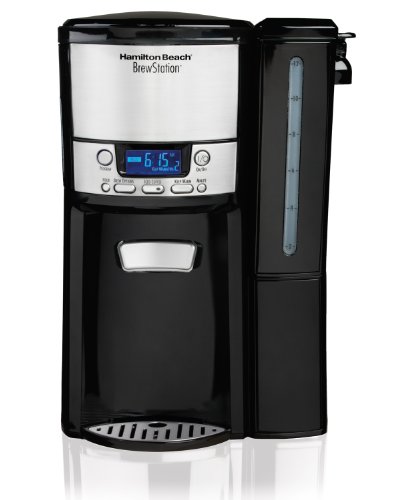
Hamilton Beach One Press BrewStation 12 Cup (47900)


AIRMSEN 12-Cup Programmable Dual Coffee Maker

Hamilton Beach FlexBrew Trio Coffee Maker (VINCI)
More Details on These Top Picks
Your countertop gets three brewing paths in one unit: a pod or ground-coffee single serving, plus a conventional 12-cup ground-coffee pot. That arrangement suits a household where one person wants a quick mug and another wants a full glass carafe ready for breakfast.
The pod-and-ground flexibility gives you more control than a basic single-serve brewer, while the 12-cup side handles group use. You may find the larger footprint less convenient in a narrow galley kitchen, but the format makes sense for a home or office station that regularly switches between personal mugs and batch brewing.
Strong Points
- Three brewing routes reduce the need for a second coffee machine.
- Pod compatibility makes quick single-cup preparation straightforward.
- Ground-coffee brewing supports a full 12-cup glass carafe.
- The separate formats suit mixed preferences during busy mornings.
Things to Consider
- Cleaning takes more attention because you’re maintaining both single-serve and carafe components.
- The wider combination design needs more counter space than a basic drip brewer.
Key Specs
Who It Suits Best
You’ll appreciate this brewer most in a mixed-preference household, shared workspace, or kitchen where one-cup and full-pot brewing both happen regularly.
Where Another Pick Suits Better
Hamilton Beach One Press BrewStation 12 Cup (47950) suits you better when spill-resistant dispensing and a removable reservoir matter more than pod flexibility.
Serving coffee directly from an internal coffee pot changes the morning routine: you press a cup against the dispenser instead of lifting a glass carafe. The 60-ounce removable reservoir also gives you a simpler filling path, especially beside a sink with limited clearance.
Compared with the FlexBrew Trio, this model focuses on batch coffee rather than pod variety. In most kitchens, that narrower purpose feels tidy and convenient, though you’ll need a separate approach for pod-only preferences.
What You’ll Like
- The internal pot removes a fragile glass carafe from the serving step.
- One-press dispensing works well for repeated cups during meetings or breakfast.
- The removable 60-ounce reservoir makes filling and carrying water easier.
- A reusable filter keeps recurring paper-filter purchases out of the routine.
- The stainless steel and black exterior fits many office or kitchen setups.
Worth Noting
- The internal tank and dispensing area require regular rinsing to keep coffee residue from building up.
- Without pod brewing, you’ll want ground coffee prepared for every batch.
- The carafe-free design can make it harder to pour coffee into another container.
At a Glance
Made for
You’re a strong match for this choice when your household brews ground coffee by the pot and serves it gradually across the morning.
Consider Something Else When
Hamilton Beach FlexBrew Trio Coffee Maker (49902) fits you better when your routine includes both K-Cup pods and full-pot brewing.
A four-hour warm-serving window makes this BrewStation appealing for a household that pours coffee in stages instead of all at once. Its internal tank follows the same carafe-free idea as the 47950, so you press your mug into the dispensing area rather than handling a hot glass vessel.
The honest distinction between this model and the 47950 is the finish and listing variation, not a different brewing concept. You may find this version a sensible route for steady pot brewing, provided you’re comfortable cleaning the internal reservoir and dispensing mechanism after regular use.
Highlights
- The internal tank keeps the serving process centered on the machine.
- A stated four-hour warm period supports staggered cups.
- The 12-cup format works for family breakfasts and shared desks.
Trade-Offs
- The internal tank needs attentive cleaning because residue can collect out of sight.
- Ground coffee is the stated brewing route, so pod users need another setup.
Technical Sheet
Right Fit for
You’ll get the most value from this model in a home or small workplace where brewed coffee is served over several hours.
A Better Fit Elsewhere
Hamilton Beach One Press BrewStation 12 Cup (47950) suits you more when a removable 60-ounce reservoir and reusable filter are priorities.
The 12C Brewstation keeps the focus on a 12-cup coffee format without adding a long list of documented features. That can work well for you when a straightforward batch brewer suits your routine and you don’t need pod compatibility or advanced programming.
Compared with the more fully described BrewStation 47900, this listing gives you less confirmed detail to weigh before purchase. For most kitchens, that makes the choice more suitable for shoppers who already know they want this style of brewer and can verify the current listing information before ordering.
Upsides
- The 12-cup capacity supports shared morning coffee.
- The Brewstation format points toward direct serving rather than a standard carafe routine.
Room for Improvement
- Limited source detail makes feature comparison less certain than with the other listed models.
- You’ll need to confirm the current listing details for cleaning and control features.
- Its batch-focused design doesn’t address single-cup pod brewing.
Quick Facts
Who Will Love This
You’re best suited to this item as a straightforward 12-cup coffee routine, especially in a household that doesn’t need pod brewing.
Look Elsewhere When
AIRMSEN 12-Cup Programmable Dual Coffee Maker suits you better when you want documented pod support, delay start, and multiple batch sizes.
Touchscreen controls, delay start, and two brewing paths give you more scheduling control than the simpler Hamilton Beach options. The multi-serve side handles four, six, eight, ten, or twelve cups, while the single-serve side accepts K-Cup pods or ground coffee.
That range makes this AIRMSEN especially useful for a home office or household with changing demand. You may appreciate the two-hour keep-warm setting during a work block, though the touchscreen and extra functions create more controls to learn and keep clean than a basic brewer.
Reasons to Buy
- Multiple batch sizes help you avoid brewing twelve cups for one or two people.
- Pod and ground compatibility gives you a choice of convenience or custom grounds.
- Delay start can coordinate brewing with a regular morning schedule.
- The 60-ounce tank supports repeated cups without constant refilling.
- A glass carafe provides a familiar way to serve multi-cup coffee.
Points to Note
- The touchscreen adds an electronic control layer that may feel excessive for simple drip coffee.
- The glass carafe needs careful handling and routine cleaning around the lid and brew area.
- A two-hour keep-warm period is shorter than the four-hour period described for the BrewStation 47900.
Feature Rundown
Whose Shelf It Belongs On
You’ll suit this model best when you want programmable dual brewing and adjustable batch sizes for a busy household or office.
Another Choice May Suit
12C Brewstation suits you better when you prefer a simpler 12-cup setup and don’t need touchscreen scheduling or pod brewing.
Small spaces change the coffee equation, and this VINCI-listed design centers on compact single-serve brewing. You can use standard K-Cup pods in four, six, eight, ten, or twelve-ounce portions, or switch to the included reusable filter cup for a ground-coffee serving up to 20 ounces.
The enclosed brewing system is designed to retain heat, while Circle Flow moves water through the grounds during extraction. Compared with the full 12-cup Hamilton Beach FlexBrew Trio, this option gives you less batch capacity but a much easier fit for a dorm, crowded desk, RV, or travel kit.
Bright Spots
- The 4.5-inch base footprint helps it fit on tight desks and narrow counters.
- A 9.2-inch height can work beneath more overhead cabinets than a full-size combo machine.
- The cord stores under the base, making storage and transport tidier.
- The reusable filter cup handles ground coffee portions up to 20 ounces.
- Five pod serving sizes let you adjust the mug volume.
- The enclosed brew path is intended to retain heat through extraction.
Small Caveats
- The 20-ounce maximum is not a substitute for a family-size carafe.
- You’ll need to rinse the reusable filter cup after ground-coffee use to prevent residue buildup.
Feature Card
Built With In Mind
You’re the right match for this brewer as a dorm resident, commuter, traveler, or office user with limited counter space and mostly single-cup needs.
Swap It Out When
AIRMSEN 12-Cup Programmable Dual Coffee Maker fits you better when several people need coffee and you want programmable batch brewing.
How to Choose the Right Made Coffee Makers
Match Capacity to Your Routine
A 12-cup label refers to coffee-maker cup measures, not twelve large travel mugs. For a household that serves several people, a full-pot model such as the Hamilton Beach FlexBrew Trio gives you useful batch capacity. A solo commuter may prefer the VINCI compact option, where four to twelve-ounce pod settings or a ground-coffee serving up to 20 ounces better match one mug.
Decide Between a Carafe and Direct Dispensing
A glass carafe is familiar and easy to pour into another container, but it adds a breakable part and a separate surface to clean. Internal-tank brewers such as the BrewStation models dispense directly from the machine, which can reduce lifting during repeated servings. That design suits an office or long breakfast, while a carafe remains more practical for carrying coffee to the table.
Check Your Coffee Format
Pod compatibility saves measuring and speeds up a single cup, while ground brewing gives you control over the coffee dose and blend. Combo machines add flexibility, but you’ll maintain more parts, including pod holders, reusable filters, and a carafe or internal tank. Your regular habit should decide the trade-off, not the longest feature list.
Consider Controls and Counter Space
Programmable delay start matters for a fixed morning schedule, while touchscreen controls may feel unnecessary for occasional brewing. Measure shelf height as well as countertop width, especially beneath cabinets. The AIRMSEN brings more scheduling and batch-size choices, whereas the VINCI prioritizes a small 4.5-inch base.
Things Worth Knowing First
Mistakes Worth Dodging
You can easily overestimate a “12-cup” capacity by comparing it with oversized mugs. Check the serving format and decide whether you need a full pot, several smaller cups, or one travel mug. Also account for cleaning access around an internal tank, reusable filter, pod holder, and dispensing spout.
A dual brewer can save space only when you use both sides. For pod-only mornings, a compact single-serve machine may take less room and involve fewer components.
Where the Extra Money Goes
Higher-tier coffee makers often charge more for scheduling, adjustable batch sizes, touchscreen controls, larger reservoirs, or dual-format brewing. Those additions can help in a shared kitchen where routines change from one day to the next. They’re harder to justify for a single daily mug, where a compact brewer with clear pod or ground compatibility may serve you better.
Final Verdict
You’ll find the strongest match by starting with your daily serving pattern. Choose the Hamilton Beach FlexBrew Trio for three-way flexibility, a BrewStation for carafe-free batch serving, AIRMSEN for scheduling and adjustable output, or the VINCI compact model for tight spaces. Capacity, cleanup, and coffee format matter more than a crowded control panel. Pick the design that fits your counter and your morning without asking you to maintain features you won’t use.
