

Latte drinks at home get easier when the machine matches your routine, your counter space, and how much control you want over grind, foam, and cleanup. Some of these picks suit someone who wants a one-touch cup before work, while others fit a weekend drink ritual with more manual control. You also get a spread of sizes and formats, from compact semi-automatic units to fuller systems with grinders and milk handling built in. That mix matters more than flashy extras.
The Shortlist At A Glance

De’Longhi Magnifica Evo Automatic Espresso Machine, Silver

KEENSTAR 3.5Bar Espresso Machine 800W

XIXUBX Espresso Machine with Milk Frother

Ninja Luxe Café Pro Series ES701
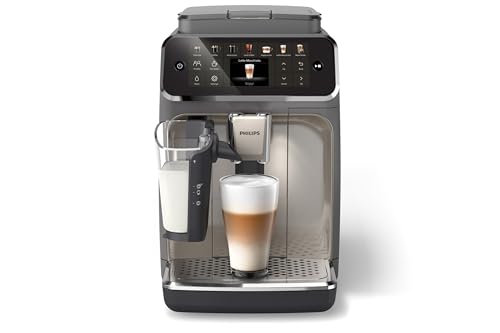
Philips 4400 Series Fully Automatic Espresso Machine EP4444/90

AIRMSEN 20 Bar Espresso Machine with Automatic Milk Frother

AMZCHEF 20 Bar Home Espresso Coffee Machine
More Details On Our Top Picks
De’Longhi’s fully automatic format suits a kitchen where you want latte drinks without building every cup from scratch. The built-in grinder and one-touch recipe approach cut the usual clutter of separate tools, so you spend less time lining up accessories and more time pouring. For households that share the machine, that simplicity is the point.
The trade-off is that a super-automatic machine like this asks for more counter depth and a little more upkeep than a basic steam wand setup. The honest read is that you get the most value when you want repeatable espresso, not hands-on tinkering, and that makes it a strong fit for daily drinkers who prefer consistency over ritual.
Strong Points
- Built-in grinding reduces the need for a separate grinder.
- One-touch drink selection keeps weekday routines moving.
- Automatic workflow suits shared kitchens well.
- Fresh grinding before brewing helps support a cleaner cup path.
- Good fit for latte drinkers who want less manual setup.
Things To Consider
- Super-automatic machines usually take more counter space than compact semi-automatic units.
- The convenience comes with more parts to clean and maintain.
- You give up some hands-on control compared with a manual steam-and-pull routine.
Key Specs
Who It Suits Best
Home espresso drinkers who want a streamlined routine and regular latte use will get the most from this machine.
A Better Fit Elsewhere
Philips 4400 Series Fully Automatic Espresso Machine EP4444/90 suits you better if a wider preset menu and saved profile memory matter more than De’Longhi’s simpler approach.
KEENSTAR stays small, and that matters in apartments, dorm-style kitchens, or anywhere counter space feels scarce. The single-knob layout keeps the learning curve gentle, which suits someone who wants latte-style drinks without moving into a bigger, more complex machine.
Compared with the De’Longhi above, this one asks for more manual attention and gives you far less automation, but that also keeps the setup simpler and lighter. You may find it best as a step up from instant coffee rather than a long-term stand-in for a full café-style setup.
What We Like
- Compact footprint works well on tight counters.
- Single-knob control keeps operation straightforward.
- Fast heating is useful for quick morning cups.
- Steam wand support lets you build milk drinks by hand.
Room For Improvement
- 3.5-bar pressure is modest beside the higher-pressure machines in this list.
- Manual steaming takes more attention than automatic milk systems.
- Smaller capacity makes it better for one or two servings at a time.
Feature Snapshot
Made For
New espresso users and small-space kitchens are the clearest match for this compact machine.
Swap It Out When
XIXUBX Espresso Machine with Milk Frother suits you better if you want stronger pressure, a gauge, and more room for more involved milk drinks.
This XIXUBX lands in the middle of the pack in a useful way, because the 20-bar pump and pressure gauge give you more control than the KEENSTAR while staying simpler than a fully automatic system. The stainless steel body also gives it a sturdier, more kitchen-ready feel for everyday use.
For someone who likes to shape espresso and milk drinks by hand, the included milk frothing pitcher is a practical touch rather than a showpiece. The honest read is that it fits people who want visible feedback from the gauge and do not mind staying a little involved in the process.
Highlights
- 20-bar pump supports a more pressure-forward espresso routine.
- Built-in gauge helps you track extraction at a glance.
- Removable 42-ounce tank makes refilling less awkward.
- Stainless steel construction should hold up well in daily kitchen use.
- Milk frothing pitcher adds a useful hands-on latte accessory.
Softer Spots
- Manual workflow asks for more attention than automatic milk systems.
- The machine still takes some practice to keep drinks consistent.
- Cleaning the pitcher and steam parts adds a little routine upkeep.
Core Details
Who Will Love This
Hands-on latte drinkers who want a little more control without moving into a full super-automatic machine fit this model well.
A Better Fit Elsewhere
AIRMSEN 20 Bar Espresso Machine with Automatic Milk Frother suits you better if you want less manual milk work and a more guided path to espresso drinks.
The Ninja Luxe Café Pro Series is built for households that want more than latte drinks from the same footprint. Espresso, drip coffee, cold brew, and hot water service turn it into a daily all-rounder, and the integrated tamper helps keep espresso prep tidier than juggling extra tools.
That broader range does make it less focused than the De’Longhi or Philips picks, so you are paying for versatility as much as latte capability. For larger kitchens, or for homes where one person wants espresso while another wants drip, that trade-off makes sense.
Upsides
- Four drink functions reduce the need for separate countertop appliances.
- Built-in grinder and integrated tamper keep espresso prep contained.
- Hands-free frother supports dairy and non-dairy milk alike.
- Useful for homes with mixed coffee habits.
- Hot water function adds day-to-day flexibility.
Points To Note
- The larger feature set also means a larger learning curve.
- More functions can mean more cleaning after a busy week.
- It makes more sense in roomy kitchens than in tight corners.
Details At A Glance
The Right Fit
Households that want one machine to cover espresso, drip, and milk drinks without splitting tasks across multiple appliances fit this model best.
Look Elsewhere When
Philips 4400 Series Fully Automatic Espresso Machine EP4444/90 suits you better if your priority is a more focused latte routine with saved profiles and fewer style-switching features.
Philips leans hard into ease, and that shows in the fully automatic format, integrated grinder, and LatteGo milk system. For a home where coffee changes from one morning to the next, the 12 presets give you enough range without making the machine feel complicated.
The color display and saved profiles matter more than they sound on paper, because they reduce repeat fiddling for shared kitchens. Compared with the Ninja Luxe Café Pro Series, this model focuses more tightly on espresso and milk drinks instead of spreading across several brewing modes.
Best Bits
- 12 presets cover a broad range of hot and iced drinks.
- LatteGo milk handling keeps foaming straightforward.
- Saved profiles help return to preferred settings fast.
- Integrated grinder makes the espresso workflow more contained.
- Quiet operation is useful in early-morning kitchens.
Small Caveats
- Fully automatic machines usually need regular cleaning attention.
- The interface is friendly, but the unit still takes up dedicated counter space.
- More presets can be overkill for anyone who only drinks one style.
Feature Rundown
Whose Shelf It Belongs On
Busy households that want a preset-driven latte setup with minimal daily fiddling will get the most from this Philips.
Skip It When
De’Longhi Magnifica Evo Automatic Espresso Machine, Silver suits you better if you want a simpler recipe set and a more straightforward super-automatic layout.
AIRMSEN pushes for speed and hands-off convenience, with a dual-boiler layout that separates brewing and steaming tasks. For a kitchen that serves several drinks in a row, that structure can feel more efficient than smaller single-purpose setups, especially since the automatic frother removes another manual step.
The 60-ounce tank also supports longer stretches between refills, which is useful for households that make multiple cups before heading out. Compared with the XIXUBX, this one leans more toward automation and capacity than toward pressure-gauge guidance.
Reasons To Buy
- 20-bar pressure gives it a serious espresso-oriented foundation.
- Automatic milk frothing keeps drink prep hands-light.
- Dual-boiler design helps brewing and steaming work more efficiently.
- 60-ounce tank suits families or frequent drink-making.
- Touchscreen control should feel familiar to most kitchens.
Areas To Watch
- The feature set is more involved than a simple starter machine.
- Automatic components usually mean more cleaning points over time.
- The dual-boiler setup can take up more room than compact units.
At A Glance
Built With In Mind
Frequent latte makers who want a guided, high-capacity machine with automatic milk handling are the clearest match here.
Where A Sibling Pick Shines
XIXUBX Espresso Machine with Milk Frother suits you better if you want a more manual setup with a pressure gauge and a simpler countertop footprint.
AMZCHEF keeps the learning curve friendly, and the LED touchscreen plus memory function make that obvious. For someone setting up a first espresso station, the self-cleaning mode is a helpful comfort, because maintenance often decides whether a machine stays in regular use.
It sits closer to the beginner side than the AIRMSEN or De’Longhi units, yet still brings 20-bar pressure and a built-in milk frother. That balance makes it a sensible starting point for latte drinks without pushing you into a complicated machine right away.
Positives
- Touchscreen controls keep the interface approachable.
- Memory function helps store preferred drink settings.
- Self-cleaning mode lowers the day-to-day upkeep burden.
- 20-bar pressure gives it a serious espresso base.
- Built-in frother supports latte and cappuccino prep.
Trade Offs
- Beginner-friendly design usually means less manual control.
- Built-in convenience can still require regular descaling and wipe-downs.
- The machine is more focused on espresso drinks than on broader coffee variety.
Core Details
Right Fit For
New espresso users and anyone who wants a cleaner, simpler path into latte-making will find this AMZCHEF easy to live with.
Another Choice May Suit
Philips 4400 Series Fully Automatic Espresso Machine EP4444/90 suits you better if you want more presets, saved profiles, and a more polished automatic milk workflow.
How To Choose The Right Latte Coffee Machines
Match Automation To Your Routine
Latte machines split into clear camps. Fully automatic models like the De’Longhi Magnifica Evo and Philips 4400 handle grinding, brewing, and milk work with less effort, while semi-automatic picks like the KEENSTAR, XIXUBX, and AMZCHEF ask for more of your attention. That difference matters most on busy mornings, because convenience usually decides whether the machine gets used every day or only on weekends.
Look Closely At Milk Handling
Milk systems shape the whole experience. Automatic frothers, such as those on the AIRMSEN and Philips, cut down on manual work, while steam wands on the KEENSTAR and XIXUBX give you more control over foam texture. The trade-off is simple, automated milk is faster, manual steaming lets you tune the result more closely.
Pay Attention To Pressure And Capacity
Pressure, measured in bar, influences how forcefully water moves through the coffee puck. Higher numbers do not fix every issue, but the 20-bar models in this list usually give you more flexibility than the 3.5-bar KEENSTAR. Capacity matters too, since a 60-ounce tank like AIRMSEN’s suits frequent use far better than a compact 4-cup layout.
Think About Cleanup And Counter Space
A latte machine lives or dies by maintenance. Built-in grinders, frothers, and touch controls make drinks easier, yet they also add parts that need regular cleaning and more room on the counter. Smaller kitchens usually benefit from a tighter semi-automatic unit, while larger households can justify the added footprint of a fuller system.
What To Weigh Before You Decide
Common Shopping Slip Ups
A lot of kitchen headaches start with buying for the drink, not the routine. A machine can make fine espresso on paper and still feel awkward if the tank is too small, the milk system is too manual, or the footprint swallows your counter. Matching the format to how often you make lattes keeps the machine from becoming clutter.
What The Higher Tier Buys
Higher-priced models usually bring grinders, automated milk handling, preset drink menus, and more refined controls. Those parts cost more because they reduce steps, not because they magically improve every cup. The upgrade makes sense when you want speed, repeatability, and a cleaner workflow, especially for households where coffee is part of the daily rush.
Closing Thoughts
Latte Coffee Machines vary more than the name suggests, and that’s good news for you. You can go compact and simple with KEENSTAR, move into more control with XIXUBX, or choose a fuller automation path with De’Longhi, Philips, or AIRMSEN. The right match comes down to how much work you want to keep in the cup-making process. Pick the format that fits your mornings, and the machine earns its place quickly.
