

Large-capacity brewers earn their keep in homes that run on more than one cup at a time. You need enough output for breakfast rounds, office pots, or a steady stream of guests, plus controls that don’t turn a simple routine into a chore. The seven picks below focus on volume, ease of filling, and real counter-use fit, not flashy extras.
Quick Look At The Shortlist

Hamilton Beach One Press Programmable Dispensing 12 Cup Coffee Maker
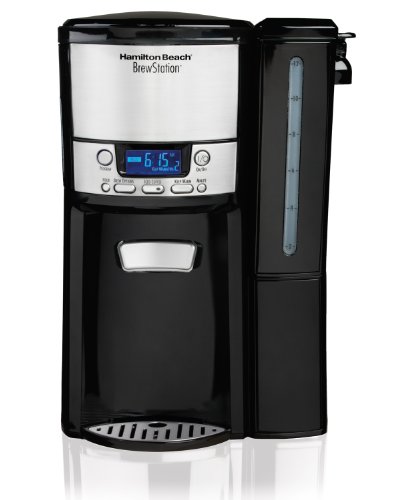
Hamilton Beach One Press Programmable Dispensing 12 Cup Coffee Maker


AIRMSEN 14-Cup Programmable Drip Coffee Maker

Hamilton Beach 2-Way Drip Coffee Maker & Single Serve Coffee Machine
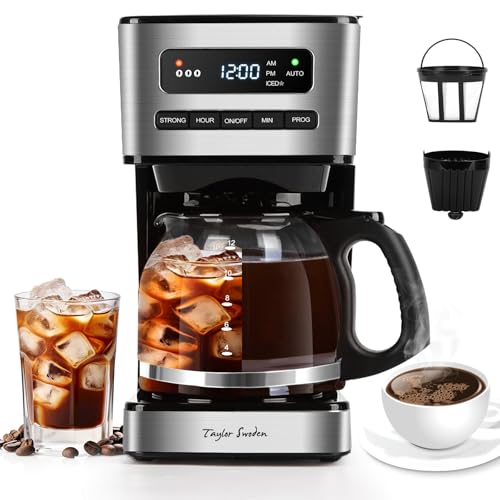
Taylor Swoden Programmable Coffee Maker 12 Cup

Homecraft 100-Cup Coffee Urn and Hot Beverage Dispenser
More Details On Our Top Picks
Hamilton Beach’s dispensing setup suits kitchens that want a full pot without the usual carafe shuffle. The removable 60-ounce reservoir also makes filling less awkward, especially on a crowded counter where a pitcher or sink move gets annoying fast.
For family breakfasts or office breakrooms, the internal coffee tank keeps serving simple and helps the brewer stay cleaner than a glass-pot routine. The honest trade-off is that the carafe-style ritual disappears, so this fits practical use more than a classic pour-and-share setup.
What We Like
- Dispensing from the internal tank reduces spills during serving.
- The removable reservoir makes refills easier in tight kitchens.
- Programmable operation suits early starts and routine weekday brewing.
- The design trims the usual cleanup tied to stained glass carafes.
Things To Consider
- The serving style is different from a standard drip brewer, so it takes a short adjustment.
- Owners who like visible coffee levels may prefer a traditional carafe model.
Feature Snapshot
Who It Suits Best
Busy homes that want a no-fuss serving routine will get the most from this brewer.
Where A Sibling Pick Shines
The Homecraft 100-Cup Coffee Urn and Hot Beverage Dispenser suits large events and serving lines far better than this 12-cup model.
This Hamilton Beach model follows the same internal-tank idea as Item 1, but it leans harder into set-it-and-serve convenience. For long workdays or a kitchen that keeps people drifting back for refills, that layout keeps the counter calmer than a classic glass-pot brewer.
It’s a straightforward fit for households that care more about fresh-tasting coffee over a longer stretch than about the ritual of a carafe. The trade-off is easy to spot, since anyone who prefers a traditional decanter or wants to watch the brew in the pot may find it less familiar.
Highlights
- Internal brewing tank helps coffee stay ready for later cups.
- Programmable operation suits morning routines that run on a schedule.
- The no-carafe serving style reduces splashing during busy use.
- Works well for households that finish coffee in rounds.
Small Caveats
- The layout is best understood as a different serving system, not a standard drip pot.
- Counter space still matters, especially in compact kitchens.
Core Details
Who Will Love This
Homes that want easy refills through the morning will get the best match here.
Swap It Out When
The Taylor Swoden Programmable Coffee Maker 12 Cup suits anyone who wants more brew-strength control and a more traditional drip format.
The 12C Brewstation keeps the same carafe-free logic as the other Hamilton Beach entries, but it strips the idea down to the essentials. That makes it feel like the cleanest option for kitchens that want fewer moving parts around the pour point.
For daily brewing, the appeal is simple: coffee goes into the internal reservoir and comes out from there, which keeps the serving area less cluttered. The trade-off is just as simple, since anyone who likes a visible glass pot on the warmer will miss that familiar setup.
Positives
- The internal brew reservoir supports mess-free serving.
- The simpler layout suits households that want a plain routine.
- It fits well in kitchens that value tidy counter space.
Points To Note
- The pared-back format offers less visual feedback than a glass carafe.
- Shoppers who want extra controls may prefer a more feature-heavy brewer.
Details At A Glance
Right Fit For
You get the most from this model in a home that wants a low-clutter coffee station.
Look Elsewhere When
The AIRMSEN 14-Cup Programmable Drip Coffee Maker fits better for households that want adjustable batch sizes and a larger brew ceiling.
AIRMSEN takes a more traditional drip route than the Hamilton Beach tank models, and that helps it suit households that still want a visible carafe. The 4, 6, 8, 10, and 14-cup settings make it easier to scale the batch to the day, which is handy for smaller mornings that still turn into bigger gatherings.
The 24-hour timer and 2-hour warming window fit early starts, office kitchens, and weekend hosting alike. You may find the glass carafe more familiar than the internal-dispense designs above, though that also means the usual pour-and-wash routine stays part of ownership.
Bright Spots
- Variable batch settings help cut waste on smaller brews.
- The 24-hour timer supports night-before scheduling.
- 1000W heating suits fast-paced mornings.
- The glass carafe keeps the brew process familiar.
- The 2-hour warming span helps through breakfast and early meetings.
Worth Noting
- The glass carafe adds the usual washing and handling routine.
- Counter space still matters because this is a full-size brewer.
Feature Rundown
Best Suited To
This suits households that want a programmable drip maker with more batch control than a basic 12-cup pot.
Another Choice May Suit
The Hamilton Beach One Press Programmable Dispensing 12 Cup Coffee Maker works better for homes that want carafe-free serving with less lifting.
This Hamilton Beach combo brewer serves two very different routines in one footprint, which makes sense in homes where one person wants a single cup and another wants a full pot. The AquaFlow showerhead, a water distribution head that spreads hot water across more of the grounds, is meant to help the brew basket saturate more evenly.
The result is a flexible layout for work-from-home desks, shared kitchens, and households that do not brew the same way every day. The trade-off is the obvious one, since mixed-use machines bring more decisions and parts than a plain drip brewer.
Best Bits
- Single-serve and full-pot brewing in one machine saves counter duplication.
- The hot and iced setup adds useful daily flexibility.
- Auto pause and pour helps during rushed mornings.
- The 12-cup glass carafe suits weekend or group brewing.
Areas To Watch
- Dual-purpose machines usually ask for more setup familiarity.
- The glass carafe means standard washing still applies.
- Counter space can tighten once the multi-brew layout is in place.
Quick Facts
Made For
Households with mixed coffee habits will get the strongest fit from this two-in-one setup.
Reach For A Different Pick When
The Taylor Swoden Programmable Coffee Maker 12 Cup suits you better if you want a simpler full-pot brewer with strength options.
Taylor Swoden gives you the most control-minded layout in this group without pushing into the more specialized urn category. Four brew-strength settings, a 24-hour timer, and an LED display make it easier to tailor the routine for iced coffee, morning mugs, or a larger family pot.
That added control matters in homes where one person wants mild coffee and another wants a bolder cup, because the same machine can serve both without much fuss. The flip side is that more options usually mean a little more learning on day one, though that tends to settle quickly.
Reasons To Buy
- Four brew-strength levels help match different taste preferences.
- The LED display keeps the schedule easy to read at a glance.
- Programmable timing suits busy mornings and planned brewing.
- Keep-warm and auto shutoff add useful routine support.
- The 12-cup size covers household use without being oversized.
Room For Improvement
- More control means a slightly busier control panel than a basic brewer.
- The glass-carafe routine still asks for normal cleaning and handling.
Technical Sheet
Built With In Mind
It fits households that want one brewer to handle different taste preferences without getting complicated.
Where A Sibling Pick Shines
The Homecraft 100-Cup Coffee Urn and Hot Beverage Dispenser is the stronger match for events, service tables, and very large gatherings.
Homecraft shifts the conversation from household brewing to service-scale output, which is exactly why it stands apart from the 12-cup models above. A 100-cup urn belongs in meeting rooms, church halls, break areas, and event tables where steady serving matters more than a small-kitchen footprint.
The dripless faucet is the detail that keeps the serving area calmer, especially when several cups are being filled in sequence. The trade-off is that an urn like this is purpose-built for volume, so it makes little sense in a compact home kitchen.
Upsides
- Very high capacity supports large groups without repeated brewing.
- The stainless steel body suits frequent service use.
- The faucet design helps reduce drips during back-to-back pours.
- Quick-brewing behavior suits event timelines and self-serve stations.
Honest Caveats
- The urn form factor takes substantial storage and counter room.
- It fits gatherings better than everyday household coffee duty.
Core Details
Whose Shelf It Belongs On
This is for organizers who need to serve coffee to large groups from a single station.
Skip It When
The AIRMSEN 14-Cup Programmable Drip Coffee Maker is the more sensible choice for a home kitchen or office breakroom with moderate daily volume.
How To Choose The Right Large Capacity Coffee Makers
Brew Volume Should Match Real Use
Start with the number of mugs you actually pour before lunch. A 12-cup brewer works well for families and shared kitchens, while a 14-cup machine gives you a little more headroom for guests or office refills. A 100-cup urn belongs in event settings, not a standard apartment kitchen.
Serving pattern matters just as much as total size. A household that sips over two hours benefits from a warm-hold function, while a room that clears a pot in one round can focus on batch size alone. That simple check prevents overbuying a machine that sits oversized on the counter.
Serving Style Changes Daily Convenience
Internal-tank brewers keep the serving area cleaner because you don’t lift a glass pot each time. That suits hectic mornings and shared breakrooms, where spills tend to happen during the pour, not the brew. Traditional drip carafes still appeal to people who like to see the pot and control each pour in the usual way.
Combo machines add flexibility, but they also add moving parts and more decisions. A single-serve plus full-pot brewer makes sense in mixed households, while a straightforward 12-cup unit stays easier to live with. The right answer depends on whether variety or simplicity matters more.
Controls Matter More Than Flash
Programmable timers are useful in any home that starts early. Brew-strength settings help when one person wants a mild cup and another wants something fuller, and an LED display makes those settings easier to read without squinting at the counter. Keep-warm settings matter only when coffee sits around long enough to need them.
Power, measured in watts, can affect how briskly a brewer heats water, but it should be read alongside capacity. A faster machine is helpful in the morning rush, though it won’t matter much in a kitchen that only makes coffee once a day. Focus on the controls you’ll use often, not the ones that look impressive in the listing.
A Quick Reality Check
Mistakes Worth Dodging
Many shoppers look only at cup count and miss the serving format. That’s how a person ends up with a brewer that makes plenty of coffee but still feels awkward to use. Counter space, reservoir access, and carafe handling deserve the same attention as output.
Another common slip is treating every programmable model as equal. Some offer simple scheduling, while others add strength controls or adjustable batch sizes that matter in a busy kitchen. Match the control set to the habits already in place.
The Upgrade Payoff
Higher-tier models usually cost more because they add flexibility, better materials, or more specialized serving systems. A stainless steel urn, a dual-format brewer, or a machine with multiple batch sizes takes more engineering than a basic 12-cup drip unit. That extra cost makes sense when the machine saves time every day or serves a larger group without strain.
Spending up pays off most in shared spaces, office kitchens, and homes with uneven coffee demand. A simple brewer remains the smarter move when the routine is predictable and the coffee disappears in one morning round. The upgrade only earns its place when the feature set removes a real nuisance.
Final Thoughts
The strongest fit in this group depends on how you serve coffee, not just how much you make at once. Hamilton Beach’s internal-dispense models simplify busy mornings, AIRMSEN adds useful batch control, Taylor Swoden gives you more strength tuning, and Homecraft handles true group service. The right machine is the one that matches your kitchen rhythm and doesn’t make the daily cup feel like extra work.
