

A quiet morning starts with freshly ground beans, but the wrong grinder can turn your kitchen into a construction zone or leave your coffee tasting flat. Whether you’re a dorm-room drip drinker or a pour-over perfectionist, the right grinder makes the difference between a decent cup and something special. Here’s how to pick one that fits your routine, your counter, and your tolerance for noise.
Quick Look At Our Top Picks
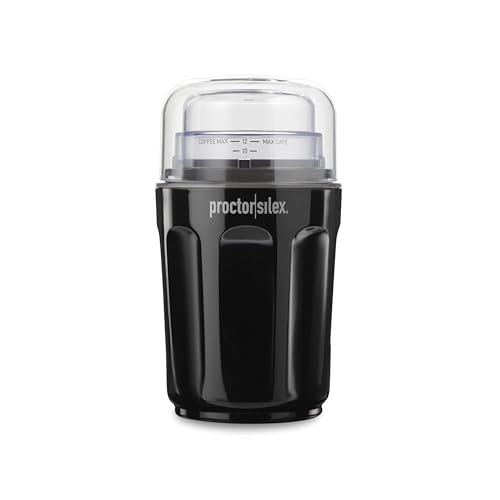
Proctor Silex Sound Shield Coffee Grinder 12 Cups (80402)

Wancle Electric Coffee Grinder 120V

Fellow Ode Gen 2 64mm Flat Burr Grinder

Aromaster Burr Coffee Bean Grinder 48 Settings

Tuni G1 Conical Burr Coffee Grinder

Aroma Housewares Mini Coffee Grinder 40g

AYCHIRO Coffee Grinder Electric 30 Settings

AYCHIRO Conical Burr Coffee Grinder 30 Settings

SHARDOR 64mm Flat Burr Coffee Grinder 100 Settings
Early risers who share a bedroom with their coffee station will appreciate the noise-dampening housing on this blade grinder. Unlike the Wancle’s one-touch simplicity, this model leans on a timed pulse system that keeps things steady for up to 12 cups.
Counter space isn’t a concern here, but the bowl does need hand-washing after oily beans. For households that grind spices or nuts alongside coffee, the removable chamber makes cleanup straightforward.
Strong Points
- Sound Shield housing reduces noise during operation, helpful in apartments or shared spaces
- 12-cup capacity handles full pots without refilling
- Removable grinding bowl lifts off for easy serving and rinsing
- Stainless steel blades handle beans, spices, and small nuts
Points To Note
- Blade grinding produces uneven particle sizes, which can affect extraction quality
- Bowl isn’t dishwasher safe despite being labeled removable
Key Specs
Right Fit For
Households that need quiet, large-batch grinding and don’t mind blade-style inconsistency.
Consider Something Else When
If you chase café-level consistency, the Fellow Ode Gen 2 delivers burr precision that blade models can’t match.
Dorm rooms and office break rooms often lack counter space for bulky appliances, which is where this compact grinder shines. The one-touch button lets you pulse until you hit the texture you want, then release to stop.
Compared to the Proctor Silex’s larger footprint, this one fits in a cabinet door pocket but maxes out around 60g of beans. The transparent lid lets you watch the action, though finer grinds can escape through the vent holes.
What We Like
- One-touch pulse control gives you direct feedback over grind time
- Transparent lid shows progress so you avoid over-grinding
- Compact size fits in tight spaces like dorm drawers or pantry shelves
- Included cleaning brush helps clear grounds from hard-to-reach spots
Trade Offs
- 60g max capacity means multiple batches for full pots
- Fine particles can puff out the sides during extended pulses
- Plastic housing feels less durable than metal-bodied competitors
Feature Snapshot
Made For
Solo drinkers or small households who want quick, single-serving grinds without bells and whistles.
Swap It Out When
Needing full-pot capacity, the Proctor Silex Sound Shield grinds enough for 12 cups in one go.
Pour-over fans know that grind consistency can make or break a cup, and this flat burr model delivers the kind of uniformity that blade grinders struggle to match. Unlike the AYCHIRO dial-adjust models, it uses a stepped collar system that clicks into 31 distinct settings.
Designed for single-dose brewing, it’s built around small batches rather than full pots. That makes it ideal for someone who brews one or two cups daily but wants café-level control.
Bright Spots
- 64mm flat burrs produce uniform particle size for even extraction
- 31 grind settings cover pour-over, French press, and cold brew ranges
- Anti-static design minimizes grounds clinging to the chute
- Stainless steel construction feels solid on the counter
- Single-dose workflow suits daily one-to-two cup routines
Small Caveats
- Single-dose hopper limits throughput compared to larger batch models
- Not suitable for espresso due to burr design limitations
Spec Overview
Who Will Love This
Pour-over enthusiasts who measure beans by the gram and want repeatable results every morning.
A Better Fit Elsewhere
Those needing espresso capability should look at the Aromaster’s 48-setting timer model, which handles finer grinds better.
Family kitchens that brew multiple pots in the morning benefit from the programmable timer on this conical burr model. Where the Tuni G1 relies on a touchscreen interface, this one sticks to a simpler dial-and-timer combo.
The 40-second timer lets you dial in exact grind durations, which matters more here than on blade models since you’re chasing consistency across larger volumes. The removable burr and included brush make weekly cleaning manageable.
Upsides
- 48 grind settings span espresso to French press with fine gradations
- 40-second programmable timer ensures repeatable batch sizes
- Anti-static system keeps grounds from scattering on the counter
- Large 3.9-ounce chamber suits family-sized brewing
- Removable burr and brush simplify routine maintenance
Areas To Watch
- Timer calibration can drift over months of daily use
- Plastic components in the chute feel less premium than metal
At A Glance
Whose Shelf It Belongs On
Multi-person households that brew several pots daily and want to set it and forget it.
Reach For A Different Pick When
Limited counter space favors the Aroma Housewares mini grinder, which tucks into tight corners easily.
Tech-savvy kitchens that already use smart appliances will find the LED touchscreen on this grinder intuitive. Unlike the Aromaster’s analog timer, it walks you through grind selection visually and shows real-time feedback.
The 0.5-second increment timer adjustment gives you surgical control over dose size, which serious home baristas appreciate. The ivory finish stands out against typical black or stainless steel appliances, though it shows fingerprints more than darker options.
Plus Points
- LED touchscreen interface makes grind selection straightforward
- 0.5-second timer increments allow precise dose control
- 48 settings cover espresso through French press ranges
- Patented anti-static conical burr reduces static cling
- Ivory finish adds visual contrast to modern kitchens
Honest Caveats
- Touchscreen can be finicky in humid environments
- Higher price point than basic blade alternatives
Details At A Glance
Perfect Match For
Baristas who track their grind settings digitally and want touchscreen convenience.
Where A Sibling Pick Shines
Budget-conscious users may prefer the AYCHIRO conical burr model, which offers similar settings without the premium interface.
Small apartments and office desks often can’t spare room for a full-size grinder, which is exactly the niche this mini model fills. Unlike the SHARDOR’s all-metal chamber, it leans on plastic construction to keep weight and cost down.
At 40g capacity, it’s built for one cup at a time rather than batch brewing. The angled blades are designed to crush beans efficiently even in such a small chamber, and the clear lid lets you monitor progress.
Best Bits
- 40g capacity suits single-cup brewing perfectly
- 304 stainless steel blades resist rust and corrosion
- See-through lid provides visual feedback during grinding
- Compact footprint fits in tight storage spots
- Matte white finish with wood button adds warmth to the counter
Room For Improvement
- Single-serve capacity means multiple rounds for groups
- Blade design creates uneven grind compared to burr models
- Plastic housing can feel fragile with rough handling
Core Details
Built With In Mind
Dorm residents, office workers, or anyone with limited counter space who brews one cup at a time.
Not Your Match When
Entertaining guests regularly, the Proctor Silex’s 12-cup capacity handles larger groups far better.
Beginners experimenting with espresso at home often find dial controls more intuitive than digital interfaces. Unlike the Tuni G1’s touchscreen, this model uses a simple black knob with numbered markings for quick adjustments.
The 12-cup capacity makes it suitable for morning routines where you’re brewing for yourself and maybe one other person. Detachable burrs mean you can clean out old grounds without tools, though the housing itself stays sealed.
Best Bits
- 30 grind settings cover espresso, drip, and Americano ranges
- Dial knob with clear markings makes adjustment simple
- 12-cup capacity suits small household brewing
- Detachable burrs allow easy cleaning between uses
- 120V operation is standard for North American outlets
Softer Spots
- Plastic housing doesn’t feel as substantial as metal-bodied rivals
- No timer function means you estimate grind duration manually
Feature Rundown
Who Should Grab It
New espresso hobbyists who want a straightforward interface without digital complexity.
Look Elsewhere When
Serious pour-over drinkers benefit more from the Fellow Ode Gen 2’s flat burr precision.
Homes where coffee drinkers prefer different methods, maybe one person likes espresso while another goes for French press, benefit from the cup-size customization on this grinder. Unlike the AYCHIRO dial model above, it uses numbered ranges to guide you toward the right setting.
The stainless steel conical burrs promise uniform grounds, and the 2-to-12-cup selector means you’re not eyeballing quantities. The hopper design tucks away cleanly, though the plastic construction around the burr housing may wear faster in high-use kitchens.
Reasons To Buy
- 30 settings organized by brewing method (espresso, cold brew, French press)
- 2-to-12-cup selector adjusts grind volume automatically
- Stainless steel conical burrs deliver consistent particle size
- Built-in anti-static features reduce counter mess
- Bean hopper, upper burr, and chamber all remove for cleaning
Minor Gripes
- Plastic burr housing may degrade with heavy daily use
- Range-based settings require some trial and error to dial in
- No audible timer alert means you watch the process manually
Quick Facts
Best Suited To
Multi-method households that switch between espresso, drip, and French press daily.
Where Another Pick Suits Better
If you’re locked into a single brewing method, the Fellow Ode Gen 2’s flat burrs offer superior consistency for pour-over.
Serious home baristas who treat coffee brewing like a science project will find the 100-setting range on this SHARDOR model worth the investment. Unlike the Fellow Ode Gen 2’s 31 settings, this one offers granularity that espresso tinkerers live for.
The all-metal chamber and 260W motor give it a heft that suggests longevity, though the silicone bellows and portafilter holder add complexity that casual users may never touch. It’s built for the person who adjusts their grind by 0.1mm and tracks extraction times in a notebook.
Reasons To Buy
- 100 grind settings provide espresso-level precision
- All-metal grinding chamber resists wear over time
- 64mm flat burrs ensure uniform particle size
- Built-in anti-static system with stainless steel cup keeps workspace clean
- LED display and precision timer offer real-time feedback
- Silicone bellows help clear residual grounds between doses
Points To Note
- Complexity may overwhelm casual coffee makers
- Higher price point requires serious usage to justify
- Portafilter holder and bellows add setup steps
Technical Sheet
Designed For
Home baristas who obsess over grind calibration and brew multiple specialty methods daily.
Skip It When
You make one pot of drip coffee each morning, the AYCHIRO conical burr model offers plenty of control at a lower price.
How To Choose The Right Home Coffee Grinders
Burr vs. Blade: Why It Matters
Blade grinders chop beans with spinning steel blades, which works fine if you’re using a drip machine and don’t care about consistency. Burr grinders crush beans between two abrasive surfaces, producing uniform particles that extract evenly. For pour-over, espresso, or French press, that difference translates directly into flavor clarity.
Grind Settings and Capacity
More settings don’t automatically mean better coffee, but they do give you room to experiment. If you switch between brewing methods, aim for at least 20 settings. Capacity matters too: single-serve drinkers can get away with 40g chambers, while families need 12-cup or larger hoppers.
Noise and Daily Use
If you share walls or wake up early, noise reduction becomes a real factor. Blade grinders tend to be louder since the motor runs longer. Some burr models include sound-dampening housing or slower grinding speeds that keep decibels manageable.
Things Worth Knowing First
Common Shopping Slip Ups
One of the most frequent mistakes is buying a grinder with too few settings and then discovering it can’t handle both espresso and French press. Another is overlooking capacity, which leads to multiple grinding rounds when entertaining. Shoppers also often skip researching cleaning requirements, only to find that oils and fines build up quickly in hard-to-reach spots.
Why Top Tier Costs More
Higher-priced grinders invest in better burrs, typically steel alloys that stay sharp longer. They also add features like timers, anti-static systems, and all-metal construction that cheaper plastic models skip. For someone brewing daily, the consistency gains compound over months of use.
Final Thoughts
The right grinder isn’t about having the most features, it’s about matching your brewing habits to the tool that supports them. Whether you need quiet morning operation or espresso-level precision, there’s a grinder here that fits your routine without asking you to compromise.
