

Manual grinders deliver control and portability that electric models can’t match, especially when you’re chasing the perfect cup away from an outlet. Whether you’re a commuter packing a travel kit, a camper brewing over a camp stove, or a home shopper who values the ritual of grinding by hand, the right crank grinder can quietly upgrade your daily coffee. The challenge is finding one that balances grind precision, build durability, and batch size without turning your morning routine into a chore.
Quick Look At Our Top Picks

TIMEMORE Chestnut C2S Manual Coffee Grinder 25g Capacity

KINGrinder K6 Manual Coffee Grinder

Alpaca Ventures Premium Manual Coffee Grinder
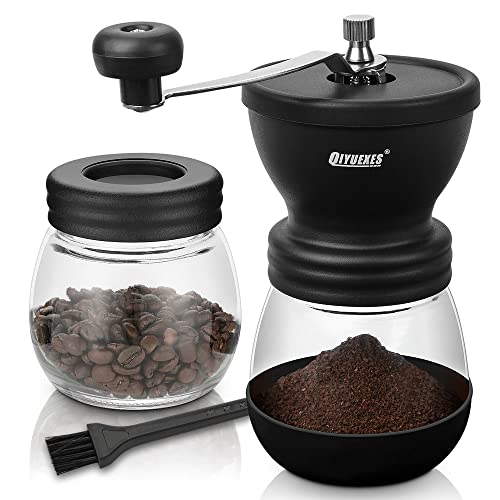
QIYUEXES Manual Coffee Grinder 80g Capacity

SimCoker Manual Coffee Grinder 20g Capacity

CEVING Manual Coffee Grinder 60g Capacity

Rsoilch Manual Coffee Grinder 5 Settings

CEVING Manual Coffee Grinder 60g Ceramic Burr

TIMEMORE Chestnut C2S Manual Coffee Grinder
More Details On Our Top Picks
The TIMEMORE C2S builds its reputation on a full-metal unibody that resists the cracking issues some users reported with earlier C2 models. A 38mm conical burr pairs with dual-bearing central shaft positioning to keep particle size tight across the grind range, which matters when you’re dialing in a pour-over at home. The adjustment dial covers roughly 36 levels, giving you room to chase that sweet spot between espresso-fine and French press-coarse.
Owners commonly report that the stainless steel body stays cool during extended grinding sessions, and the knurled grip makes the crank comfortable even when your palms get sweaty. The 25g hopper handles a single serving, so it’s best suited for one cup at a time rather than batch brewing for the whole household.
Strong Points
- Full-metal unibody construction resists cracking better than the previous C2 design
- 38mm conical burr with dual-bearing alignment produces uniform grounds
- 36-step adjustment dial covers espresso through French press ranges
- Cool-running stainless steel body stays comfortable during longer sessions
- Knurled grip keeps your hand secure even when palms get slick
Honest Caveats
- 25g capacity means you’ll grind twice for a full pot, which slows mornings
- Some users note the adjustment dial feels loose at the finest settings
Quick Facts
Made For
Home brewers who want consistent grounds for pour-over or espresso and don’t mind grinding one cup at a time.
Where A Sibling Pick Shines
If you need bigger batches, the QIYUEXES 80g model grinds enough for a full French press in one go.
Where the TIMEMORE C2S leans on internal adjustment, the KINGrinder K6 puts its settings on the outside, which makes dialing in faster when you switch between brewing methods. The external adjustment nut delivers 16-micron steps per click across four full rotations, so you can chase espresso precision without hunting through a tiny internal dial.
A straight-handle crank and dual-bearing design keep the effort smooth, and the aluminum body with stainless burrs feels solid enough for daily use. The trade-off shows up in capacity, though, since this one also sits around the 25g mark.
What We Like
- External adjustment nut gives 16-micron steps per click for precise dialing
- Straight handle provides comfortable leverage for extended grinding
- Dual-bearing design keeps the burr stable during use
- Four full rotations of adjustment cover espresso to French press
Points To Note
- 25g capacity still means multiple passes for larger batches
- Aluminum body, while durable, won’t stay as cool as stainless steel
Feature Snapshot
Who Should Grab It
Brewers who switch between espresso and pour-over daily and want external adjustments that don’t require disassembly.
Not Your Match When
You’re grinding for a full pot every morning, the TIMEMORE C2S and QIYUEXES models both offer larger effective throughput per session.
Unlike the bulkier TIMEMORE and KINGrinder models, the Alpaca Ventures grinder shrinks down to something that slips into a carry-on without adding noticeable weight. A built-in bearing reduces the torque needed to turn the handle, which matters when you’re grinding at altitude or in a cramped campsite.
The 420 stainless steel burr holds its edge well, and the compact footprint means it won’t dominate a hostel counter or dorm desk. You do sacrifice some capacity, but for single-serving travel brewing that’s usually fine.
Bright Spots
- Compact design fits easily in carry-on luggage or a backpack
- Built-in bearing reduces grinding effort for high-altitude use
- 420 stainless steel burr maintains sharpness over extended use
- Lightweight construction won’t add bulk to travel gear
Small Caveats
- Smaller hopper means more frequent refills during travel
- Limited adjustment range compared to the 36-step TIMEMORE C2S
Spec Overview
Right Fit For
Travelers, students, or anyone who brews single cups in tight spaces and needs a grinder that won’t weigh down their luggage.
Swap It Out When
You’re primarily brewing at home, the SimCoker offers similar portability at a lower price point if budget matters more than burr grade.
The CEVING ceramic-burr model may claim “world’s first” 60g capacity, but the QIYUEXES takes that concept further with an 80g hopper that handles a full French press in one session. The adjustment ring clicks through 48 settings, which covers everything from espresso to cold brew without much fuss.
Owners commonly report that the two included mason jars make transferring grounds mess-free, and the compact 2.95-inch footprint still fits in a cabinet door rack. The catch is that the larger capacity makes the unit noticeably heavier when full, so it’s less travel-friendly than the Alpaca Ventures.
Upsides
- 80g capacity handles a full French press in a single grinding session
- 48-step adjustment ring covers espresso through cold brew ranges
- Two mason jars included for mess-free grounds transfer
- Compact footprint still fits in most cabinet door racks
- Conical burr design promotes consistent particle size
Areas To Watch
- Heavier when full, making it less practical for daily travel
- Some users note the adjustment ring can shift during aggressive grinding
Details At A Glance
Best Suited To
Families or roommates who brew multiple cups at once and want to minimize grinding sessions each morning.
Consider Something Else When
You travel weekly, the CEVING 60g model offers a lighter alternative with similar capacity benefits.
Where the TIMEMORE and KINGrinder models sit at the higher end of the price spectrum, the SimCoker keeps things simple with a 20g capacity and a ceramic burr that won’t dull as quickly as steel. The 304 stainless steel body resists rust, which matters if you store it in a humid environment.
It’s not built for daily heavy use, but for occasional home brewing or as a backup grinder, the straightforward design holds up reasonably well. You do lose some of the fine adjustment precision found in the pricier models, though.
Plus Points
- Ceramic conical burr preserves aroma and resists dulling
- 304 stainless steel body offers rust resistance in humid conditions
- Compact size smaller than a phone fits in small kitchens
- Simple adjustment mechanism is intuitive for beginners
Room For Improvement
- Only 20g capacity limits batch size for daily use
- Fewer adjustment steps compared to premium models
- Plastic components in the crank assembly may wear over time
Feature Rundown
Perfect Match For
Beginners or budget-conscious shoppers who brew one cup occasionally and want a reliable entry point without premium features.
Reach For A Different Pick When
You need espresso-level precision, the KINGrinder K6 offers finer adjustment steps at a moderate price increase.
The CEVING 60g model splits the middle ground between the travel-friendly Alpaca Ventures and the batch-focused QIYUEXES 80g model. A 60g hopper handles two to three cups in one session, which cuts down on the repeated grinding that slows down the 25g models.
The external click-ring delivers 40 settings, and the stainless steel conical burr holds its edge well for daily use. Owners commonly report that the black finish shows coffee oils over time, so regular cleaning becomes important to maintain performance.
Bests Bits
- 60g capacity reduces grinding sessions for multi-cup mornings
- 40 external settings cover espresso through French press ranges
- Stainless steel conical burr resists wear during daily use
- External adjustment ring allows quick setting changes
- Portable enough for weekend trips despite larger capacity
Softr Spots
- Black finish shows coffee residue and requires frequent cleaning
- Slightly heavier than the 25g models when full
Core Details
Whose Shelf It Belongs On
Daily coffee drinkers who brew two to three cups each morning and want fewer grinding sessions without going fully electric.
Where Another Pick Shines
If you travel frequently, the Alpaca Ventures model is significantly lighter and more packable for carry-on luggage.
Where the CEVING and TIMEMORE models offer dozens of settings, the Rsoilch strips things down to just five positions, which makes it approachable for beginners who don’t want to overthink their grind size. A ceramic burr keeps the grounds cool, and the stainless steel housing feels sturdy enough for casual use.
It won’t satisfy anyone chasing espresso-level precision, but for French press and drip brewing, the five-step system covers enough range to get decent results. The compact design tucks away easily in a drawer, which is a plus in small apartments.
Reasons To Buy
- Five-step adjustment is intuitive for beginners
- Ceramic burr keeps grounds cool during grinding
- Stainless steel housing resists rust and staining
- Compact footprint fits in small drawers or cabinets
Minor Gripes
- Only five settings limits brewing method flexibility
- Ceramic burr, while durable, can chip if dropped
- Plastic crank handle may feel less sturdy over time
Technical Sheet
Best Suited To
Casual coffee drinkers who want a straightforward grinder for French press or drip brewing without spending on premium features.
A Better Fit Elsewhere
If you need espresso capability, the KINGrinder K6 offers far more precision at a reasonable price jump.
The CEVING stainless steel burr model shares its 60g capacity and 40-setting click-ring with the ceramic burr version reviewed at pick 6, but swaps the metal burr for ceramic to appeal to aroma-focused brewers. Ceramic burrs tend to run cooler than steel, which some users say preserves more of the bean’s natural oils.
You get the same high-capacity hopper and external adjustment system, so the practical differences come down to burr material and price. The trade-off is that ceramic, while excellent for heat retention, is more fragile if the grinder takes a fall.
Highlights
- Ceramic conical burr runs cooler to preserve coffee oils
- 60g capacity handles multiple cups in one session
- 40 external settings cover broad brewing method range
- External click-ring allows quick setting changes
Trade Offs
- Ceramic burr is more fragile than stainless steel if dropped
- Higher price than the steel burr CEVING model
- Black finish shows residue and needs regular cleaning
At A Glance
Made For
Aroma-focused brewers who prioritize oil preservation and are willing to pay more for ceramic burrs in a high-capacity manual grinder.
Swap It Out When
You’re rough on equipment, the steel burr CEVING model delivers the same capacity at lower cost with better impact resistance.
This is the original C2S variant, sharing the same 38mm stainless steel burr and dual-bearing positioning as the black version reviewed at pick 1, but with an internal adjustment dial instead of the external ring found on the KINGrinder K6. The internal system keeps the exterior clean but requires you to remove the top to adjust settings.
Where the KINGrinder K6 wins on adjustment convenience, the C2S holds an edge in shaft stability thanks to its dual-bearing design. It’s a solid middle-ground option if you value consistency over quick-setting changes and don’t mind the occasional disassembly.
Standout Traits
- Dual-bearing central shaft positioning ensures stable burr alignment
- 38mm stainless steel conical burr delivers consistent grind size
- Internal adjustment keeps the exterior free of coffee residue
- Full-metal construction resists cracking during daily use
- 36-step range covers espresso through French press methods
Worth Noting
- Internal adjustment requires disassembly for setting changes
- 25g capacity means multiple passes for larger batches
Feature Card
Who Will Love This
Home brewers who prioritize grind consistency and don’t mind occasional disassembly to adjust settings between brewing methods.
Consider Something Else When
You switch methods frequently, the KINGrinder K6’s external adjustment saves time and keeps the exterior clean.
How To Choose The Right Hand Crank Coffee Grinders
Burr Material And Its Impact On Taste
Conical burrs come in two main materials: stainless steel and ceramic. Steel burrs tend to run warmer during extended grinding, which can introduce subtle heat notes into delicate light roasts. Ceramic burrs stay cooler but are more fragile and typically cost more to replace. For daily home use where durability matters, steel burrs like those in the TIMEMORE C2S offer a practical balance of performance and longevity.
Grind Adjustment: External vs. Internal
External adjustment rings, as seen on the KINGrinder K6 and CEVING models, let you dial in settings without disassembling the grinder. This convenience comes at the cost of slightly more exposed mechanism parts that can collect coffee oils over time. Internal dials, like the one on the TIMEMORE C2S, keep the exterior cleaner but require you to remove the top assembly whenever you switch brewing methods.
Capacity And Batch Size Considerations
Capacity directly affects how often you need to reload beans during a grinding session. The 20g models like the SimCoker work well for single cups but become tedious when brewing for two or more people. Mid-range 60g hoppers like the CEVING strike a balance, handling two to three cups in one pass. For households that brew French press regularly, the 80g QIYUEXES model eliminates the need for multiple grinding sessions entirely.
Portability vs. Stability Trade-offs
Travel-focused grinders like the Alpaca Ventures prioritize lightweight construction and compact dimensions, but the smaller footprint can mean less stability on a shaky campsite table. Heavier models with larger bases, such as the CEVING 60g, stay put on a countertop but add noticeable weight to a travel bag. Consider whether you’ll use the grinder primarily at home or on the road before choosing.
Things Worth Knowing First
Common Shopping Slip Ups
One of the most frequent mistakes shoppers make is focusing solely on the number of grind settings while ignoring burr alignment and build quality. A grinder with 48 settings means nothing if the burrs wobble during use, producing inconsistent particles that ruin your brew regardless of how precisely you dial in. Another common error is underestimating how capacity affects daily workflow. A 20g hopper might seem adequate, but grinding twice for a single pot of drip coffee adds minutes to your morning routine. Finally, many shoppers overlook cleaning requirements, particularly with external adjustment rings that can trap coffee oils and require more frequent disassembly.
Where The Extra Money Goes
Higher-tier manual grinders justify their cost through materials and engineering that directly impact consistency. A 38mm stainless steel conical burr, like the one in the TIMEMORE C2S, is machined to tighter tolerances than the smaller burrs found in budget models, which translates to more uniform particle size. Dual-bearing shaft positioning, also featured on the TIMEMORE and KINGrinder models, eliminates the wobble that causes inconsistent grinding in cheaper alternatives. External adjustment rings with 40 or more settings, as seen on the CEVING grinders, require more precise machining and add manufacturing complexity. These aren’t luxury features, they’re functional upgrades that make a measurable difference in your cup.
Final Thoughts
The best hand crank coffee grinder for you depends on whether you prioritize portability, capacity, or precision above all else. Travelers will gravitate toward the Alpaca Ventures compact design, while home brewers who want fewer grinding sessions should consider the CEVING or QIYUEXES high-capacity models. For those chasing espresso-level consistency, the KINGrinder K6 and TIMEMORE C2S offer the alignment and adjustment finesse to get there. Start with your brewing method and daily routine, then let those needs guide the choice rather than chasing features you won’t use.
