

Your ideal choice depends on the coffee you make, the space available, and how much hands-on work you want each morning. A programmable drip machine can suit a busy household, while a bean-to-cup espresso machine gives you fresh grinding and milk drinks with fewer separate steps. This guide covers both styles, so you can match your routine, counter space, and preferred cup to a practical option. You’ll also find honest trade-offs around cleanup, storage, controls, and everyday use.
Your Shortlist At A Glance

Hamilton Beach One Press Programmable 12-Cup Coffee Maker 47950
Hamilton Beach One Press Programmable 12-Cup Coffee Maker 47900

12C Brewstation

De’Longhi Dinamica Espresso Machine, Black
Takywep Fully Automatic Espresso Machine with Built-in Grinder

Philips 3200 Series Fully Automatic Espresso Machine EP3241/74

Cuisinart Personal Brew 12-Cup Coffee Maker DCC-12

AIRMSEN 12-Cup Programmable Dual Coffee Maker
More Details On Our Top Picks
A removable 60-ounce water reservoir makes this Hamilton Beach a sensible fit for households that brew several cups before lunch. The internal coffee pot replaces a conventional glass carafe, so you dispense directly from the machine during a busy breakfast rather than lift and pour.
That design can reduce countertop clutter and the chance of a messy pour, though the internal tank adds another area to rinse. You may find the reusable filter especially convenient for regular home use, while the 12-cup capacity suits a family or a small office.
Strong Points
- Direct dispensing makes repeated cups easier during crowded mornings.
- The removable 60-ounce reservoir simplifies filling beside a sink.
- A reusable filter reduces the need to keep paper filters nearby.
- The black and stainless-steel finish fits many kitchen layouts.
- Its 12-cup format works well for shared coffee routines.
Things To Consider
- The internal pot and dispensing path need regular rinsing to keep coffee residue from building up.
- People who prefer a portable carafe may find the fixed dispensing format less flexible.
Key Specs
Who It Suits Best
You’ll appreciate this choice most in a family kitchen or small office where several people want drip coffee throughout the morning.
Another Choice May Suit
Cuisinart Personal Brew 12-Cup Coffee Maker DCC-12 suits you more when scheduled brewing and adjustable strength matter more than carafe-free serving.
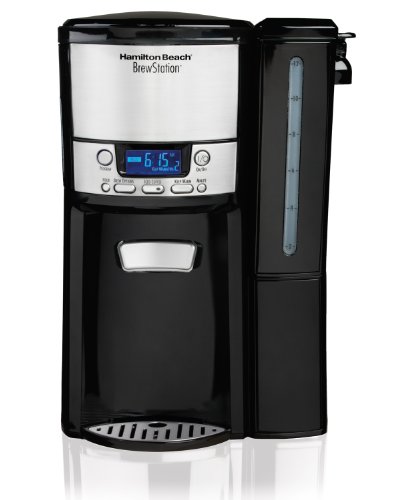
The 47900 follows the same internal-reservoir idea as the Hamilton Beach 47950, giving you a 12-cup drip format without a separate serving carafe. That arrangement feels useful in a shared kitchen, especially during a long breakfast where each person pours a cup at a different time.
A 60-ounce reservoir supports larger batches, and the warm-holding design aims to keep the pot ready across the morning. The honest trade-off is cleaning access, since an internal tank and dispensing mechanism take more attention than a basic brewer with a removable carafe.
What We Like
- Internal storage keeps the serving footprint tidy.
- A removable 60-ounce reservoir makes filling less cumbersome.
- The 12-cup capacity fits group breakfasts and office counters.
Worth Noting
- The no-carafe design won’t suit anyone who pours coffee into a travel jug.
- Regular rinsing becomes part of ownership because coffee sits inside the machine.
- You may prefer a different layout for a narrow counter with limited access above the reservoir.
At A Glance
Made For
This model fits you best when a shared household needs a straightforward large-batch brewer with direct cup dispensing.
Consider Something Else When
Hamilton Beach 12C Brewstation makes more sense for you when the familiar Brewstation format matters more than distinguishing the 47900 from its close sibling.
For a large household that wants familiar drip coffee, the 12C Brewstation keeps the category simple. Its name identifies the 12-cup capacity and Brewstation format, a practical arrangement for mornings that involve several refills rather than one carefully prepared espresso.
Compared with the Hamilton Beach One Press 47900, this listing gives you less visible detail to work from, so you’ll want to confirm the exact configuration on the product page. You may find it appealing as a basic shared-kitchen option, but coffee enthusiasts seeking milk drinks or fresh grinding need a different style of machine.
Highlights
- The 12-cup format suits group serving.
- Brewstation styling keeps the focus on ordinary drip coffee.
Trade Offs
- The short source details make configuration checks especially worthwhile before purchase.
- A basic drip format won’t replace an espresso machine for concentrated drinks.
- Cleaning expectations depend on the exact reservoir and dispensing setup shown on the listing.
Quick Facts
Right Fit For
You’re the right match for this item when you want a recognizable 12-cup drip machine and don’t need espresso or milk-focused controls.
Look Elsewhere When
AIRMSEN 12-Cup Programmable Dual Coffee Maker suits you better when your household switches between pods, grounds, and different batch sizes.
Espresso, long espresso, drip-style coffee, and iced coffee all sit within the Dinamica’s bean-to-cup system. Bean-to-cup means the machine grinds whole beans before brewing, so you can move beyond pre-ground coffee without adding a separate grinder to your counter.
The built-in steel burr grinder handles the grinding stage, while the touch-sensitive interface lets you adjust cup size and strength. A manual frother gives you control over milk texture, which may appeal to hands-on home baristas, though it asks more from you than Philips’s LatteGo approach.
Upsides
- Built-in grinding removes a separate appliance from your morning setup.
- Multiple coffee styles support households with different drink preferences.
- Adjustable size and strength give you more control than a fixed drip brewer.
- The steel burr grinder is a substantial component for fresh-bean preparation.
Room For Improvement
- The manual frother requires practice and wiping after milk preparation.
- More drink hardware means more cleaning steps than the Hamilton Beach drip models.
Feature Snapshot
Best Suited To
You’ll get the most from this machine as a home coffee enthusiast who wants whole-bean drinks and doesn’t mind learning manual milk frothing.
A Better Fit Elsewhere
Philips 3200 Series Fully Automatic Espresso Machine EP3241/74 fits you better when one-touch milk drinks and a simpler frother matter more than manual control.
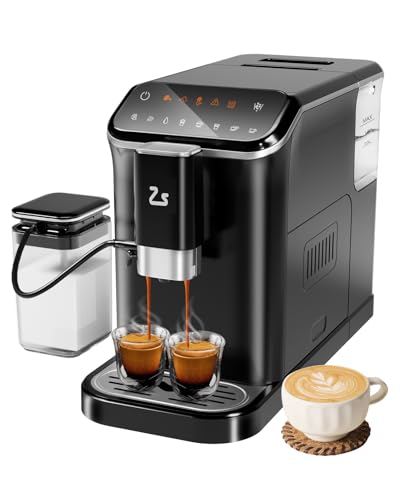
The Takywep targets you when espresso and milk drinks are part of the daily routine, not an occasional treat. Its built-in grinder, touch panel, and integrated milk frother keep the major steps in one appliance, while the stated 20-bar extraction system focuses on espresso preparation.
A dual thermoblock system uses separate heating paths for brewing and steaming, which is intended to let you handle both tasks in the same session. You may value that speed during a busy breakfast, but a steam wand still needs prompt wiping and rinsing after milk use.
Reasons To Buy
- The built-in grinder supports a fresh-bean workflow without extra counter equipment.
- A touch panel keeps common drink preparation easy to access.
- Dual thermoblock heating is designed for brewing and steaming together.
- The 1.5-liter water tank reduces frequent refills for regular home use.
- Auto-cleaning can reduce the number of routine cleaning steps.
Points To Note
- The 20-bar figure describes pump pressure, not a promise of a particular flavor in every cup.
- Milk residue still calls for manual attention around the steam wand.
- More internal systems can make servicing and storage planning more involved than with a drip machine.
Technical Sheet
Who Will Love This
This choice suits you as a milk-drink enthusiast who wants integrated grinding, steaming, and touch controls in a single countertop unit.
Not Your Match When
De’Longhi Dinamica Espresso Machine, Black is a better fit for you when you prefer a manual frother and a more established bean-to-cup format.
Five coffee varieties and an iced coffee setting give the Philips 3200 a broad daily range. Fresh beans feed the automatic brewing system, while the intuitive touch display lets you choose a drink without working through a long sequence of buttons.
LatteGo, the named milk system, creates a frothy milk topping with a dedicated setup that may feel easier than the De’Longhi Dinamica’s manual wand. You may still need to rinse milk-contact parts often, but this Philips makes sense for homes where black coffee, iced drinks, and milk beverages all share the same counter.
Bright Spots
- Five drink varieties give you more daily choice than a standard drip machine.
- The iced coffee setting adds seasonal flexibility.
- LatteGo provides a dedicated route to frothy milk drinks.
- The touch display keeps selection straightforward for beginners.
Small Caveats
- Milk-system parts still require regular cleaning after use.
- The broader drink menu takes more counter space and maintenance than the Cuisinart drip format.
Feature Rundown
Whose Shelf It Belongs On
You’ll suit this machine best as a household that wants simple touch operation and several hot, iced, and milk-based coffee choices.
Where A Sibling Pick Shines
Takywep Fully Automatic Espresso Machine with Built-in Grinder suits you more when simultaneous brewing and steaming, a 1.5-liter tank, and auto-cleaning are higher priorities.
Scheduled coffee is the main appeal here. The Cuisinart DCC-12 lets you set a brew up to 24 hours ahead, which fits an early workday, a planned weekend breakfast, or any routine where you want the machine ready before you enter the kitchen.
Its 12-cup capacity and adjustable brew strength keep it closer to a familiar drip brewer than to the espresso machines above. The stainless-steel and black finish feels easy to place, though you won’t get built-in grinding, milk frothing, or the drink variety offered by Philips.
Plus Points
- A 24-hour timer supports predictable morning preparation.
- Adjustable strength lets you change the cup to match your preference.
- The 12-cup size suits households that brew by the pot.
- Stainless steel and black work well in a practical kitchen setup.
Areas To Watch
- The glass-carafe style requires careful pouring and washing.
- Ground coffee is the focus, so espresso drink fans need another appliance.
- You may find the feature set less useful without a fixed morning schedule.
Core Details
Who Should Grab It
This model fits you best as a drip-coffee drinker who values scheduled brewing and control over strength more than specialty drinks.
Swap It Out When
AIRMSEN 12-Cup Programmable Dual Coffee Maker suits you more when some mornings call for a pod, a single serving, or a smaller batch.
The AIRMSEN addresses a common household split: one person wants a pod, another wants ground coffee, and a third wants a full pot. Its dual format supports single-serve brewing with K-Cup pods or grounds, while the multi-serve side handles four, six, eight, 10, or 12 cups.
A touchscreen, delay-start programming, 60-ounce tank, and glass carafe give you a flexible setup for home or office use. You may appreciate the two-hour keep-warm period during a staggered breakfast, but the extra brewing path means more parts to empty, rinse, and store than the Cuisinart DCC-12.
Best Bits
- Pod and ground compatibility accommodates different coffee habits.
- Five batch sizes let you avoid making a full pot for one person.
- The 60-ounce tank supports repeated brewing during office hours.
- Delay start helps you schedule coffee around work or school.
- A touchscreen keeps the dual system accessible.
Honest Caveats
- The glass carafe needs careful handling and routine washing.
- Two brewing systems create more cleanup and storage tasks.
- Two-hour warming may feel brief for a long, slow morning.
Details At A Glance
The Right Fit
You’ll benefit most from this machine in a home or office where coffee preferences change between single servings, grounds, and full pots.
Reach For A Different Pick When
Hamilton Beach One Press Programmable 12-Cup Coffee Maker 47950 is a better fit for you when direct dispensing and a reusable filter matter more than pod compatibility.
How To Choose The Right Fully Auto Coffee Machines
Start With Your Daily Cup
Drip machines and bean-to-cup espresso machines solve different problems. A 12-cup brewer suits you when a household or office needs a pot, especially with the Cuisinart DCC-12 timer or the Hamilton Beach Brewstation’s direct dispensing. An espresso machine makes more sense for short, concentrated drinks, fresh-bean grinding, and milk beverages.
Your morning pattern matters more than a long feature list. A commuter who leaves at the same time each day may value scheduled brewing, while someone working from home may prefer a machine that keeps several drink styles available.
Match Controls To Your Skill Level
Touch displays reduce the number of separate steps, which can help you serve different drinks without learning a complicated sequence. Philips uses touch selection for five coffee varieties and iced coffee, while De’Longhi gives you more manual involvement through its frother. Manual frothing can offer greater control, but it also adds technique and cleanup.
A built-in burr grinder prepares whole beans inside the machine. That saves counter space, although the grinder and brew path need regular care, and the appliance generally takes more room than a basic drip model.
Check Capacity, Cleaning, And Counter Space
Water capacity affects how often you stop to refill. The 60-ounce tanks on several drip choices support shared use, while Takywep’s 1.5-liter tank suits repeated espresso drinks. Larger tanks reduce interruptions but can add weight and make removal awkward beneath low cabinets.
Cleaning deserves equal attention. Carafe machines need carafe and filter-basket washing, internal dispensing systems need rinsing through their serving path, and milk systems need attention after each use. Measure the available counter depth and overhead clearance before choosing a larger bean-to-cup machine.
Separate Useful Features From Decorative Ones
A two-hour keep-warm period on AIRMSEN can help during a staggered breakfast, while its multiple batch sizes support solo and group use. Takywep’s dual thermoblock system matters mainly for people who brew and steam in the same session. Choose features that solve a repeated problem in your kitchen, not features that sound impressive but rarely affect your routine.
What To Weigh Before You Buy
Mistakes Worth Dodging
Capacity labels can mislead your planning because a 12-cup rating describes a batch, not twelve oversized travel mugs. Match the tank and brew volume to your actual routine, then leave room for the machine’s removal path and cleaning access.
You can also overlook the difference between automatic espresso preparation and automatic drip brewing. A machine with a grinder and frother needs more care than a simple coffee brewer, so check whether your morning schedule leaves time for rinsing milk parts and emptying grounds.
Where The Extra Money Goes
Higher-tier espresso machines often combine a grinder, drink presets, milk equipment, and more control in one housing. You’re paying for fewer separate steps and more beverage variety, not an assurance that every bean or recipe will taste the same.
The upgrade makes sense for you when espresso, iced coffee, and milk drinks appear regularly in your routine. A scheduled 12-cup brewer remains the more sensible choice for plain coffee, especially when your main goal is reliable batch preparation with minimal counter equipment.
Closing Remarks
Your best choice starts with the cup you actually drink. Hamilton Beach and Cuisinart suit scheduled or shared drip coffee, AIRMSEN adds pod flexibility, and De’Longhi, Takywep, and Philips bring whole-bean espresso and milk drinks into one appliance. Focus on capacity, cleanup, counter clearance, and control style before you compare extra features. A machine that fits your mornings will feel more useful than a feature-heavy choice that creates work you don’t want. Take a final look at your routine, then choose the format that supports it naturally.
