

Extra-coarse grinding matters more than people think, especially for French press, cold brew, and other brews that need a clean, even extraction instead of grit in the cup. You also want the grinder to match your routine, whether that means a quiet countertop setup, a travel-ready hand mill, or a compact option that handles more than coffee. The picks below focus on grind control, capacity, cleanup, and the kind of daily use that actually shapes ownership.
The Shortlist At A Glance

Lonkion Burr Coffee Grinder Electric 28 Grind Settings

SHARDOR Electric Coffee Grinder 70g Capacity

SHARDOR Super Silent Blade Coffee Grinder White

SHARDOR Super Silent Blade Coffee Grinder Silver

CEVING 60g Manual Coffee Grinder Black

KIDISLE Conical Burr Coffee Grinder 35 Settings
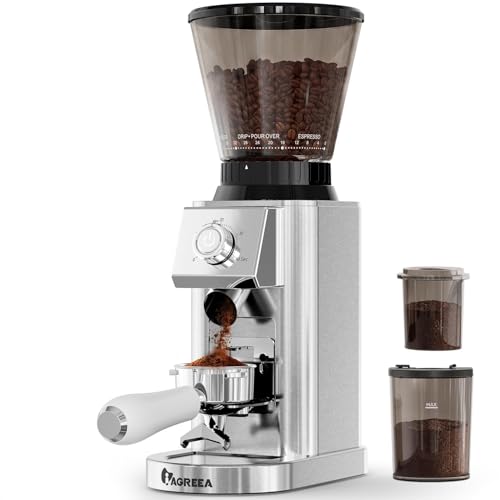
IAGREEA Coffee Grinder 48 Grind Settings

KRUPS Electric Blade Coffee Grinder 1.6 Oz
More Details On Our Top Picks
A burr grinder like this suits you well when French press mornings or longer brew days need more than a rough guess. The 28 settings give you enough spread to move from finer coffee styles into the extra-coarse range without feeling boxed in, and the 2 to 12 cup control helps keep portions sensible for solo cups or a small household.
The flat burr design matters because burrs, unlike spinning blades, crush beans more evenly, which usually means a more consistent cup and less dust mixed into coarse grounds. The trade-off is that burr grinders tend to need a little more counter space and cleaning attention than the simplest blade models, so this makes the most sense for you if consistency matters more than speed.
Strong Points
- 28 grind steps make dialing in coarse settings far easier than on fixed-speed blade grinders.
- 2 to 12 cup selection helps you match the amount to your morning routine instead of wasting grounds.
- Flat burr grinding usually gives you a more even texture for press pots and similar brews.
- Stainless steel styling should fit neatly into a modern kitchen setup without looking bulky.
Things To Consider
- Burr grinding is slower than a simple blade chop, so convenience shoppers may prefer a lighter option.
- The more precise mechanism can mean a bit more cleanup around the grinding chamber and exit path.
- Space on the counter matters here, especially in smaller kitchens with limited storage.
Key Specs
Who It Suits Best
You get the most from this pick if you brew at home and want a dependable path to coarse, even grounds without a lot of guesswork.
A Better Fit Elsewhere
CEVING 60g Manual Coffee Grinder Black suits travelers and camp setups more cleanly, since it gives you handheld control without needing counter power.
This one leans toward flexibility, not just coffee, which is useful in a kitchen that already does double duty. A 70g chamber gives you enough room for larger batches, and the timing knob with seconds markings helps you control grind length without relying on guesswork.
Compared with the burr models above, this blade grinder is the more straightforward pick for speed and batch variety, though it does not usually match a burr unit for uniformity. That trade-off makes sense for you if you want one grinder for beans, dry spices, herbs, or grains and you care more about convenience than precision fine-tuning.
Highlights
- 70g capacity supports larger batches for coffee or pantry ingredients in one go.
- Seconds-marked timing control helps you repeat a grind length more easily from day to day.
- Multi-use design suits a countertop that has to cover more than just coffee beans.
- The black finish keeps the look simple and easy to pair with common appliances.
Minor Gripes
- Blade grinders can leave a less even texture than burr grinders, especially for coarser brew styles.
- The bowl will need regular wiping, particularly after spices or oily beans.
- Batch size is useful, but a larger chamber can invite overfilling if you rush the routine.
Feature Snapshot
Who Should Grab It
You’ll appreciate this most in a busy kitchen where coffee, spices, and dry ingredients all need one compact tool.
Swap It Out When
KIDISLE Conical Burr Coffee Grinder 35 Settings is the better fit for you if coarse coffee consistency matters more than using one grinder for several pantry jobs.
The quieter blade approach is the main appeal here, especially in an apartment kitchen or an early-morning routine where loud appliances feel out of place. The timing knob gives you a practical way to adjust texture, and the coarse-to-fine range keeps it versatile for coffee plus dry add-ins.
Compared with SHARDOR’s 70g version, this one reads more like a living-space friendly choice than a batch-first tool. You also get the spoon with a built-in brush, which should make routine cleanup less annoying, though the grinding bowl still deserves a quick wipe after each use.
Positives
- Quiet operation suits shared homes where loud grinding can be a nuisance.
- Timed control helps you repeat a grind length without changing your whole routine.
- The included spoon and brush make basic cleanup feel more manageable.
- Its white finish gives you a lighter visual look than the black versions in this list.
Worth Noting
- Blade grinding still gives up some grind evenness compared with a burr system.
- The white finish can show coffee dust more readily, so wiping it down matters.
- You may need a few cycles to settle on the grind length you like for coarse coffee.
Core Details
Built With In Mind
This suits you best for quiet household coffee routines where convenience and light cleanup matter more than ultra-even grounds.
Look Elsewhere When
Lonkion Burr Coffee Grinder Electric 28 Grind Settings is the better fit for you if consistent coarse brewing matters more than blade-style simplicity.
This version mirrors the white SHARDOR model’s control layout, but the silver finish gives it a more appliance-like presence on the counter. You still get timed grinding and coarse-to-fine adjustment, so it works well for someone who wants the same everyday function with a different visual tone.
For most kitchens, the choice between this and the white version comes down to style rather than grinding logic. The honest read is that the finish matters more here than the mechanics, so you may gravitate toward it if your setup already leans metallic or stainless in appearance.
Bright Spots
- Silver finish blends naturally with stainless appliances and brushed hardware.
- Timed control keeps it approachable for everyday coffee routines.
- Quiet blade operation is easier to live with in a shared kitchen.
- The included brush spoon helps with basic cleanup after grinding.
Small Caveats
- Grind evenness still follows blade-grinder limits, especially for coarse brews.
- The metallic look may show smudges, so a quick wipe helps keep it tidy.
- It overlaps heavily with the white SHARDOR model, so the finish is the main differentiator.
Details At A Glance
Right Fit For
You’ll like this best if you want the same quiet, timed blade setup as the white SHARDOR model, but in a finish that feels more polished on the counter.
Another Choice May Suit
IAGREEA Coffee Grinder 48 Grind Settings is the better match for you if low-speed burr grinding matters more than finish alone.
Manual grinding changes the pace completely, and that can be a good thing for travel bags, camp tables, or a quiet kitchen before sunrise. The 60g capacity is unusually roomy for a hand grinder, so you spend less time refilling, while the 40 external settings give you an easy way to move toward extra-coarse territory for press-style brewing.
Compared with the electric picks above, this one gives you portability and a more tactile routine rather than convenience at the push of a button. That trade-off fits you best when counter space is limited or you want a grinder that travels without needing power.
Reasons To Buy
- 60g capacity is generous for a manual grinder and reduces repeat refills.
- 40 external settings make coarse adjustment easier to manage on the fly.
- Stainless steel conical burrs point toward more even hand-ground texture.
- Manual operation works well for trips, cabins, and off-grid coffee routines.
Areas To Watch
- Hand grinding takes more effort, especially for larger brew batches.
- The taller capacity can make storage a little less convenient in tight bags.
- Cleaning moving parts takes a bit more care than with a simple compact blade unit.
Feature Rundown
Made For
You’ll get the best fit here if you want a manual grinder for travel, camping, or a low-noise home routine.
Where A Sibling Pick Shines
KIDISLE Conical Burr Coffee Grinder 35 Settings makes more sense for you if you want electric ease and dose control at home.
This KIDISLE model sits in the sweet spot for someone who wants burr consistency without a complicated interface. The 35 settings give you a useful spread for espresso, drip, and coarse brew styles, and the 2 to 12 cup selector keeps the portioning straightforward for day-to-day use.
Compared with the Lonkion grinder, it offers a very similar home-friendly approach, so the decision may come down to which control layout feels easier to live with. The anti-static design is worth a look too, since static tends to make ground coffee cling to containers and create a mess on the counter.
Best Bits
- 35 grind settings give you enough range to move toward extra-coarse brewing with confidence.
- 2 to 12 cup selector supports both solo cups and small family batches.
- Anti-static design should help reduce cling and stray grounds around the container.
- Transparent hopper and bin make it easier to keep an eye on bean levels.
Points To Note
- Like most burr grinders, it needs a little more care during cleanup than a very basic blade unit.
- The larger hopper and bin can take more storage room than a travel-friendly grinder.
- Control feel matters here, so the best fit depends on whether you prefer KIDISLE or Lonkion’s layout.
Quick Facts
The Right Fit
You should consider this one if you want an electric burr grinder for home use with simple dose control and a broad grind range.
Skip It When
SHARDOR Electric Coffee Grinder 70g Capacity is the better route if you want a more flexible blade setup for beans plus pantry ingredients.
The low-speed motor is the headliner here, and for many home brewers that means a calmer grind cycle with less heat buildup and less static mess. Add 48 settings and a precision timer, and you get a grinder that feels aimed at people who care about dialing in drip, French press, and cold brew with more control.
Compared with KIDISLE and Lonkion, this one offers more grind steps and a slower motor, which may suit you better if flavor consistency matters more than speed. The anti-static design is also a practical touch, especially in kitchens where grounds tend to cling to containers and spill across the counter.
Upsides
- 48 grind settings give you a wide lane for coarse brewing and finer adjustments.
- 450RPM low-speed operation should suit users who prefer a calmer grind process.
- Anti-static design helps reduce the dusty cleanup that can follow ground transfer.
- Precision timer supports repeatable brewing routines without much guesswork.
- Metallic silver finish gives it a clean, modern look on the counter.
Softer Spots
- The finer control may be more than casual users need for simple morning coffee.
- A feature-rich burr grinder usually asks for a bit more care during cleaning.
- Speed is not the main story here, so quick batch grinding may feel slower than a blade model.
At A Glance
Whose Shelf It Belongs On
You’ll get the most from this one if you brew at home and want a burr grinder that leans toward control, consistency, and a cleaner work area.
A Better Fit Elsewhere
KRUPS Electric Blade Coffee Grinder 1.6 Oz makes more sense for you if compact storage and simple cleanup matter more than a wide grind range.
Small kitchens often need a grinder that disappears into a cabinet easily, and this KRUPS unit fits that kind of life. The push-lid operation keeps things simple, while the removable bowl helps make cleanup less of a chore after coffee, spices, or herbs.
Compared with the bigger-capacity SHARDOR and burr options, this is the most straightforward space saver in the group. The trade-off is texture consistency, which is usually the price of a basic blade grinder, so it works best for you if compact size and easy wash-up matter more than ultra-even coarse grounds.
Standout Traits
- 1.6 oz bowl keeps the footprint small for tight counters and crowded cabinets.
- Push-lid operation is simple enough for quick everyday grinding.
- Removable bowl supports easier cleaning than a fixed chamber design.
- Dishwasher-safe bowl adds convenience after dry ingredients or coffee use.
Room For Improvement
- The compact bowl means more frequent refills for larger brew batches.
- Blade grinding is less even than burr grinding, especially for coarse brew needs.
- The small chamber may suit single-cup routines better than group brewing.
Technical Sheet
The Right Fit
You should choose this one if you want a compact, no-fuss grinder for a small kitchen, light coffee use, or occasional spice grinding.
Where Another Pick Suits Better
SHARDOR Electric Coffee Grinder 70g Capacity is the better option for you if batch size and multi-use flexibility matter more than a tiny footprint.
How To Choose The Right Extra-Coarse Coffee Grinders
Start With Brew Method, Not Hype
Extra-coarse settings matter most for French press, cold brew, and other immersion brews that punish overly fine grounds. A grinder with a wide adjustment range helps you land where your brewer needs to be, instead of forcing you to live with sediment or weak extraction. Burr grinders usually give you better control here, while blade grinders lean more toward convenience and speed.
Capacity should match your routine as well. A solo morning cup can work with a compact chamber, but a household that brews several cups at once benefits from a larger hopper or bowl. Hand grinders can be a smart match for travel or quiet spaces, yet they ask for more effort, so that trade-off should feel acceptable before you commit.
Look Closely At Control And Cleanup
Timed control, cup selectors, and external adjustment rings all exist for the same reason, they make repeatable grinding easier. That matters because coarse coffee is less forgiving than many people expect, and small changes in grind length can shift the cup noticeably. The easier the controls are to read, the easier it is to keep your routine steady.
Cleanup deserves equal attention. Anti-static design, removable bowls, and included brushes can save you from chasing grounds around the counter, which matters a lot in a busy kitchen. A grinder that is annoying to empty tends to get used less often, even when the grind itself is solid.
Choose The Build That Fits Your Space
Counter size, cabinet height, and noise level all shape the right choice. A low-speed burr model works well in homes where you want calmer operation and more even grounds, while a compact blade grinder fits small spaces and casual use better. Manual grinders make sense for travel, camping, or low-noise mornings, as long as you’re fine putting in the effort by hand.
Material and finish matter too, even though they can feel secondary at first. Stainless steel and metallic housings usually feel more at home beside modern appliances, while lighter finishes can make a small setup feel less visually heavy. Those details do not change the brew by themselves, but they do influence how pleasant the grinder feels to keep on the counter.
Things Worth Knowing First
Mistakes Worth Dodging
A common slip is chasing coarse settings without checking whether the grinder actually gives consistent output. Another is buying a tiny bowl for a household that brews in larger batches, which quickly turns a quick task into repeated refills. You also want to think about cleanup, because a grinder that clings to grounds or sprays dust can become a nuisance fast.
Noise gets overlooked too. In a shared apartment or an early kitchen routine, a loud grinder can feel more disruptive than its spec sheet suggests. That’s why quiet operation, static control, and easy-empty parts often matter more in real life than a flashy feature list.
What The Higher Tier Buys
Higher-tier grinders usually cost more because they use more precise grinding systems, more granular controls, and housing that feels steadier during daily use. Burr mechanisms, low-speed motors, and anti-static details all add complexity, but they also support more repeatable coarse grinding. That extra control can be worth it for French press drinkers, cold brew fans, and anyone who notices texture differences in the cup.
Cheaper models still make sense for casual use, especially in small kitchens or mixed-purpose spaces. The upgrade pays off when coffee is part of your daily rhythm and you want fewer compromises around consistency, mess, and dose control. In that setting, a better grinder tends to feel less like a gadget and more like a tool you reach for every day.
Closing Thoughts
You have plenty of good paths here, but the right grinder depends on whether you care most about coarse consistency, quiet use, portability, or small-space convenience. Burr models like Lonkion, KIDISLE, and IAGREEA suit coffee-first routines, while SHARDOR, CEVING, and KRUPS cover faster or smaller setups with different trade-offs. Pick the one that matches how you actually brew, not the one with the longest feature list.
