

Pulling a balanced espresso shot at home or in a small cafe demands consistent, repeatable grind quality. Pre-ground coffee loses volatile aromatics within minutes, which is why dedicated grinders matter for anyone chasing real espresso flavor. Shopper profiles range from beginners upgrading from blade grinders to seasoned enthusiasts dialing in single-origin beans across multiple brew methods. The models here cover that spread, from compact touchscreen units to professional flat-burr builds.
The Shortlist At A Glance

SHARDOR Conical Burr Espresso Grinder Precision Timer 2.0
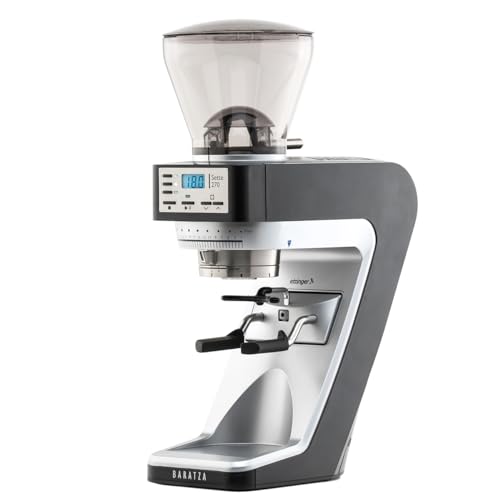
Baratza Sette 270 Conical Burr Coffee Grinder

Tuni G1 Conical Burr Coffee Grinder 48 Grind Settings Silver

Tuni G1 Conical Burr Coffee Grinder 48 Grind Settings Ivory

Tuni G1 40mm Conical Burr Coffee Grinder 48 Grind Settings Black

AMZCHEF 64mm Flat Burr Coffee Grinder 90 Settings
More Details On Our Top Picks
SHARDOR positions this model as a versatile home grinder rather than a dedicated espresso specialist, and the design choices reflect that. The 40mm stainless steel conical burr spins at a speed meant to keep grinding temperatures low, protecting the volatile oils that carry most of the flavor. You get 51 grind settings spanning from fine espresso powder to coarse French Press particles, giving you plenty of room to experiment across brew methods. The touchscreen interface handles both grind time and cup quantity, so you can dial in a repeatable dose without weighing every shot.
The cup quantification feature goes up to 12 cups, which is handy for mornings involving a full drip carafe rather than a single double-shot. Grind time adjusts in 0.1-second increments up to 60 seconds, offering fine control over dose volume. Anti-static engineering cuts down on the mess that cheaper burr grinders leave on the counter, a practical touch for daily kitchen use. For someone stepping up from a blade grinder or entry-level burr model, this covers a lot of ground without overwhelming the user.
Strong Points
- 51 settings provide enough granularity to dial in espresso while still covering French Press and drip needs
- The 0.1-second timer increments mean repeatable doses morning to morning without a separate scale
- Anti-static design keeps grounds from clinging to the chute, simplifying counter cleanup after a busy session
- Stainless steel conical burr generates less heat than ceramic alternatives, preserving aromatic compounds in lighter roasts
- Touchscreen interface is responsive and clearly labeled, reducing the learning curve for first-time burr grinder owners
Things To Consider
- Owners commonly report that the 40mm burr, while competent, may struggle to produce the ultra-fine consistency demanded by commercial-level unpressurized portafilter baskets
- The housing collects fingerprints in a bright kitchen, requiring frequent wiping to maintain a clean appearance
- Plastic components in the internal chute may show wear over time with heavy daily use
Key Specs
Who It Suits Best
Home brewers who want one grinder for espresso, drip, and French Press without managing separate appliances benefit most from this flexible design.
Where A Sibling Pick Shines
Serial espresso dialers who need programmable dosing buttons and a dedicated portafilter mount will find the Baratza Sette 270 a more focused tool.
Unlike the SHARDOR’s do-everything approach, the Baratza Sette 270 is built with espresso as the primary mission. The standout feature is the three programmable dosing buttons, each saving a separate grind time accurate to a tenth of a second. You can store separate doses for a single shot, a double shot, and a backup brewing method, then recall them with one press. That eliminates the daily guesswork that makes dialing in espresso so frustrating.
The Sette 270 also offers dual dosing paths: grind straight into a portafilter or into a grounds bin for other brew methods. The burr assembly sits on a gear-driven mechanism that produces very low retention, meaning stale grounds from yesterday’s session do not contaminate today’s shot. Baratza has a long-standing reputation in the specialty coffee community, and their support network is widely regarded as responsive for replacement parts and service. This is a grinder built for someone who pulls shots daily and wants repeatable results.
What We Like
- Three programmable dose buttons save time and eliminate the need to re-measure for each shot
- Low retention design keeps yesterday’s stale grounds from mixing into fresh doses
- Direct portafilter grinding means fewer steps and less mess on the counter
- Baratza’s parts availability and service reputation make long-term ownership realistic
- Conical burr design balances espresso precision with enough range for AeroPress and drip
Worth Noting
- The motor produces more noise than some competitors, which may be noticeable in an open kitchen layout during early mornings
- Some owners report the gear mechanism can develop play over years of heavy use, requiring occasional adjustment
At A Glance
Made For
Daily espresso drinkers who want programmable, repeatable shots without managing a separate scale every morning.
Look Elsewhere When
Shoppers who need flat-burr particle consistency for high-volume commercial settings should consider the AMZCHEF 64mm Flat Burr Grinder instead.
The Tuni G1 in Silver takes a different visual route than the SHARDOR or the Baratza, wrapping its 40mm conical burr in a polished stainless steel housing that looks at home on a modern counter. The 48 grind settings cover espresso through French Press, with timer adjustments in 0.5-second increments up to 40 seconds. Cup selection runs from 2 to 12 cups based on an Americano serving size, which gives you a practical range for both solo mornings and entertaining.
The patented anti-static burr system is the functional highlight here, addressing one of the most common complaints about home grinders: grounds clinging to the chute and scattering across the counter. The LED touchscreen provides a clean interface for adjusting both grind time and cup quantity, and the stainless steel build feels more substantial than plastic-bodied alternatives. Compared to the Baratza Sette 270, the Tuni G1 trades programmable dosing buttons for a broader brew-method range and a more decorative finish.
Highlights
- Patented anti-static technology significantly reduces grounds scatter, keeping the work area clean during back-to-back grinding sessions
- 48 settings offer enough steps for espresso dialing without overwhelming casual users
- LED touchscreen simplifies operation and gives the unit a modern, integrated look
- Silver stainless steel finish resists wear and complements contemporary kitchen aesthetics
Softer Spots
- The 0.5-second timer increments are coarser than the SHARDOR’s 0.1-second steps, giving you less fine control over dose volume
- The 40-second timer cap may feel limiting for larger batch grinding sessions
- Stainless housing shows smudges in high-traffic kitchens, requiring regular wiping
- Lack of programmable dose buttons means you re-enter settings each session
Quick Facts
Right Fit For
Style-conscious home baristas who value a clean counter and a modern interface over programmable dosing precision.
A Better Fit Elsewhere
Shoppers who prioritize dose repeatability for daily espresso will find the Baratza Sette 270’s programmable buttons more efficient.
Functionally, this Ivory variant mirrors the Silver Tuni G1 in every meaningful way: same 40mm anti-static conical burr, same 48 settings, same 0.5-second timer increments up to 40 seconds. The difference is aesthetic, and that matters for shoppers designing a kitchen around a specific palette. The warm ivory finish pairs naturally with cream-colored cabinetry, marble counters, or any space where a silver or black appliance would feel visually jarring. The LED touchscreen remains the control hub, handling both grind time and cup quantity adjustments.
Cup selection runs 2 to 12 cups based on Americano serving sizes, matching the Silver model’s range. The anti-static burr system does the same job of keeping grounds off the counter, which is especially useful during back-to-back grinding for guests. One thing worth noting: the lighter finish shows coffee splatter and dust more readily than the Silver or Black variants, so expect to wipe it down more frequently. The internal components are identical, so performance and longevity should match the other G1 colors.
Plus Points
- Warm ivory finish integrates into light-toned kitchen designs where metallic or black grinders clash
- Anti-static burr system keeps grounds contained, reducing counter cleanup during multi-cup sessions
- 48-setting range covers espresso through French Press without forcing a second grinder purchase
- LED touchscreen offers intuitive control over both grind time and cup quantity
Room For Improvement
- The light ivory surface shows coffee dust and splatter more visibly than darker finishes, requiring more frequent cleaning
- Timer increments of 0.5 seconds limit dose precision compared to the SHARDOR’s finer 0.1-second steps
Feature Snapshot
Who Will Love This
Home brewers with light-toned kitchen aesthetics who want versatile grind coverage without disrupting their design scheme.
Swap It Out When
Shoppers with dark countertops and a preference for a stealthy appearance should grab the Tuni G1 Black variant instead.
The Black Tuni G1 rounds out the color trio with the same 40mm conical burr and 48 grind settings as its Silver and Ivory siblings. What sets this variant apart is the cup selection calibration, which is designed specifically for drip coffee and pour-over brewing methods rather than Americano sizing. That subtle shift matters for pour-over enthusiasts who want the cup count to reflect a standard drip serving rather than a diluted espresso volume. The black stainless finish also hides coffee dust and splatter better than the Ivory version, making it a lower-maintenance choice for daily use.
The anti-static burr system, 0.5-second timer increments up to 40 seconds, and LED touchscreen all carry over from the other G1 models. In most kitchens, the black finish blends into darker countertops and espresso machine setups without drawing attention. You may find the drip-focused cup calibration more intuitive for morning pour-over routines, where the cup count actually reflects the coffee you are brewing. The trade-off remains the same: no programmable dose buttons, so each session requires manual timer input.
Upsides
- Black finish conceals coffee dust and splatter, reducing visible cleaning frequency compared to the Ivory variant
- Cup calibration tuned for drip and pour-over matches common morning brewing routines more accurately
- Anti-static burr system minimizes grounds scatter on the counter
- 48-setting range provides coverage for espresso through French Press in one unit
Points To Note
- The drip-focused cup calibration may require mental adjustment for shoppers accustomed to Americano-based cup sizing
- Timer increments of 0.5 seconds limit fine dose control compared to grinders with 0.1-second steps
- Manual timer input is required for each session since no programmable dose buttons are present
Feature Rundown
Built With In Mind
Dark-counter pour-over and drip coffee enthusiasts who want a grinder that matches their daily brewing volume without standing out visually.
Reach For A Different Pick When
Shoppers who need broad Americano-based cup calibration and a lighter aesthetic should choose the Tuni G1 Silver instead.
The AMZCHEF FC6202 takes a fundamentally different approach from every conical burr model on this list. Its 64mm flat burrs produce tighter, more uniform particle distributions than conical alternatives, which translates to cleaner flavor separation and sweeter espresso extraction. Flat burrs (two parallel grinding plates) create more consistent particle sizes than conical burrs (cone-and-ring designs), and the larger 64mm diameter gives you a wider grinding surface for better throughput. The 90 precision settings are organized into three ranges: espresso (4 to 15), Moka and pour-over (16 to 55), and French Press with cold brew (56 to 90).
The all-metal grinding chamber is a meaningful structural upgrade over plastic chambers that can wobble and retain odors over time. The stainless steel body adds rigidity and reduces vibration during operation, which helps maintain burr alignment under load. A DC motor provides consistent torque, and the anti-static technology addresses the same grounds-scatter issue the Tuni models tackle. The LED timer handles dose control, and the unit is designed for straightforward cleaning, a practical consideration for anyone grinding multiple pounds per week.
Reasons To Buy
- 64mm flat burrs deliver tighter particle distribution than conical alternatives, producing cleaner espresso shots with sweeter extraction
- All-metal grinding chamber eliminates the wobble and odor retention common in plastic-bodied grinders
- 90 settings across three labeled ranges make it easy to locate the right zone for any brew method
- Stainless steel housing minimizes vibration, helping maintain burr alignment during heavy grinding sessions
- DC motor provides consistent torque even with light-roast beans that resist grinding
- Anti-static technology reduces grounds scatter on the counter
Small Caveats
- The larger footprint may strain compact kitchen counters where space is at a premium
- Flat burrs typically require more frequent cleaning than conical burrs to maintain performance, as oils build up on the wider surface area
Spec Overview
Who Should Grab It
High-volume espresso enthusiasts and small cafe setups that need flat-burr particle consistency and a durable, all-metal construction.
Consider Something Else When
Shoppers with limited counter space or primarily drip brewing needs will find the Tuni G1 Black a more compact and practical fit.
How To Choose The Right Commercial Espresso Coffee Grinders
Burr Type Shapes Everything
Conical burrs use a cone-and-ring design that produces a mix of fine and coarse particles, which some drinkers prefer for the body and complexity it adds to espresso. Flat burrs use two parallel plates that create more uniform particle sizes, leading to cleaner flavor separation and sweeter extraction. The AMZCHEF 64mm flat burr model on this list illustrates the flat-burr advantage, while the conical models offer versatility across brew methods. Neither is objectively better; the choice depends on whether you prioritize espresso clarity or multi-method flexibility.
Setting Count And Grind Range
More settings give you finer control over particle size, which matters most for espresso where small adjustments change extraction dramatically. The SHARDOR’s 51 settings and the AMZCHEF’s 90 settings both offer wide ranges, but the organization of those settings matters as much as the raw count. The AMZCHEF labels its ranges by brew method (espresso, Moka, French Press), making it easier to find a starting point. Models with fewer settings may still cover the range but with larger jumps between steps.
Dosing Mechanism And Timer Precision
Programmable dose buttons, like the Baratza Sette 270’s three presets, save time for daily espresso routines by storing repeatable grind times. Timer precision matters because finer increments (0.1 seconds versus 0.5 seconds) translate to more accurate doses without a separate scale. Shoppers who pull the same shot daily benefit from programmable buttons, while those who switch between brew methods may prefer manual timer input with a broader range.
Build Material And Longevity
Stainless steel bodies and all-metal grinding chambers reduce vibration, maintain burr alignment, and resist odor retention over time. Plastic components, while lighter and less expensive, can flex under load and may show wear with heavy daily use. The AMZCHEF’s all-metal chamber addresses this directly, while the Tuni G1 models use stainless steel housings with internal components that vary by model. For shoppers planning years of daily use, metal construction in high-stress areas is a meaningful durability signal.
Footprint And Kitchen Fit
Grinder size affects where it lives and how often you use it. Compact models like the SHARDOR fit under cabinets and move easily for cleaning, while larger units like the AMZCHEF demand dedicated counter space. Measure your available area before committing, and factor in the height clearance needed for a portafilter or grounds bin underneath the chute. A grinder that fits your space gets used more often than one you have to retrieve from storage each morning.
Things Worth Knowing First
Traps First Timers Fall Into
Many first-time burr grinder shoppers focus entirely on grind setting count and overlook dosing convenience. A grinder with 90 settings but no programmable dosing still requires manual input every session, while a model with fewer settings and programmable buttons can save daily friction. Another common misstep is ignoring burr type entirely. Conical and flat burrs produce different flavor profiles, and choosing based on setting count alone may land you with a grinder that does not match your taste preferences. Static is another underrated factor. Grinders without anti-static engineering scatter grounds across the counter, adding cleanup time to every session.
The Upgrade Payoff
Higher-tier grinders cost more because they invest in the components that affect consistency and longevity: larger burrs, all-metal chambers, DC motors, and better alignment mechanisms. The AMZCHEF’s 64mm flat burrs and metal chamber represent the kind of structural upgrades that improve shot quality over years of use. For shoppers pulling multiple shots daily or running a small cafe, these upgrades pay off in cleaner extraction and reduced maintenance. Casual home brewers who grind once a day for a single brew method may not see the same return, making mid-tier conical models the more rational choice.
Final Verdict
Choosing the right espresso grinder comes down to matching build features to your daily routine. Daily espresso dialers get the most value from programmable dosing, multi-method brewers need setting range and versatility, and high-volume setups benefit from flat-burr consistency and all-metal construction. The models here cover those profiles across different price tiers and design philosophies. Pick the one that fits your counter, your workflow, and the coffee you actually brew.
