

Roasting your own beans at home changes everything about your morning cup. The problem most people face is that store-bought roasted beans start losing their character within days, while green unroasted beans stay fresh for up to two years. That flavor gap is what drives coffee enthusiasts toward home roasting, whether you want small artisan batches or larger volumes for a household of daily drinkers. This roundup covers six options spanning from hands-on ceramic roasting to fully automated electric machines, so you can match your skill level and batch size to the right tool.
The Shortlist At A Glance

Proctor Silex Commercial 18 Quart Roaster Oven (32921)
Nuvo Eco Ceramic Handy Coffee Bean Roaster

Fresh Roast SR540 Automatic Coffee Bean Roaster

Fresh Roast SR800 Coffee Roaster
ANGELLOONG 1200W Coffee Bean Roaster 750g

GIVEROO 500g Coffee Bean Roaster Machine
More Details On Our Top Picks
This Proctor Silex model stands apart from everything else on this list because it is not a dedicated coffee bean roaster at all. It is a commercial-grade electric roaster oven designed for cooking large cuts of meat, baking, and keeping food warm at catered events or large family gatherings. The 18-quart capacity accommodates a turkey up to 24 pounds, and the temperature dial ranges from 200 to 450 degrees Fahrenheit.
You might wonder why it appears here. Some shoppers searching for commercial roasting equipment land on this category expecting coffee-specific machines, and this oven occasionally surfaces in those search results. For someone running a church kitchen, a community hall, or a catering side business where large-batch food preparation matters more than coffee, this unit earns its place. The stainless steel construction and commercial rating make it a legitimate workhorse, just not for coffee beans.
Strong Points
- Massive 18-quart interior handles whole turkeys and large roasts without breaking a sweat
- Commercially rated construction meets UL 197 standards for foodservice environments
- Wide temperature range from 200 to 450 degrees Fahrenheit covers roasting, baking, and food holding
- Stainless steel exterior wipes clean and resists corrosion in busy kitchen settings
- Serves double duty as both a cooker and a food warmer, cutting down on equipment needs
Things To Consider
- Not designed for coffee bean roasting despite appearing in related search results
- Bulky footprint requires dedicated counter or storage space that small kitchens may lack
- Cleaning the large enameled interior takes more effort than wiping a standard baking pan
Key Specs
Who It Suits Best
Caterers, community kitchen operators, and anyone feeding 20-plus people regularly will get the most from this oven.
Where Another Pick Suits Better
Shoppers who actually want to roast coffee beans should skip this and look at the Fresh Roast SR540 for a true dedicated home coffee roaster.
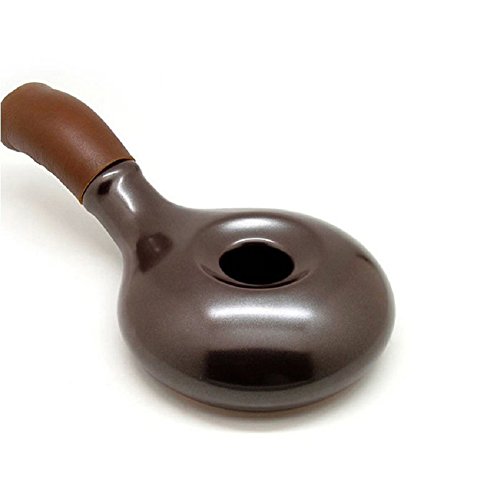
Jumping from the Proctor Silex food oven to this feels like switching from a freight truck to a canoe. The Nuvo Eco Ceramic Handy Roaster is the most analog item on this list, a hand-held ceramic pot designed for stovetop coffee bean roasting. Made in Korea from heat-resistant glazed pottery, it relies on your own gas or electric burner and your hands to agitate the beans.
The interior features a waffle-shaped texture that helps tumble beans for more even heat distribution compared to a flat-bottomed pan. A rear hole lets you hear the cracks during roasting, which experienced roasters use as audio cues for development stage. The genuine cowhide grip protects your hand from the ceramic body’s heat, though you still need to keep things moving constantly.
Highlights
- All-ceramic body delivers even radiant heat that many purists prefer over metal drums
- Waffle-pattern interior tumbles beans naturally as you shake, reducing scorch spots
- Rear sound hole lets you hear first and second crack clearly for development stage timing
- Genuine cowhide grip gives a comfortable, heat-resistant hold during stovetop use
- Compact size stores easily and doubles as a conversation piece on a kitchen shelf
Trade Offs
- Small batch size of roughly 30 to 70 grams means multiple roasts for a week’s supply
- Requires constant manual shaking and attention, with no timer or thermostat to fall back on
- Ceramic construction is fragile compared to the stainless steel bodies on electric machines
At A Glance
Made For
Coffee purists who enjoy the tactile ritual of hand-roasting small batches will appreciate this ceramic pot the most.
Look Elsewhere When
Anyone wanting consistent hands-off results with larger batches should reach for the Fresh Roast SR800 instead of this manual ceramic option.
After the hands-on Nuvo, the Fresh Roast SR540 feels like stepping into a modern kitchen appliance. This is a fluid bed roaster, meaning it uses hot air circulated by a convection fan to lift and tumble beans rather than a spinning drum. That design keeps beans moving constantly for even development and faster roast times.
The SR540 handles up to 120 grams of wet-processed green beans per batch, which translates to roughly 7 to 14 cups of brewed coffee. A real-time digital temperature display shows you exactly what is happening inside, and nine power levels let you fine-tune the heat profile. Beginners can start with defaults and get drinkable results, while experienced roasters can dial in specific curves for different bean origins.
Upsides
- Nine-level power settings give genuine control over roast development, not just low or high
- Real-time temperature display removes guesswork for beginners learning roast stages
- Convection fan control lets you adjust bean agitation independently from heat
- Speed roast system finishes a batch in under 10 minutes for quick weeknight roasting
- Compact countertop footprint fits where drum-style machines would not
Worth Noting
- 120-gram batch capacity limits you to small batches, which means frequent roasting for multi-cup households
- Fluid bed roasters produce more chaff and smoke than drum designs, so ventilation matters more than you might expect
- Plastic and glass construction feels less durable than the ceramic Nuvo or stainless Proctor Silex
Quick Facts
Right Fit For
Beginners stepping into home roasting for the first time will find the digital display and adjustable settings approachable enough to learn without feeling overwhelmed.
A Better Fit Elsewhere
Drinkers who need larger batches per session should consider the Fresh Roast SR800, which nearly doubles the capacity to 226 grams for less frequent roasting.
Think of the SR800 as the SR540’s bigger sibling. Both share the same fluid bed architecture and nine-level power control, but the SR800 pushes batch capacity to 8 ounces or 226 grams. That extra volume translates to 14 to 28 cups of brewed coffee per session, which makes a real difference for households where multiple people drink coffee daily.
The larger capacity does not slow things down. The speed roast fluid motion system still finishes a full batch in under 10 minutes. You get the same real-time temperature display and convection fan control, so experienced roasters can replicate profiles from the SR540 without relearning the interface. The honest read is that this model makes the most sense for someone who has already outgrown the 120-gram limit of the SR540 and does not want to roast every other day.
Plus Points
- 226-gram batch capacity cuts roasting frequency in half compared to the SR540 for the same weekly coffee consumption
- Same nine power levels and digital display as the SR540 preserve your learned roasting technique
- Independent fan and heat control lets you craft distinct profiles for light, medium, and dark roasts
- Speed roast system maintains the under-10-minute cycle despite the larger batch
- Works with any green bean type including decaf, organic, and fair trade origins
Minor Gripes
- Larger batch means more chaff and smoke, so a range hood or outdoor setup becomes more necessary
- Owners commonly report that the glass roasting chamber requires careful handling and thorough cooling before cleaning
Feature Snapshot
Who Will Love This
Coffee enthusiasts who have graduated past beginner batches and want enough volume for several days of drinking will find the SR800 hits a practical sweet spot.
Swap It Out When
Shoppers who want maximum batch size in a single session should reach for the ANGELLOONG 1200W, which handles 750 grams compared to this model’s 226-gram limit.
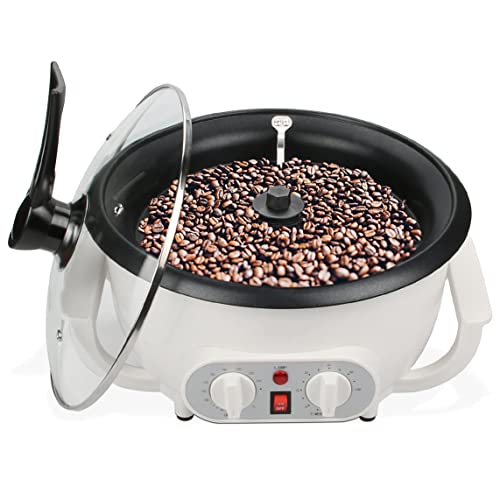
The ANGELLOONG takes a completely different approach from the Fresh Roast models. Instead of a fluid bed, this machine uses a drum-style roasting chamber with automatic stirring, similar to commercial cafe roasters but scaled for countertop use. The 1200-watt heating element drives temperatures from 212 to 464 degrees Fahrenheit, and a 0 to 60-minute timer gives you long roast windows for deep dark roasts.
Where the Fresh Roast SR800 caps at 226 grams, this unit handles 750 grams per batch. That is roughly 1.65 pounds of green beans, which yields a substantial amount of roasted coffee in about 25 minutes. The transparent heat-resistant glass lid and four vent holes let you watch color changes during the roast, a feature the Fresh Roast’s opaque chamber does not offer.
Reasons To Buy
- 750-gram batch capacity produces enough roasted coffee for a week or more in a single session
- Automatic stirring mechanism eliminates the manual shaking required with the Nuvo ceramic roaster
- Honeycomb non-stick pan coating reduces bean sticking and simplifies cleanup with a damp towel
- Transparent glass lid lets you visually monitor color development without opening the chamber
- Wide 212 to 464 degree Fahrenheit temperature range covers everything from light to very dark roasts
- 0 to 60-minute timer allows extended roasting cycles that shorter machines cut off too early
Areas To Watch
- 1200-watt draw may strain older kitchen circuits sharing power with other appliances
- Teflon coating inside the honeycomb pan requires gentle cleaning to avoid scratching over time
- Larger physical footprint demands more counter or storage space than the compact Fresh Roast models
Feature Rundown
Built With In Mind
Serious home roasters and small cafe operators who need large batches with consistent stirring will benefit from this drum-style machine.
Reach For A Different Pick When
Beginners who want simplicity and transparent temperature feedback should start with the Fresh Roast SR540 before committing to this larger, more complex machine.
The GIVEROO sits between the Fresh Roast SR800 and the ANGELLOONG in terms of capacity. Its 500-gram batch size hits a middle ground that many home roasters find practical, enough for several days of coffee without the counter footprint of the larger 750-gram ANGELLOONG. The non-stick drum and electric stirring follow the same design philosophy as the ANGELLOONG, just at a smaller scale.
One detail worth noting is the manufacturer’s guidance on bean quality. Smaller or damaged beans can jam the stirring mechanism, so sifting green beans before loading is recommended. The unit also performs best with at least 400 grams loaded, meaning very small batches may roast unevenly due to insufficient tumbling mass.
Bright Spots
- 500-gram capacity balances batch size with a more manageable countertop footprint
- Non-stick interior simplifies cleanup compared to uncoated drum surfaces
- Electric stirring provides hands-off agitation unlike the manual Nuvo ceramic pot
- Wide temperature range up to 240 degrees Celsius covers light through dark profiles
Softer Spots
- Requires a minimum 400-gram load for even roasting, limiting flexibility for small test batches
- Green beans need sifting before loading to prevent stirrer jams from small or damaged beans
- Clearing a jam requires disconnecting power and manually removing stuck beans, which interrupts the roasting workflow
- Detailed wattage and timer specifications are not provided by the manufacturer, making comparisons harder
Core Details
Whose Shelf It Belongs On
Home roasters and small cafe operators who want a middle-weight machine between compact fluid bed models and full-size drum roasters will find this a sensible fit.
Another Choice May Suit
Shoppers who need the largest single batch available here should skip this and grab the ANGELLOONG 1200W for its 750-gram capacity.
How To Choose The Right Commercial Coffee Roasters
Match Batch Size To Your Drinking Habits
The single most important spec to nail down is batch capacity, because it determines how often you roast. A 120-gram machine like the Fresh Roast SR540 produces roughly 7 to 14 cups per session. That works for a one or two person household, but a family of four daily drinkers will be roasting every other day. Stepping up to 226 grams with the SR800 or 500-plus grams with the drum models cuts that frequency dramatically. Think about your weekly coffee consumption in cups, then work backward to find a batch size that keeps you roasting once or twice a week, not every evening.
Fluid Bed Versus Drum Roasting
These are the two core roasting architectures you will encounter. Fluid bed roasters, like the Fresh Roast models, use a convection fan to suspend beans in hot air. They roast fast, usually under 10 minutes, and produce bright, clean flavor profiles. Drum roasters, like the ANGELLOONG and GIVEROO, use a rotating or stirring mechanism inside a heated chamber. They take longer, often 20 to 25 minutes, but many enthusiasts prefer the deeper, more developed flavor that slower heat penetration provides. Neither is objectively better, but they produce noticeably different cups from the same green beans.
Control Features Matter More Than You Think
A machine with only an on-off switch and a timer will teach you roasting through trial and error. Models with nine power levels and a real-time temperature display, like both Fresh Roast units, let you make incremental adjustments mid-roast and learn cause and effect. For beginners, that feedback loop accelerates the learning curve. For experienced roasters, independent fan and heat control means you can craft distinct profiles for different origins rather than relying on one default setting.
Ventilation And Cleanup Requirements
Every roaster on this list produces smoke and chaff, the papery skin that separates from beans during roasting. Fluid bed models generate more chaff because the airflow blows it around actively. Drum models contain most chaff inside the chamber but still produce smoke at darker roast levels. You need either a range hood, an open window, or an outdoor setup for any of these machines. Non-stick interiors, like the ANGELLOONG’s honeycomb coating, make cleanup faster. Glass and ceramic chambers require more careful handling but let you watch the roast visually.
Things Worth Knowing First
Traps First Timers Fall Into
The most common mistake is buying a roaster based solely on capacity without considering ventilation. A 750-gram machine produces significant smoke during a dark roast, and without a range hood or outdoor space, your kitchen will smell like a coffee shop for hours. Another frequent slip-up is expecting commercial-grade consistency from entry-level machines. The Fresh Roast SR540 delivers excellent results for its price, but it will not match the repeatability of a dedicated cafe drum roaster. Start with realistic expectations about what a home machine can do.
Another pitfall involves ignoring bean quality before loading. The GIVEROO manufacturer specifically warns that small or damaged beans can jam the stirring mechanism. Sifting green beans takes two minutes and saves you from interrupting a roast cycle to clear a stuck stirrer. This applies to every drum-style machine on this list, not just that one.
The Case For Spending Up
Higher-tier roasters cost more because they add independent heat and fan control, larger batch capacity, and better build materials. The jump from the SR540 to the SR800 gives you nearly double the batch size for what is likely a modest price difference. The jump to a drum machine like the ANGELLOONG adds automatic stirring and a non-stick chamber, which reduces both effort and cleanup time. For someone roasting several times a week, those upgrades pay for themselves in convenience within a few months. For a casual weekend roaster, the entry-level models deliver everything needed without the extra spend.
Closing Thoughts
Finding the right roaster comes down to honest assessment of your drinking habits, your kitchen setup, and how much control you want over the process. Someone roasting for one person needs a completely different machine than someone supplying a small cafe. Start with batch size, consider ventilation, and pick the control level that matches your experience. The right choice is the one that keeps you roasting consistently, not the one with the most features sitting unused on a shelf.
