

Running a breakroom, café, or small office means keeping coffee flowing without babysitting the machine. The right commercial brewer handles volume, speed, and durability so your team stays caffeinated. From compact single-serve models to multi-warmer pourover tanks, these picks cover the range of demands a busy morning throws at you.
The Shortlist At A Glance

BUNN 13300.0001 VP17-1SS Pourover Coffee Brewer (Silver)
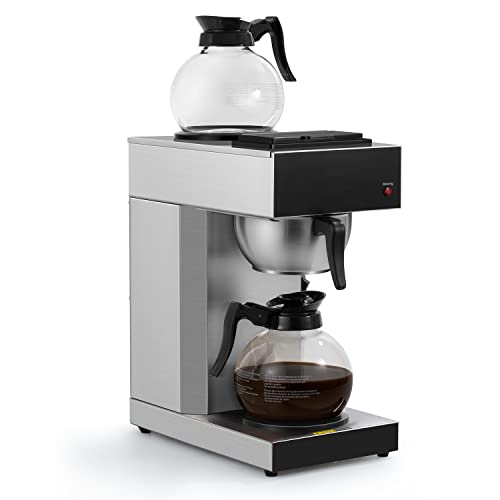
SYBO 12-Cup Commercial Pour Over Coffee Maker SF-CB-2GA

BUNN VP17-3 12-Cup Low Profile Pourover Coffee Maker (Silver)

Keurig K-2500 Single Serve Commercial Coffee Maker

Keurig K-1550 Small Business Single Serve Coffee Maker (Black)
Elite Gourmet CCM040X 40 Cup Coffee Brewer Urn (Stainless Steel)
More Details On Our Top Picks
Some machines try to do everything and end up doing nothing particularly well. This Bunn keeps it simple: a stainless steel pourover brewer with a single warmer plate, built for years of daily use. The “pourover” design means you pour water in manually, so there is no plumbing requirement. That matters in a kitchen or office where running a water line is not practical or the landlord will not allow it. The stainless construction shrugs off the dings and spills that come with a busy service environment.
Compared to the multi-warmer Bunn VP17-3 further down this list, the single-warmer design takes up less counter space. You give up the ability to hold multiple decanters at once, which is a fair trade for a smaller operation. The honest read is that this model suits a spot doing steady but not extreme volume, like a ten-person office or a small diner. For most low-volume settings, that single warmer is plenty.
Strong Points
- Pourover operation needs no plumbing, so placement is flexible anywhere you have a counter and an outlet.
- Stainless steel body stands up to daily wear in commercial environments far better than plastic housings.
- Single warmer keeps one decanter at serving temperature without taking up the footprint of a multi-warmer unit.
- Straightforward design with minimal electronics means fewer failure points over years of operation.
Things To Consider
- With only one warmer, you cannot keep a second pot of decaf or a backup batch ready, which limits simultaneous service.
- Manual pour-over means someone has to fill the reservoir each cycle, a step that gets repetitive in high-volume settings.
Key Specs
Right Fit For
Small offices, diners, or breakrooms serving up to about 15 people benefit most from this straightforward, single-decanter setup.
A Better Fit Elsewhere
Cafés or restaurants running regular and decaf side by side should reach for the BUNN VP17-3, since its three warmers let you stage multiple decanters at once.
Not every breakroom needs to spend big to get reliable coffee service. The SYBO SF-CB-2GA brings a 12-cup pourover setup with two glass carafes included, which is a detail that immediately sets it apart from the single-decanter Bunn above. You can brew a fresh pot and set it on the warmer while the second carafe is already serving. The stainless steel exterior and spray head, which distributes water evenly over the grounds for better extraction, give it a genuinely commercial feel at a friendlier price point.
The ETL certification means the unit meets North American electrical safety standards, a detail that matters for insurance and compliance in a commercial kitchen. You may find the glass carafes feel a bit lighter than what Bunn ships, so they require a gentler hand during busy rushes. For a small office that wants a turnkey package without buying extra decanters separately, this is a smart starting point.
Highlights
- Two glass carafes come in the box, letting you serve one batch while the next brews.
- Spray head design distributes water evenly across the coffee bed for more consistent flavor.
- Stainless steel build with ETL certification meets commercial safety standards without a premium price tag.
- Reusable brew basket eliminates the need for disposable paper filters, cutting ongoing supply costs.
Worth Noting
- Glass carafes are more fragile than the stainless decanters that come with higher-end brewers, so expect to replace them eventually.
- Owners commonly report the warming plate runs hot enough to scorch coffee left on for extended periods, so transferring to a thermal server is wise for longer holding.
At A Glance
Made For
Budget-conscious offices and small cafés that want a complete two-carafe setup straight out of the box will appreciate the value here.
Consider Something Else When
Shoppers who need the durability of a stainless decanter rather than glass should look at the BUNN 13300.0001 VP17-1SS, which pairs a rugged decanter with a simpler single-warmer layout.
Stepping up from the single-warmer Bunn changes what your service looks like. The VP17-3 keeps the same stainless steel pourover foundation but adds three lower warmers, so you can hold three decanters at serving temperature simultaneously. In a busy restaurant or café, that means regular, decaf, and a flavored option can all stay hot and ready at once. The SplashGard funnel deflects hot liquid away from your hands during the brew cycle, a small but meaningful safety detail when someone is pulling a funnel in a rush.
Bunn rates this unit for up to 60 cups per hour, which is roughly 3.8 gallons of brewed coffee. That kind of throughput handles a morning rush or a lunch service without making people wait. The low-profile design helps it fit under standard cabinets, assuming your counter has the depth for the three warming plates. Compared to the SYBO above, this is the heavier-duty machine built for sustained commercial volume.
Upsides
- Three lower warmers let you stage multiple decanters, perfect for offering regular and decaf simultaneously.
- SplashGard funnel keeps hot liquid away from the operator’s hands during brewing, reducing burn risk in fast-paced environments.
- Stainless steel exterior holds up to the daily abuse of a commercial kitchen without showing wear quickly.
- Rated for up to 60 cups per hour, enough capacity to handle a restaurant lunch rush without bottlenecks.
- Low-profile build fits under standard cabinetry, making it a practical fit for kitchens with limited vertical clearance.
Trade Offs
- Three warmers demand serious counter space, so measure your available footprint carefully before committing.
- Decanters are not included, which means an additional purchase before you can start brewing.
- The all-stainless build is heavier than budget models, making it harder to reposition once it is set up.
Technical Sheet
Who Will Love This
Busy restaurants, hotel breakfast bars, and cafés that serve multiple coffee options at once will get the most out of the three-warmer layout.
Reach For A Different Pick When
Small offices that only need a single pot at a time will find the BUNN 13300.0001 VP17-1SS simpler and more space-appropriate for low-volume needs.
Pourover brewers make great coffee, but not every office wants the routine of grinding, batching, and cleaning carafes. The Keurig K-2500 flips the script with single-serve pod brewing designed for commercial use. You get five cup sizes, from a 4-ounce espresso-style shot up to a 12-ounce travel mug fill, plus a STRONG setting that slows the extraction for a bolder cup. The touchscreen interface keeps selection simple even for first-time users in a breakroom setting.
The standout feature here is the plumbed-in option. Connect a water line and the machine draws automatically, which means no refilling a reservoir between cups. An optional 110-ounce reservoir is available for spots without plumbing access. The serviceable modules, meaning internal components designed to be swapped by a technician rather than replacing the whole unit, help extend the machine’s lifespan in a commercial environment. Compared to the K-1550 below, this model sits higher up the range with more size options and the plumbing capability.
Plus Points
- Plumbed-in option provides continuous brewing without manual reservoir refills, ideal for high-traffic breakrooms.
- Five cup-size options accommodate everything from a quick espresso shot to a full travel mug.
- STRONG setting increases extraction time for a bolder flavor that holds up to ice, which is useful for iced coffee fans.
- Serviceable modules allow component replacement to extend the machine’s operational life.
- Touchscreen interface simplifies drink selection for multiple users in a shared space.
Small Caveats
- Pod-based systems incur a higher per-cup cost than bulk ground coffee, which adds up in a busy office of daily drinkers.
- Plumbing installation requires a water line near the counter, which may need a professional setup depending on your space.
- Owners commonly report the pod needle needs regular descaling and cleaning to prevent clogs in hard-water areas.
Feature Snapshot
Perfect Match For
Mid-size offices with access to a water line and a team that values drink variety over bulk brewing will get the most out of this plumbed-in pod system.
Skip It When
Shoppers who want a no-plumbing, no-pod option should grab the BUNN 13300.0001 VP17-1SS, which keeps things mechanical and uses standard ground coffee.
Not every small business needs the plumbed-in complexity of the K-2500 above. The K-1550 strips things back to a 96-ounce removable reservoir and four cup sizes, making it a straightforward pod brewer for a tight breakroom. You still get a STRONG button for a bolder cup and brew-over-ice functionality, plus compatibility with the full range of K-Cup pods. The black finish is understated enough to sit on a counter without looking industrial.
Where the K-2500 offers five sizes and a plumbing option, this model keeps things simpler with four sizes and a manual-fill tank. That 96-ounce reservoir holds roughly eight to twelve cups before needing a refill, depending on the size you pick. For a team of five to ten people, that is a reasonable cadence without constant babysitting. The honest read is that this model hits a sweet spot for small businesses that want pod convenience without paying for features they will not use.
Reasons To Buy
- 96-ounce reservoir holds enough water for several cups before refilling, reducing daily interruptions.
- Four cup sizes cover the most common preferences without overwhelming infrequent users.
- STRONG button increases brew strength for those who prefer a bolder flavor profile.
- Compact footprint suits small breakrooms where counter space is at a premium.
Room For Improvement
- No plumbing option means someone has to refill the reservoir manually, which becomes a chore in a busy office.
- Pod-based brewing costs more per cup than traditional drip systems using bulk ground coffee.
Quick Facts
Best Suited To
Small businesses with five to ten employees who want push-button pod convenience and a compact counter footprint will find this model hits the right balance.
Look Elsewhere When
Offices with a water line available and higher daily volume should step up to the Keurig K-2500, which adds plumbing capability and an extra cup-size option.
Everything else on this list brews in 12-cup batches, which is fine for a steady trickle of coffee drinkers. But catering an all-hands meeting or a conference breakout changes the math entirely. The Elite Gourmet CCM040X is a 40-cup urn designed for exactly that scenario. Brew time runs about one minute per cup, so a full urn takes roughly 40 minutes to complete. External water-level markings let you fill to the exact amount you need, so you are not forced to brew a full batch for a smaller group.
The cool-touch exterior keeps the stainless steel body from burning hands during service, a meaningful safety feature when people serve themselves in a buffet line. A two-way dispenser lets you fill from the front or use a spigot, and the removable filter basket makes cleanup straightforward. This is a different category of tool than the pourover brewers above, serving volume rather than variety.
Bright Spots
- 40-cup capacity handles large gatherings in a single batch, eliminating the need for multiple brewing cycles.
- Cool-touch exterior prevents burns during self-service, which is valuable in buffet or buffet-line settings.
- Two-way dispenser offers flexible serving from the front or via spigot, accommodating different cup sizes.
- Removable filter basket simplifies cleanup after large events.
Points To Note
- Full-batch brew times of around 40 minutes require planning ahead, since this is not a quick-cycle machine.
- Large footprint means it needs dedicated counter or table space, which may be tight in small breakrooms.
- Urn-style brewers cannot make multiple coffee types simultaneously, so serving decaf requires a separate batch.
Core Details
Built With In Mind
Caterers, conference organizers, and offices hosting regular large meetings will get the most mileage from this high-volume urn.
Swap It Out When
Shoppers who need to serve multiple coffee options simultaneously rather than one large batch should reach for the BUNN VP17-3, whose three warmers handle regular, decaf, and a third option at once.
How To Choose The Right Commercial Coffee Makers
Match The Brewer Type To Your Service Style
Commercial coffee makers fall into three main categories: pourover, single-serve pod, and urn-style batch brewers. Pourover models like the Bunn VP17 series use ground coffee and a manual water pour, making them ideal for offices that want fresh-brewed flavor without plumbing. Single-serve machines like the Keurig K-2500 use pods, trading a lower per-cup cost for convenience and drink variety. Urn brewers handle large volumes in one cycle, which serves catering events but cannot offer multiple roasts at once. Your service style dictates the category more than any other spec.
Capacity And Speed: How Much, How Fast
Hourly capacity determines whether your team waits in line or walks away with a cup. Bunn rates its VP17-3 for up to 60 cups per hour, which suits a restaurant lunch rush. Pod machines brew in under a minute per cup, but that speed comes with a higher ongoing cost for pods. For a ten-person office, a 12-cup pourover cycle is usually enough. A 40-cup urn takes longer to finish but covers a large group in one shot. Match the capacity to your peak demand, not your average morning.
Water Source: Plumbed Versus Manual Fill
Plumbed-in brewers connect directly to a water line, eliminating refills entirely. That requires a water source near the counter and, depending on your building, professional installation. Manual-fill models use a reservoir you pour water into each cycle. Plumbed units like the Keurig K-2500 shine in high-traffic breakrooms where nobody wants to babysit a tank. Manual models like the Bunn VP17-1SS work anywhere, no plumbing required. Your building setup usually makes this decision for you.
Durability And Maintenance Expectations
Stainless steel bodies hold up better than plastic in commercial environments, but they also cost more and weigh more. Look for serviceable components, which means parts a technician can replace individually rather than tossing the whole machine. Pod machines need regular descaling, especially in hard-water areas, to keep the needle and internal lines clear. Pourover brewers have fewer electronics to fail but require manual cleaning of the spray head and funnel. Factor in the cleaning routine, not just the brewing routine, when comparing models.
Before You Click Buy
Traps First Timers Fall Into
The most common mistake is overbuying capacity. A three-warmer Bunn sitting on a four-person breakroom counter wastes space and electricity. Another frequent slip-up is ignoring water hardness. Pod machines and plumbed brewers accumulate scale fast in hard-water areas, shortening their lifespan significantly without regular descaling. Shoppers also forget to check whether decanters are included. The Bunn VP17-3 ships without them, which means an extra purchase before the first brew. Read the listing carefully to avoid surprises on delivery day.
The Upgrade Payoff
Spending more in this category buys durability, throughput, and flexibility. Higher-tier pourover models add warmers, safety features like the SplashGard funnel, and heavier stainless construction that survives daily commercial use. Premium pod machines add plumbing capability, more cup sizes, and serviceable modules that extend the machine’s life. The upgrade makes sense for operations serving 20 or more people daily, where a cheaper unit will either bottleneck service or wear out faster under heavy use. For a small office of five, the extra capacity goes unused.
Closing Remarks
Finding the right commercial coffee maker comes down to matching your daily volume and service style to the right brewing method. Pourover models win for fresh-brewed flavor and durability, pod machines offer unmatched convenience, and urns handle the big crowds. Think about your counter space, water source, and how many people you serve at peak. Whatever your setup, one of these picks will keep the coffee flowing without the fuss.
