

Commercial coffee gear earns its keep when mornings get loud, the line keeps moving, or your kitchen has to serve more than one person at a time. You want something that fits your pace, your space, and the way drinks are actually made in a break room, café corner, office, or home setup that sees heavy use. The eight picks below split neatly between pour-over brewers, single-serve workhorses, and a pair of espresso machines for more hands-on drinks.
Quick Look At The Shortlist

BUNN VP17-1SS Pourover Coffee Brewer 1-Warmer
SYBO 12-Cup Commercial Pour Over Coffee Maker SF-CB-2GA
Philips 4400 Series Fully Automatic Espresso Machine EP4444/90

BUNN 04275.0031 VPS 12-Cup Pourover Commercial Coffee Brewer

BUNN VP17-3 12-Cup Low Profile Pourover Commercial Coffee Maker

Keurig K-2500 Single Serve Commercial Coffee Maker

Keurig K-1550 Small Business Single Serve Coffee Maker 96 oz Reservoir

EUHOMY Espresso Machine with Grinder 20 Bar Professional Espresso Coffee Maker
More Details On Our Top Picks
The single warmer and stainless steel body make this Bunn a straightforward fit for steady coffee service. In a break room or small café corner, that kind of plain, no-drama setup can be exactly what you want, especially when you care more about dependable output than a crowded feature list.
Compared with the two-warming BUNN VPS and the low-profile VP17-3, this one stays simpler and easier to place. You may find the pared-back layout easier to live with in a compact kitchen, though the trade-off is less holding capacity than the multi-warner models.
Strong Points
- Stainless steel construction suits heavy daily use.
- One warmer keeps a small station organized.
- Pour-over design avoids needing a plumbed line.
- Simple layout is easier to wipe down.
Things To Consider
- One warmer suits lighter serving needs better than larger stations.
- Pour-over setup means you handle water fill yourself.
- The plain format leaves little room for specialty drink variety.
Feature Snapshot
Who It Suits Best
Small offices, church kitchens, and compact service counters benefit most from this brewer.
Where A Sibling Pick Shines
The BUNN 04275.0031 VPS fits better for service lines that need several warm holding spots at once.
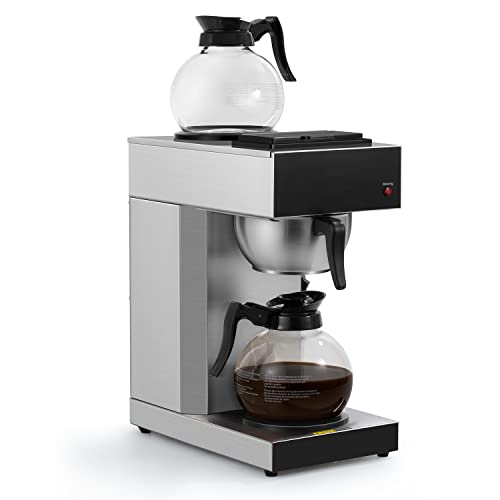
This SYBO leans into practical volume, with a reusable brew basket, spray head, and two glass carafes in the box. For shared kitchens or backup service in a busy office, that mix can feel more flexible than the single-warmer Bunn above, because you have more serving pieces ready to go.
The honest read is that this pick makes more sense for people who want a broad, useful setup without drifting into fancier automation. Owners commonly appreciate the stainless steel shell for daily wipe-downs, though glass carafes always ask a little more care than metal holding pots.
Upsides
- Two glass carafes add serving flexibility.
- Reusable brew basket cuts disposable basket churn.
- Spray head helps water spread over grounds more evenly.
- Stainless steel exterior suits regular cleaning.
Small Caveats
- Glass carafes need more careful handling than thermal containers.
- Reusable basket means you rinse and clean it often.
- Basic pour-over operation leaves brewing control in your hands.
Core Details
Best Suited To
You get the most from this model in shared kitchens, small break rooms, and service setups that need a second carafe ready.
Another Choice May Suit
The BUNN VP17-3 is a better fit for a lower-profile station that needs three warmers in a tighter footprint.
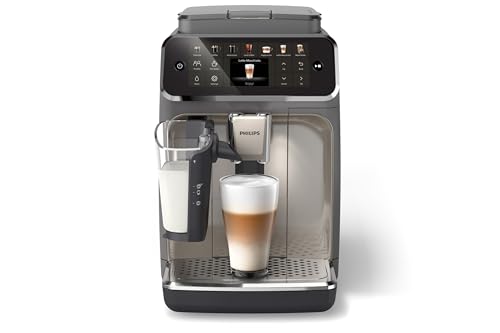
Where the pour-over units lean on volume and simplicity, this Philips goes after convenience with an integrated grinder, LatteGo milk system, and 12 hot or iced presets. In a home office or small staff lounge, that makes it feel more like a compact drink station than a plain brewer.
SilentBrew and Quick Start give it a calmer, faster feel than many fully automatic espresso machines, and the 15-bar pressure spec signals a more serious extraction setup. The trade-off is obvious, though, because the extra parts and drink options also bring more cleaning and more learning curve than the Bunn models.
Positives
- Integrated grinder keeps beans and brewing in one machine.
- LatteGo system supports milk drinks with less mess than many frothing setups.
- 12 presets cover both hot and iced drink habits.
- Quick Start helps it fit busy mornings.
- SilentBrew is a nice touch for shared spaces.
Areas To Watch
- More parts mean more cleaning than a basic drip brewer.
- Preset-driven design leaves less manual control than semi-automatic espresso gear.
- Its feature depth makes sense more in dedicated coffee spots than in ultra-minimal setups.
Details At A Glance
Whose Shelf It Belongs On
Frequent espresso drinkers and households that want cappuccinos or iced drinks from one machine will get the most out of it.
Reach For A Different Pick When
The Keurig K-2500 suits a service counter better when you need low-lift, one-cup drinks for many different tastes.
Three warming stations change the feel of this Bunn immediately, because you can keep more coffee ready without juggling separate brewers. That matters in church kitchens, office service areas, or any line where a single warmed pot would disappear too fast.
Compared with the VP17-1SS, this model is built for more holding capacity, not just simpler brewing. You may find the larger footprint worth it in a busy space, but the honest trade-off is that it needs more room than the low-profile VP17-3.
What We Like
- Three warming stations keep multiple pots ready.
- 12-cup format suits repeat serving across a shift.
- Pourover layout avoids plumbing work.
- Commercial build fits routine use in shared spaces.
Points To Note
- Three warmers ask for more counter room.
- Pourover style means manual water filling.
- It makes more sense for volume than for occasional cups.
Technical Sheet
Made For
You get the best fit in busier communal kitchens that need several pots staged at once.
Swap It Out When
The BUNN VP17-3 works better for a lower, narrower counter where three warmers still matter.
This is the cleaner space-saver in the Bunn group, because the low-profile body gives you three lower warmers without the taller visual bulk of the VPS. In tighter service counters, that can make the whole setup feel easier to arrange around mugs, syrups, and prep gear.
It still asks for manual water filling, so it belongs more in a controlled station than a hands-off workflow. The upside is practical: you get the holding flexibility of three warmers while keeping the machine footprint more manageable than the higher-stanced Bunn brewer above.
Bright Spots
- Low-profile shape suits tighter counters.
- Three lower warmers support staggered serving.
- 12-cup size works well for regular office rounds.
- Commercial styling is simple to keep presentable.
Room For Improvement
- Manual fill still asks for attention during service.
- Low-profile design saves height, not every inch of counter space.
- It remains more utilitarian than flexible.
Feature Rundown
The Right Fit
This suits small cafés, office pantries, and service counters that need three warmers without extra height.
Look Elsewhere When
The BUNN 04275.0031 VPS is the better call for stations that can spare more width in exchange for more warming capacity.
The K-2500 shifts the shortlist away from pots and toward individual cups, which is useful in offices where everyone wants something different. Flexible installation matters here, because plumbed setups reduce refill chores while the optional 110 oz reservoir gives you another path for spaces without a water line.
Compared with the brewing stations above, this Keurig makes service feel less centralized and more personal. One thing worth considering is that single-serve convenience comes with pod-style dependence, so it works best in places that value speed and variety over batch brewing.
Reasons To Buy
- Plumbed or reservoir setup offers real placement flexibility.
- Single-serve format helps each cup stay individualized.
- Useful for offices with mixed drink preferences.
- Cleaner workflow than handling multiple pots.
Minor Gripes
- Pods or portioned brewing fit some routines better than others.
- Reservoir mode asks for refilling on a busy schedule.
- Single-serve service is less efficient for large groups at once.
At A Glance
Right Fit For
Small businesses and shared offices that want a flexible, cup-by-cup brewer will appreciate this model most.
Skip It When
The SYBO pour-over brewer is the better choice for group coffee service that leans on pots instead of single cups.
The K-1550 keeps the same single-serve logic but leans harder into easy ownership with a 96 oz reservoir. In an office pantry or small team space, that larger water supply can trim refill interruptions, which is the kind of small relief people notice fast.
Compared with the K-2500, this model feels a little simpler and more self-contained. You may prefer it for a countertop that needs straightforward operation rather than installation flexibility, though the trade-off is less adaptability than the plumbed option.
Best Bits
- 96 oz reservoir supports longer stretches between refills.
- Single-serve setup keeps brewing straightforward.
- Black finish fits many office counters.
- Good match for steady everyday use.
Softer Spots
- Reservoir filling remains part of upkeep.
- Less installation flexibility than the K-2500.
- Single-serve pace is still better for individual drinks than group brewing.
Core Details
Built With In Mind
You get the best match in small businesses that want a no-fuss cup-by-cup brewer with fewer interruptions.
Where A Sibling Pick Shines
The Keurig K-2500 is the better fit for spaces that need plumbing flexibility or a larger installed setup.
This EUHOMY shifts the tone toward espresso-first brewing, with a grinder built in and a milk frother for latte and cappuccino drinks. For someone who wants café-style drinks at home without jumping straight to a fully automatic machine, that combination lands in a useful middle ground.
Compared with the Philips 4400, this one sounds more hands-on and less preset-driven, which suits people who like a bit more control. The trade-off is that you take on more operator involvement, so it fits a home setup better than a shared station with lots of different users.
Highlights
- Built-in grinder supports fresh bean prep in one unit.
- 20-bar pressure suggests a strong espresso-oriented setup.
- Milk frother broadens drink options for lattes and cappuccinos.
- Good bridge between basic and fully automatic espresso gear.
Honest Caveats
- Hands-on workflow asks for more attention than a pod brewer.
- Espresso gear usually rewards regular cleaning and routine care.
- Best suited to home use rather than a high-traffic service line.
Quick Facts
Perfect Match For
Home espresso enthusiasts who want control, texture, and a built-in grinder will feel at home with this machine.
Another Choice May Suit
The Philips 4400 Series is the easier path for households that want presets and a quieter, more automated routine.
How To Choose The Right Coffee Machine Commercials
Match The Machine To The Serving Pattern
Serving one person at a time calls for different hardware than filling a line of mugs. Single-serve brewers like the Keurig pair make sense in offices, front desks, and mixed-use counters, while pour-over units from Bunn and SYBO fit places that pour pot after pot. Espresso machines sit in a different lane altogether, because they trade batch output for drink variety and more control.
Capacity matters more than many shoppers expect. A 12-cup brewer sounds simple, yet the real question is how often you need that next pot ready, and whether warmed holding spots matter more than raw brew speed. That’s where the BUNN VPS with three warmers feels better suited to active service than a lone-warmer model.
Think About Water Access And Counter Space
Water access changes the setup more than the badge on the front. A plumbed machine reduces refills, while a reservoir model keeps installation easier and can still work well in a small pantry or break room. Pour-over machines sit in the middle, since you fill them manually but avoid plumbing work.
Counter shape deserves attention too. Low-profile units like the BUNN VP17-3 can slide under shelves more comfortably, while machines with multiple warmers need more room around them for mugs, cleaning, and traffic flow. In a narrow kitchen, that little difference can feel as large as a second prep station.
Decide How Much Control You Want
Automatic espresso machines and single-serve brewers reduce daily effort, which helps in mixed-use spaces. Semi-automatic espresso machines ask for more involvement, but they give you more say over the drink itself, especially for milk-based drinks and espresso shots. That trade-off tends to suit homes better than public counters.
Cleaning and upkeep also belong in the decision. Reusable brew baskets, glass carafes, grinders, and milk systems all add tasks, even when they improve the drink or reduce waste. For a shared space, simpler hardware usually saves time, while a feature-heavy machine rewards someone who doesn’t mind a more involved routine.
What To Weigh Before You Choose
Hidden Buying Traps
A common mistake is choosing by cup count alone. A 12-cup brewer can still be the wrong fit when you need multiple pots ready, or when your counter is too tight for several warmers and carafes.
Another slip-up is ignoring daily cleanup. Glass carafes, grinders, reusable baskets, and milk systems all ask for more attention than a plain brew station, so the easier-looking machine can become the fussier one over time.
The Upgrade Payoff
Higher-tier models usually cost more because they add control, flexibility, or convenience pieces that change the whole workflow. Integrated grinders, milk systems, multiple warming stations, and plumbed installation all raise the feature count and reduce friction in daily use.
That extra spend makes sense when coffee service is frequent or varied. A break room with steady traffic, or a home setup where espresso and milk drinks matter every day, benefits more from the richer machine than a simple office corner that only needs basic drip coffee.
Frequently Asked Questions
What makes a commercial coffee machine different from a home model?
Commercial models usually focus on higher throughput, sturdier materials, or better heat management for repeated use. That usually matters most in offices, service counters, and shared kitchens.
Is a pour-over brewer the same as a manual drip setup?
Not exactly, because commercial pour-over brewers often mean you add water directly to the machine rather than using a fixed water line. That keeps installation simple while still supporting regular batch brewing.
Do single-serve commercial brewers work in busy offices?
Yes, as long as the group prefers individual cups over batch pots. They make the most sense where people want different drinks and quick turnaround.
Why would you choose a low-profile brewer?
A low-profile design helps in counters with shelves, cabinets, or limited vertical space. It keeps the station easier to fit into tight spots without giving up warmers.
Which pick fits a home espresso setup best?
The EUHOMY and Philips espresso machines both fit that role, but they serve different habits. The Philips suits a more automated routine, while the EUHOMY fits someone who wants more hands-on control.
Closing Thoughts
You have a pretty clear split here: pour-over brewers for dependable batch coffee, single-serve machines for varied office routines, and espresso machines for richer drink menus. The best match depends less on flashy features and more on how many cups you serve, how much room you have, and how much cleanup you want to handle. A simple stainless steel brewer can be the right answer in a busy corner, while a grinder-equipped espresso machine makes more sense in a home setup that treats coffee as part of the routine. Choose the machine that fits your day, not just your countertop.
