

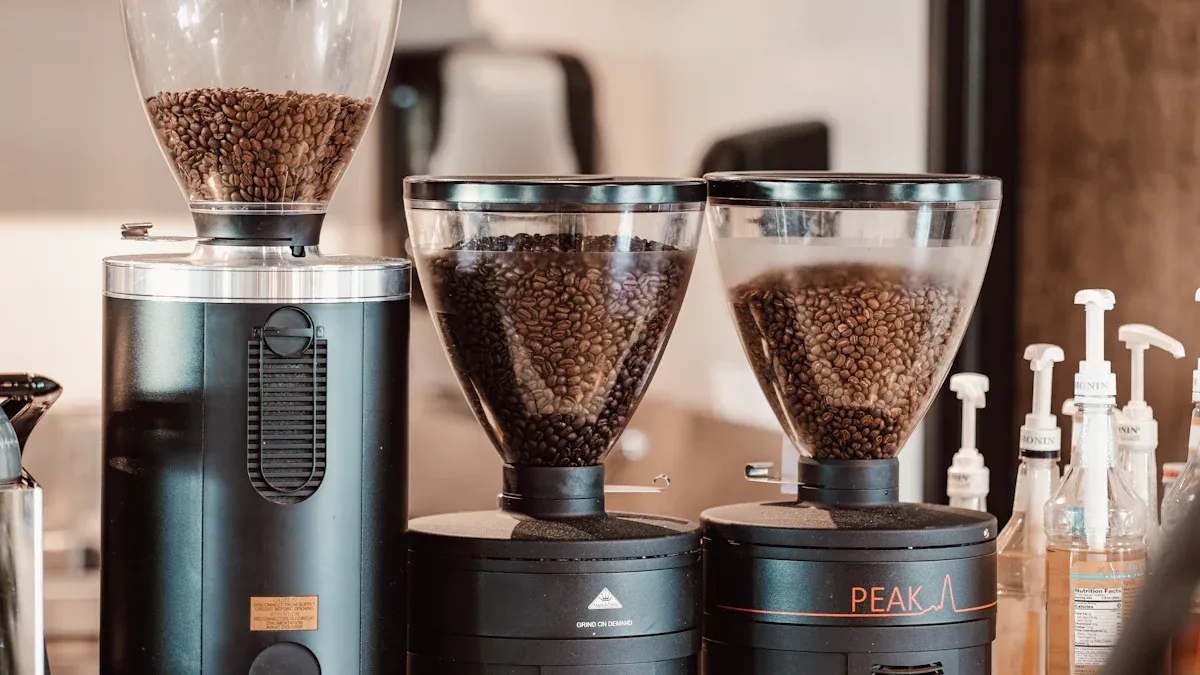
When you prepare coffee, grind size plays a crucial role. It directly affects how your coffee tastes and how well it extracts flavors. If you want that perfect cup, you need to understand your grinder settings. The right grind size can unlock rich flavors or leave you with a bitter brew. So, let’s dive into the world of coffee grinding and discover how to achieve your desired flavor profile!
Key Takeaways
Grind size is crucial for coffee flavor; it affects extraction rates and taste.
Use a fine grind for espresso to achieve quick extraction and bold flavor.
Coarse grinds are best for methods like French press, preventing over-extraction.
Experiment with grind settings to discover your perfect coffee flavor.
Monitor brewing time and water temperature to avoid bitterness or sourness.
Importance of Grind Size
When it comes to brewing coffee, the grind size is one of the most important factors to consider. It affects how well your coffee extracts flavors and ultimately how it tastes. Let’s break down the effects of both fine and coarse grinds.
Effects of Fine Grind
A fine grind increases the surface area of the coffee particles. This means that more coffee comes into contact with water, allowing for quicker extraction of flavors. Here’s what you should know:
Faster Extraction: With a fine grind, you expose more surface area, which helps water extract flavors more efficiently. This can lead to a rich and bold cup of coffee.
Risk of Over-Extraction: However, if you grind too fine, you might extract too much. This can result in bitterness and astringency, especially in filter coffee. As one expert notes, “Fines are guaranteed to overextract and contribute bitterness and astringency.”
To make the best-possible filter coffee, it’s likely you should try to minimize fines. If you can remove fines or avoid creating them in the first place, you’ll make a cleaner, sweeter cup with smoother mouthfeel.
If you’re brewing espresso, a fine grind is necessary for adequate extraction. But remember, balance is key. Too many fines can lead to undesirable flavors.
Effects of Coarse Grind
On the other hand, a coarse grind has its own unique benefits. It’s often preferred for methods like French press and cold brew. Here’s how it impacts your coffee:
Aspect | Description |
|---|---|
Texture | Gritty, like kosher salt |
Extraction Rate | Slower extraction requiring longer brew time |
Best Brewing Methods | Ideal for cold brew, French press, and percolator |
Pros | Lower risk of over-extraction |
Cons | Risk of under-extraction if brewed for insufficient time |
Flavor Impact | Less surface area leads to slower flavor extraction; can result in sour, weak coffee if brewed too quickly. |
A coarse grind allows for longer brewing times, which enhances flavor extraction. The larger grounds take more time for hot water to penetrate, resulting in a richer flavor profile. If brewed too quickly, however, you might end up with a sour or weak cup.
The Science of Extraction
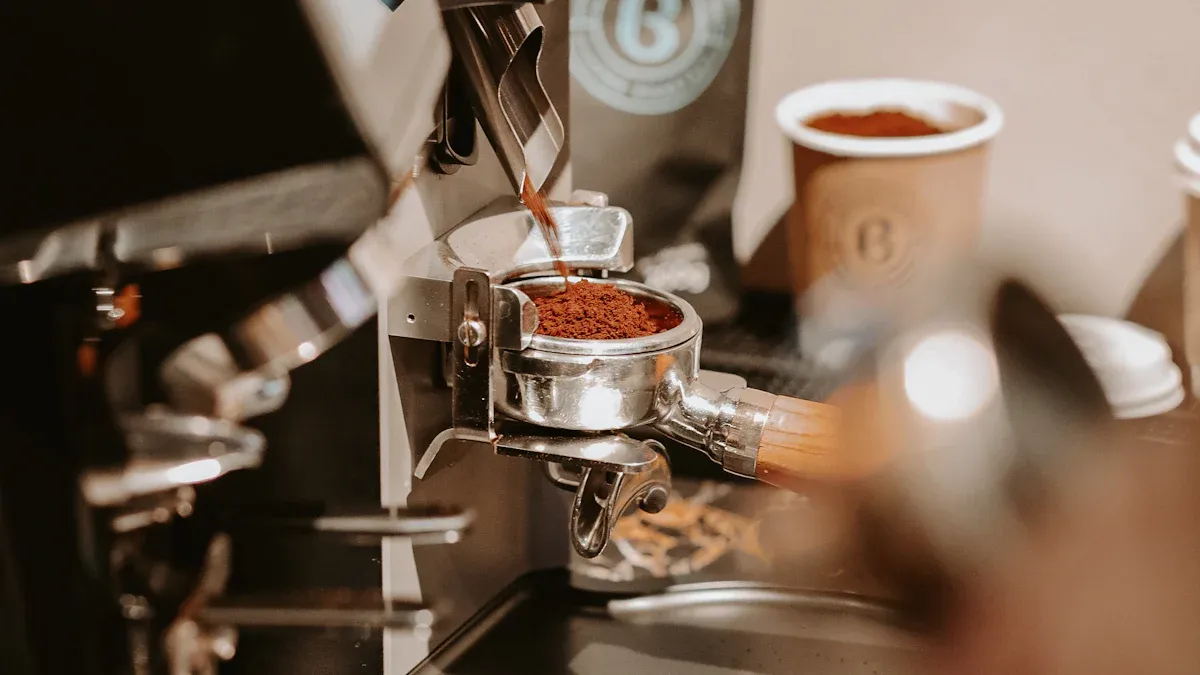
When you brew coffee, understanding extraction is key to unlocking the best flavors. Two major factors influence this process: solubility and brew time. Let’s explore how these elements work together to create your perfect cup.
Solubility and Brew Time
Solubility refers to how well coffee compounds dissolve in water. The grind size you choose plays a significant role in this process. Here’s how it breaks down:
Finer Grinds: These have a larger surface area, which means they dissolve more quickly. This leads to faster extraction of soluble compounds, giving you a bold flavor.
Coarser Grinds: With a smaller surface area, these require more time for extraction. If you don’t brew long enough, you might end up with a weak or sour cup.
Finding the right balance is crucial. You want to extract enough flavor without overdoing it. Too much extraction can lead to bitterness, while too little can leave your coffee tasting flat.
Water Temperature Impact
Water temperature also plays a vital role in extraction. The ideal temperature for brewing coffee typically ranges from 195°F to 205°F (90°C to 96°C). Here’s why this matters:
High Pressure in Espresso: When you brew espresso, you use high pressure. This method extracts various compounds quickly. In fact, over 70% of antioxidants come out in the first eight seconds! However, this rapid extraction doesn’t always mean efficiency.
Filter Coffee: This method shows a U-shaped extraction profile. It peaks at the end of the brew time, thanks to longer water contact. This compensates for the lack of pressure, allowing for a more balanced flavor.
Lungo Preparations: These use more water under high pressure, leading to higher extraction efficiencies compared to traditional espresso.
Grinder Settings for Brewing
When it comes to brewing coffee, the grind size you choose can make or break your cup. Different brewing methods require different grinder settings to achieve the best flavor. Let’s explore the ideal settings for espresso, French press, pour over, and cold brew.
Espresso and French Press
For espresso, you need a fine grind to ensure proper extraction. The ideal grind size falls between 180 and 380 microns. This fine texture allows water to extract flavors quickly under pressure, giving you that rich, bold shot you crave.
On the other hand, if you’re brewing with a French press, you’ll want a coarser grind. The recommended size is between 690 and 1300 microns. This coarser texture helps prevent over-extraction, allowing for a smoother, more balanced cup.
Remember, the grind size can significantly impact your coffee’s taste. Adjusting it based on your brewing method is essential for achieving the perfect flavor.
Pour Over and Cold Brew
Now, let’s talk about pour over and cold brew methods. Here’s a quick comparison of the recommended grind sizes:
Brewing Method | Recommended Grind Size |
|---|---|
Pour Over | Medium |
Cold Brew | Extra Coarse |
For pour over, a medium grind works best. It strikes a balance between extraction speed and flavor clarity. If you go too fine, you risk clogging the filter and creating a bitter taste.
Cold brew, however, requires an extra coarse grind. This allows for a slow extraction process over an extended brewing time, resulting in a smooth, less acidic flavor profile.
Adjusting your grinder settings based on the type of coffee bean you use is also crucial. Different beans have unique characteristics that affect extraction. For example, light roasts are denser and extract slower, so they benefit from a finer grind. In contrast, dark roasts are more brittle and extract faster, often needing a coarser grind to avoid bitterness.
Common Mistakes and Troubleshooting
Over-Extraction Issues
Over-extraction happens when you extract too many flavors from the coffee grounds. This can lead to a bitter and unpleasant taste. Here are some signs of over-extraction to watch for:
Your coffee tastes bitter or harsh.
It has a dry, astringent mouthfeel.
The flavor lacks balance and complexity.
To fix over-extraction, try these tips:
Adjust grind size: If your grind is too fine, switch to a coarser grind. This reduces the surface area and helps prevent over-extraction.
Control brewing time: Make sure you’re not brewing for too long. For French press, steep for no more than 4 minutes. For pour-over, aim for 2.5 to 3.5 minutes.
Monitor water temperature: Keep your brewing temperature between 195°F and 205°F. Too hot water can burn the coffee, leading to bitterness.
Correct brew ratio: Use a standard ratio of 1:15 or 1:16 (coffee to water) for balanced extraction. Using too much water can also lead to over-extraction.
Remember, using fresh, high-quality beans roasted within the last 2-3 weeks can make a big difference in flavor!
Under-Extraction Solutions
Under-extraction occurs when you don’t extract enough flavors from the coffee. This can leave your coffee tasting sour, weak, or thin. Here are some signs of under-extraction:
Your coffee tastes sour or acidic.
It has a watery or weak mouthfeel.
The flavor seems flat and lacks depth.
To resolve under-extraction, consider these adjustments:
Adjust grind size: Finer grinds have more surface area, allowing for better flavor release. If your coffee tastes weak, try a finer grind.
Increase brewing time: Allow more time for extraction. If you’re brewing too quickly, extend the brewing time to enhance flavor.
Use the right brew method: Different methods require different grind sizes. Make sure you’re using the correct grind for your brewing method to maximize flavor extraction.
By paying attention to these details, you can troubleshoot your coffee brewing and enjoy a delicious cup every time!
In summary, selecting the right grind size is crucial for brewing the perfect cup of coffee. Here are the key takeaways:
Grind size affects extraction rates, which directly influences flavor.
Fine grinds work best for espresso, while coarse grinds suit methods like French press.
Experimenting with different settings helps you find your ideal taste.
Research shows that about 90% of coffee lovers believe proper grind size is key to flavor quality. So, don’t hesitate to play around with your grinder settings. You might just discover your new favorite brew! ☕️
FAQ
What grind size should I use for espresso?
For espresso, you should use a fine grind. This allows for quick extraction under pressure, resulting in a rich and bold flavor.
How does grind size affect flavor?
Grind size impacts the surface area of coffee grounds. Finer grinds extract flavors faster, while coarser grinds take longer, affecting the overall taste.
Can I use the same grind size for all brewing methods?
No, different brewing methods require different grind sizes. For example, use a fine grind for espresso and a coarse grind for French press.
What happens if my coffee tastes sour?
Sour coffee often indicates under-extraction. Try using a finer grind or increasing your brewing time to enhance flavor extraction.
How can I avoid bitterness in my coffee?
To prevent bitterness, avoid over-extraction. Use a coarser grind, control your brewing time, and ensure your water temperature is between 195°F and 205°F.
